(Editor’s Note: This article is the Pacific Citizen’s first installment of “History 100,” a series of interviews and profiles of individuals who have celebrated reaching — and surpassing — the century mark. For JACL and Pacific Citizen, this series has extra meaning as both the organization and its newspaper will reach their respective centennials in 2029.)
Even at this unique point in human history, when there are more centenarians across the developed world than ever, reaching and surpassing the 100-year mark is still an accomplishment.
Meeting that major milestone while still maintaining one’s faculties is even more momentous, truly a case of getting to have your (birthday) cake and eat it, too.
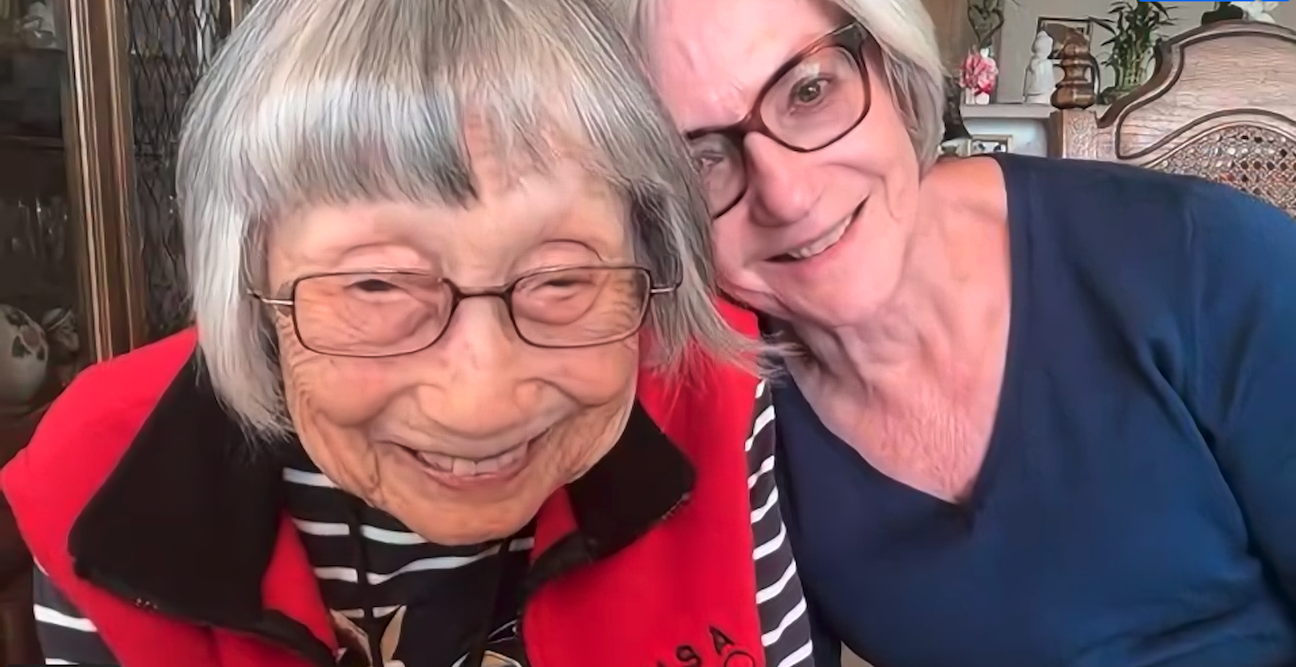
Anne Shibata of Albuquerque, N.M., who is now 101 and retains her memories and maintains her health, is very aware of her good fortune. “I am truly blessed,” she recently told the Pacific Citizen in an interview conducted with the assistance of her daughter-in-law, Lisa Shibata.
Asked to speculate as to why she has been able to live such a long life, Anne candidly answered, “I didn’t think I was ever going to. I didn’t even dream about hitting 100. I just took one day at a time. But once I hit 90, well, you know, the people start counting. I didn’t realize that I would make it this much.
“But fortunately, I’m in fairly good health, and I can enjoy my life, you know, whatever I have left of it,” she continued. “I’m managing, I think, quite well.”
As for a couple of the things most longevity experts say contribute to a long life — exercise and diet — Anne noted that she was “pretty active” about exercising at the gym until Covid came along. “I just quit after that,” she said, noting that she never contracted the virus. “In the food part, you know, I prefer my rice and that type of thing.”
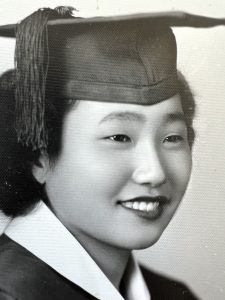
Born Anne Ayako Matsubara in California, she lived in the Golden State until she was a sophomore attending Glendale High School, when circumstances turned less-than-golden for Californians — as well as Washingtonians and Oregonians — of Japanese heritage.
When she was a youth, the Matsubara family was led by father Daikichi and mother Toshi, and they operated three flower shops in Glendale. Anne’s brothers, eldest to youngest, were Frank Takeo, George Haruki and Charles Saburo. That business and the course the family would take all changed when Japan, which Anne actually had visited with her family twice when she was a few years younger, attacked American military facilities in Hawaii on Dec. 7, 1941.
The West Coast’s simmering and pervasive anti-Japanese sentiments, abetted by newspapers of the era, were held mostly in check during peacetime but burst forth after America declared war on Japan and its Axis partners and entered World War II.
Within weeks, life for West Coast Nisei like Anne and their Issei parents who were barred from becoming naturalized U.S. citizens would be upended in epic and spectacular fashion, thanks to an executive order signed by President Franklin D. Roosevelt, which would lead to the western portions of the three coastal states (and the southern third of Arizona) becoming the Western Exclusion Zone.
Forced removal and incarceration for most Japanese Americans in this 125,000-strong bigenerational cohort would prove imminent and inevitable — with “most” being the operant term.
For some, like Anne and her family, there was a window during which ethnic Japanese on the West Coast could, under certain circumstances, voluntarily evacuate for inland states like Utah, Colorado or New Mexico, if there was work awaiting them or had family to take them in. According to Anne, this scenario applied to her family, thanks to a family friend she refers to as “this gentleman named Mr. Saeda,” who had a sister in Albuquerque, N.M.
“My sister-in-law was connected with that family,” Anne told the Pacific Citizen. When Moriichi Saeda, an Issei living in California who had previously lived in Albuquerque decided to return, Anne’s parents made a monumental family decision: to join a five-car caravan with 18 people led by Saeda that took U.S. Route 66 from California to Albuquerque. She refers to him as “truly the leader of us all.”
“I am grateful for Mr. Saeda,” Anne recalled. “He’s the key man. He is the key man for all of it, and I truly appreciate what he had to do.
“And being that he lived in Albuquerque at one time, he was able to get this place,” she continued. “It was a large house, and it had acreage in the back. And so, my side of the family became farmers as well. And so that’s our start in New Mexico.”
Remembering the past, “We had a party every night, and they converted the garage into a kitchen and dining area. Yeah, it was quite an experience,” Anne recalled. “One family had a stove that they brought. The other family had a refrigerator. My family had a washing machine. So that with all of that going, we were able to manage our life during that time that we evacuated to Albuquerque.”
But parties aside, it was, to be sure, a major disruption, leaving everything behind while she was still in high school, describing it as a sadness that was “hard to truly explain.”
“It was very, very sad when you uproot your lifestyle and everything, leave your friends … it’s really hard to express that type of feeling. It was sadness and everything else that went with it. It was a difficult, difficult time. Not only for me, but for everyone,” said Anne.
Lisa Shibata added that her mother-in-law also still has sad memories of having to “burn her Japanese books,” as ordered by her father. “I think about it to this day now,” said Anne. As a high school sophomore, her parents’ decision to just up and leave was, as Anne put it, “quite extreme.” But no doubt underpinning the decision and the circumstances she, her family and so many other Japanese in America had to confront also was the shikata ga nai (“it cannot be helped”) cultural ethos. “But there was no choice, and you learned to accept that and go on with your life,” she added.
That, and a “water under the bridge” mentality would likely explain why for Anne there was never any desire or feeling of nostalgia to return to life in Glendale. “We went through it, but never to stop or anything like that. That was a thing of the past then,” Anne said. “By the time I visited California, we were pretty well-settled in Albuquerque, and we felt that Albuquerque was our place to stay now.”
Later, some of that was no doubt due to Walter Shibata, who hailed from Gallup, N.M. After he and Anne married, they would return to his hometown, where they would reside for 55 years.
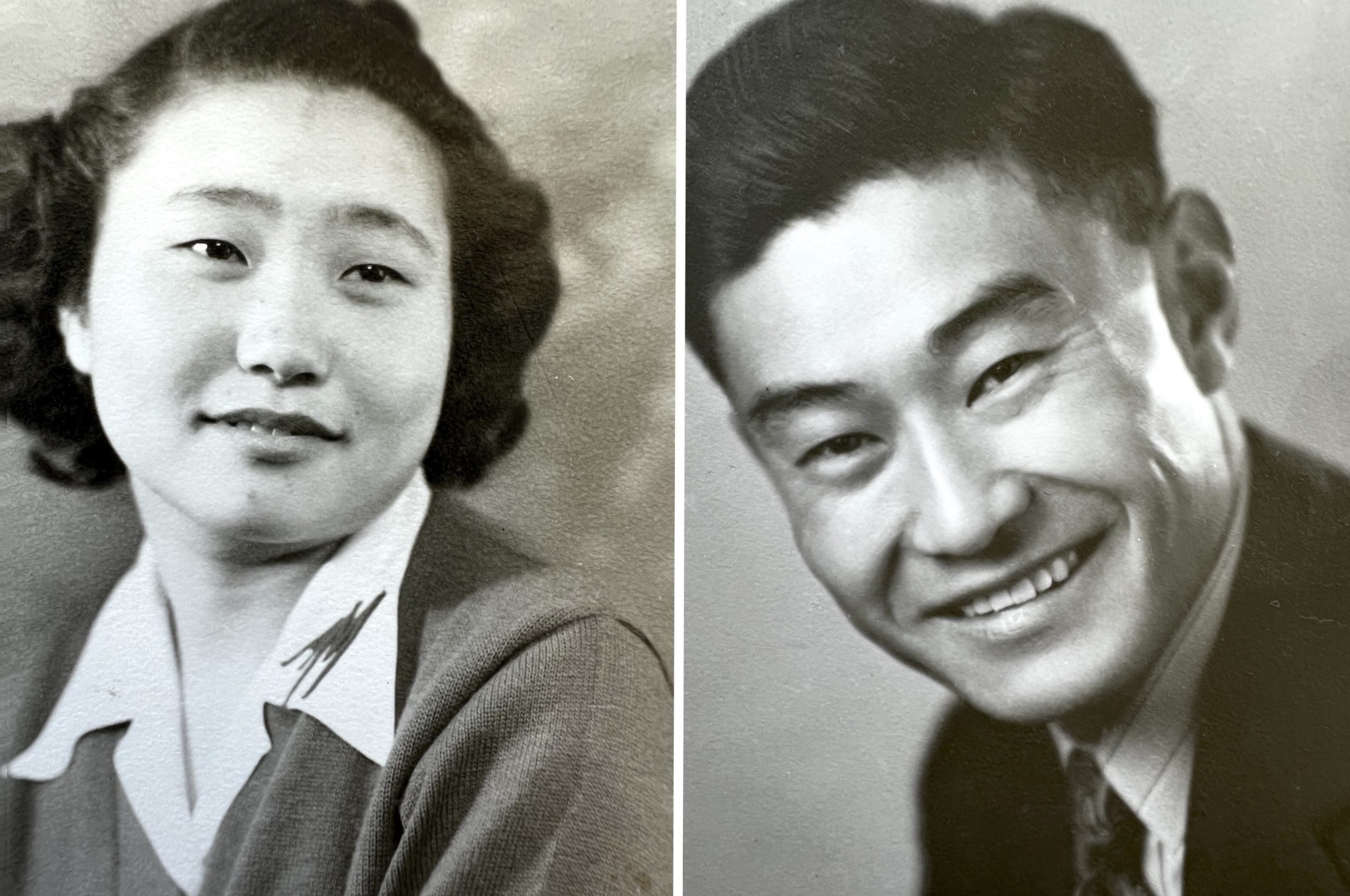
Although the move to New Mexico from California meant that Anne was able to escape incarceration, not all in her family were not so fortunate. Brothers George, aka Ruki, and Charlie stayed behind in Glendale to “clean up the three flower shops that we had,” Anne recalled. She said her brothers were also concerned about her education. “They wanted to be sure that I would be able to go to school, and … continue my high school education here.” But staying in California meant the Matsubara brothers would end up being incarcerated at the Manzanar War Relocation Authority Center. After war’s end, they, too, would make the move to New Mexico, with George becoming a cook and Charlie becoming a farmer.
As for Anne, after finishing high school, she worked for an abstract company and would find work as a typist/county clerk at the Bernalillo County Courthouse. “I was typing titles and abstract like deeds and everything. We had to we had to type everything because we did not have a copy machine at that time,” she said.
That lasted for about three years, until her marriage to Walt Shibata. “I met Walt after he came back,” said Anne, referring to him and his overseas military service. He served during WWII in the 442nd Regimental Combat Team’s 2nd battalion, Co. F, and became a prisoner of war after being captured by German soldiers.
Marriage would mean moving to Gallup, some 140 miles from Albuquerque. “Walt and his family were all born in Gallup,” said Anne, who noted that like other Japanese families there at the time were coal miners. “I knew his family. I knew his sister well,” Anne said.
Anne and Walt would become good friends with arguably the most-famous person from Gallup, N.M.: Hiroshi “Hershey” Miyamura, who served in the Army during the Korean War and was famously awarded the Medal of Honor, and his wife, Terry (see tinyurl.com/yc8ytmbz).
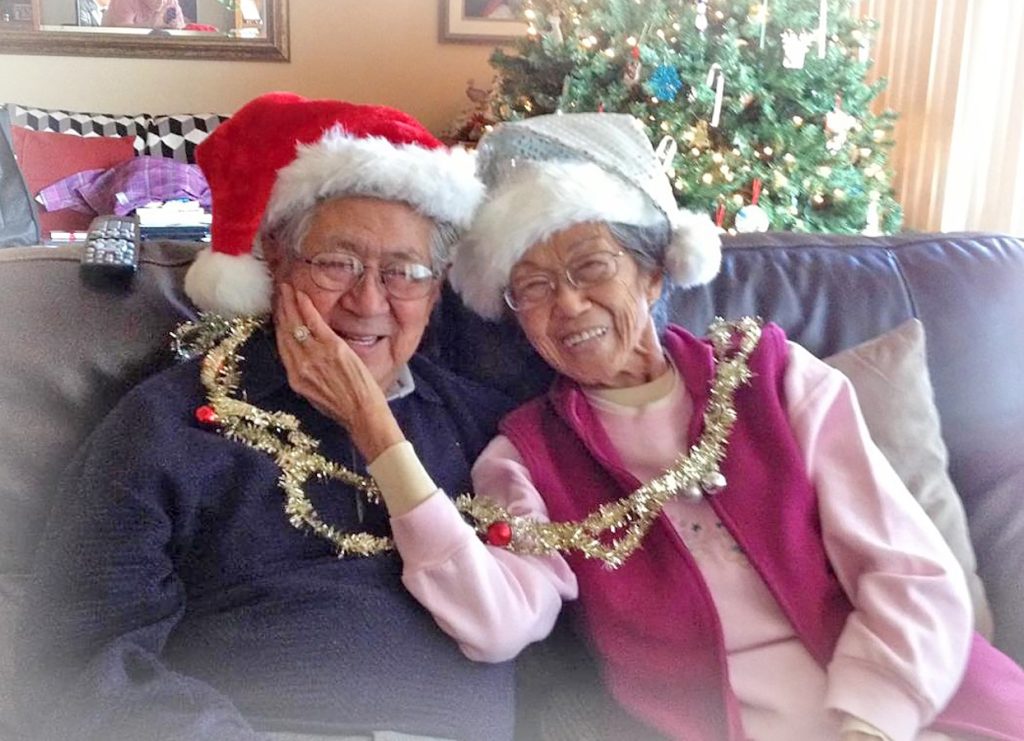
“We were quite close,” said Anne of Hershey and Terry. “I truly mourn her passing. But it’s one of those things that does happen to all of us. But anyway, Hershey and Terry will never be forgotten. Not in Gallup, for sure, in my heart as well. They really were-they were just down-to-earth people.”
She remembers well the homecoming Gallup put together for Hershey when he returned from serving in Korea, where he had been captured as a prisoner of war by Chinese communist troops. “We had to organize a big banquet and all that for him. You know, Gallup is a very small town, and many, many people just get involved,” Anne said. “We had a beautiful, beautiful welcoming banquet for him.” (An account of that homecoming and Anne and Walt’s role in planning it appears in the Sept. 18, 1953 Pacific, Citizen, tinyurl.com/4dvvxfnu.)
In Gallup, Anne found new employment, landing a job at a Chevrolet dealership. “I was doing bookkeeping and that type of thing, office work. I was there for maybe three years as well until I have started a family.” But when her sons, Randolph, who died in 2017, and Ronald, were older, she got a job as an office worker for a bakery for about 20 years. She remains proud of the fact that they both served as JACL chapter presidents.
In addition to Hershey Miyamura, Anne recalls her friendship with Denver-based JACL leader Minoru Yasui. “We got to know him quite well,” she said, recalling how the New Mexico JACL chapter brought him down from Denver. “He was just absolutely terrific.”
At a dinner where Sen. Pete Domenici (R-N.M.) and his wife were present, Anne recalled that “Min Yasui just poured his heart out. I think Pete Domenici had some influence with the president to make sure that that bill passed.” That bill was, of course, HR 442, signed by President Ronald Reagan in 1988, which authorized an apology and remuneration of $20,000 to each still-living Japanese American incarcerated during WWII.
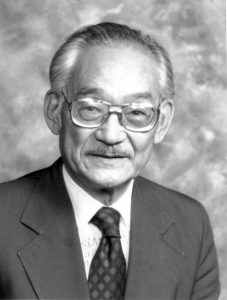
This included voluntary evacuees like Anne and some members of her family who were not incarcerated. Asked if she still had the apology letter signed by Reagan’s successor, President George H.W. Bush, she knew she still had it saved somewhere. As for how she felt when the check and apology arrived, Anne’s feelings were mixed.
Recalling that the redress campaign was a “long, drawn-out situation” and that she was thankful to JACL to pursuing redress, Anne said, “When I did get it, naturally we were all happy about it, that we did receive something. It’s not something that you would jump up and down with joy and feel like celebrating it. It’s just something that that it came to you because of the hardships that we had to go through. So, we were pleased to get it. … But it was nothing like a celebration or something like that.”
With JACL approaching the point in its existence that Anne has already passed, she says, “I am so happy that it continues.” As for the Pacific Citizen, Anne noted that she “took it for a long, long time,” but with generational changes, “the articles were not as interesting to me.”
Something that was interesting to her was a 2006 trip to Japan, which she had not visited since she was about 9 years old. “We had a wonderful time,” said Anne. The Nihongo she used to speak with her parents came back. “When we went to Japan, my language was not a problem.”
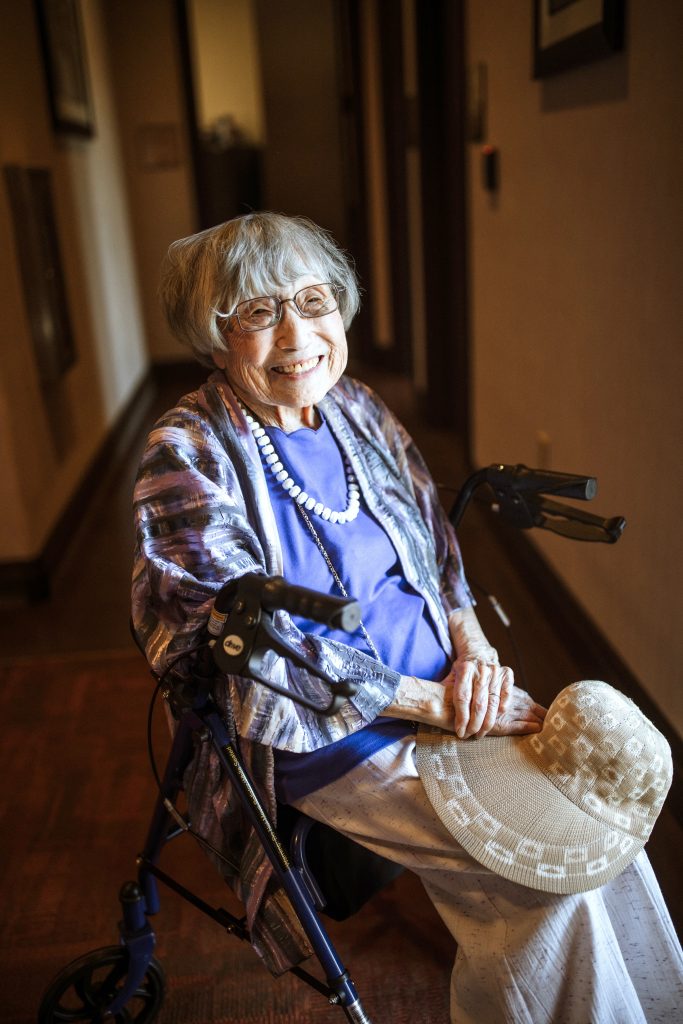
Now, at 101, Anne Shibata can reflect philosophically about everything she encountered, the history she lived through and experienced firsthand.
Last year, the city of Albuquerque honored her because she turned 100. “They had an Anne Matsubara Shibata Day. It was really a surprising thing because to me I was just a plain ordinary person. They honored me because I turned 100. Can you imagine?”
If there is one thing that she misses as a centenarian, it’s being able to drive a car. “When you don’t drive, your whole life changes,” she said. “You just adjust to it.”
To that, she added: “I have reached the age now where I just kind of sit back and try to just enjoy what’s going by me.”
(Related video: “The Togami and Matsubara Family Story during World War II on Route 66.”)