
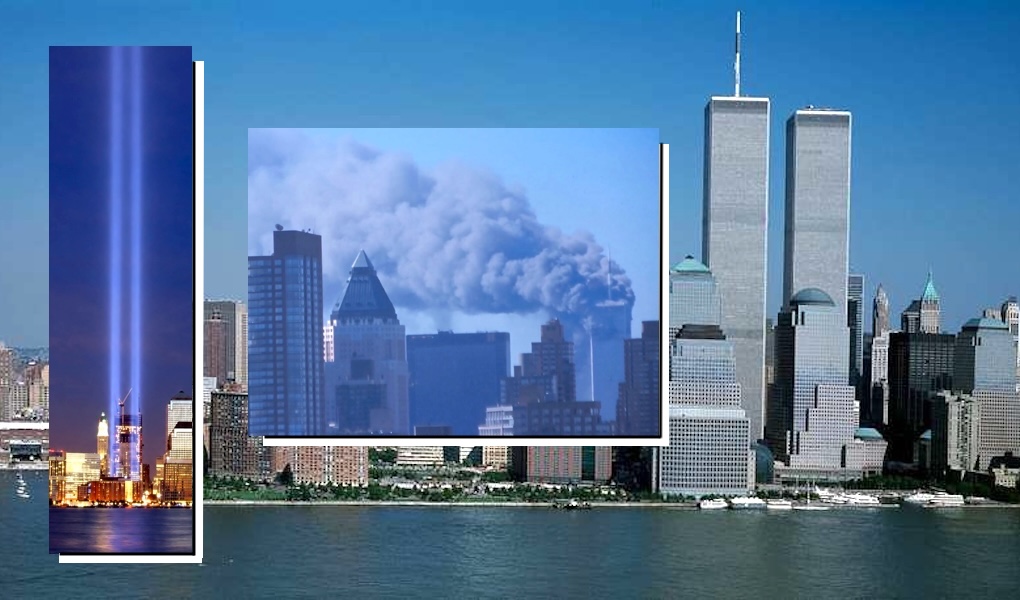
The Twin Towers that once defined the New York City skyline were destroyed on Sept. 11, 2001.
Three individuals who were at Ground Zero
reflect on how 9/11 changed them forever.
By George Toshio Johnston, P.C. Senior Editor
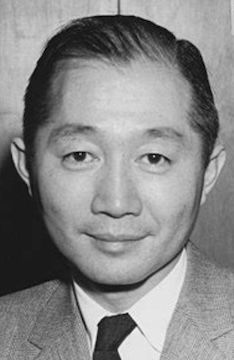
Minoru Yamasaki
When Minoru Yamasaki “humbly” accepted recognition as the 1961-62 Nisei of the Biennium on July 30, 1962, at the Japanese American Citizens League’s 17th National Convention (see Aug. 3, 1962, Pacific Citizen, tinyurl.com/3yz6mntm), held in his hometown of Seattle, it was thanks to his already stellar reputation as a world-class architect.Whether someone as visionary as Yamasaki had already been daydreaming of a future project, perhaps a skyscraper that would surpass the height of the Empire State Building, maybe with an equally tall twin right next to it, is anyone’s guess.
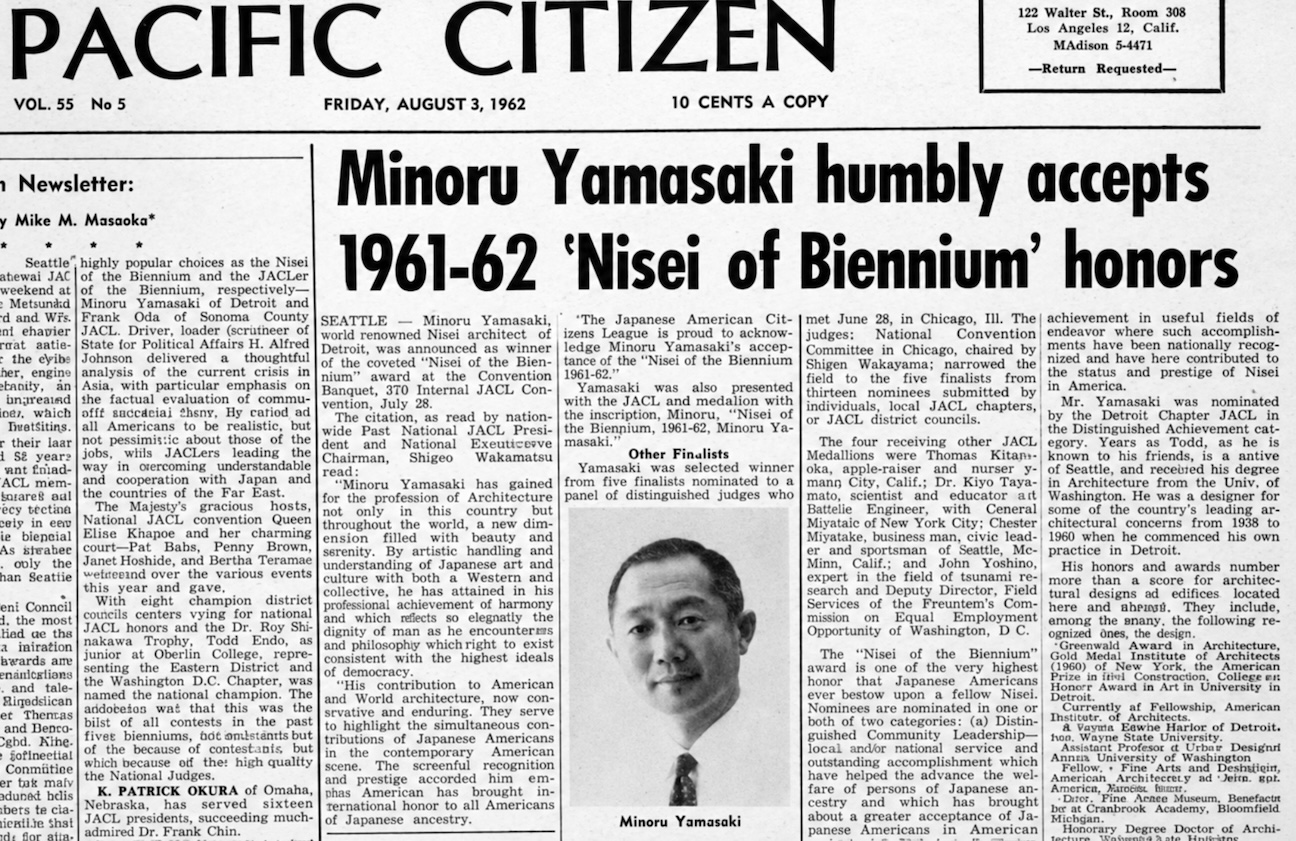
Minoru Yamasaki was featured on the front page of the Pacific Citizen’s Aug. 3, 1962, issue. (Photo: Pacific Citizen Archives)
If so, however, the timing would have been fortuitous for him. In December 1963, the Port Authority of New York and New Jersey revealed an architectural plan for what would become Yamasaki’s magnum opus: the World Trade Center, boasting the world’s two tallest buildings. A little more than a decade later, the World Trade Center and its 110-story Twin Towers would open on April 3, 1973, fitting for the city so nice they named it twice.
Although he lived to see the Twin Towers rise and join the Empire State Building and the Statue of Liberty as the visual shorthand for New York City in ad campaigns, movies, TV shows, magazine covers and personal photo albums, not to mention the international symbol for America as the world’s premier economic powerhouse, Yamasaki died Feb. 6, 1986, at 73 and was thus spared the heartbreak, tragedy and trauma of seeing his brainchild fall in flames on an achingly beautiful September morning 15 years, seven months and five days later.
That would not, however, be the case for Bobby Ideishi, Scott Ito and Ron Uba, all of whom were there on Sept. 11, 2001, on the morning the towers fell to experience and bear witness to the events that would contort America’s actions and policies, domestic and foreign, to this very day.
♦ ♦ ♦
Twenty-five years ago, on 9/11, as that day in the first year of the new millennium would forever become known, was not only when the Twin Towers of the World Trade Center collapsed in fire, smoke, ash and dust after the North Tower 1 was deliberately crashed into by American Airlines Flight 11, followed by South Tower 2 getting smashed into by United Airlines Flight 175.
It was also the morning when two other jet airliners were also hijacked by al-Qaeda terrorists from Saudi Arabia. American Airlines Flight 77 crashed into the Pentagon, killing all aboard and some in the building that houses the brain trust of the U.S. Armed Forces. United Airlines Flight 93 crashed in a field near Shanksville, Pa., after passengers fought the terrorists, killing all aboard the Boeing 757.
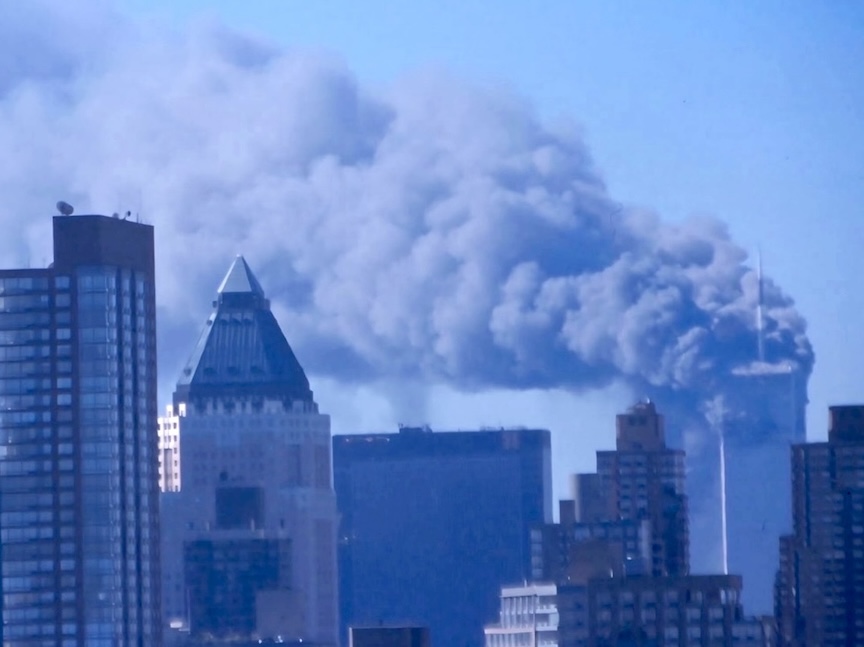
An aerial view of the burning Twin Towers on Sept. 11, 2001 (Photo: Courtesy of the Prints and Photographs Division, Library of Congress)
Unlike those two tragedies, however, the WTC attacks took place in Manhattan, the nerve center for America’s news media industrial complex. Within minutes of the first airliner hitting one of Yamasaki’s towers, every TV network went live with images of the first burning skyscraper, not just to the shocked eyes of Americans coast–to–coast but around the world.
The first impact was shocking and tragic but not without precedent. In 1945, an Army Air Forces B-25 accidentally hit the Empire State Building. This was not that. It was only after the second jet hit the second tower on live broadcast television when the reality of what was happening registered.
♦ ♦ ♦
Bobby Ideishi, who was raised in the Venice-Culver area of Los Angeles, remembers how beautiful the weather was on Sept. 10 after arriving in New York City to attend a seminar on customs and import and export laws at Pace University’s World Trade Institute, which was housed in the North Tower. He had been tasked with becoming the import-export compliance officer for Kingston Technology. “I was going every other month on behalf of my company,” Ideishi told the Pacific Citizen. “I had been attending for a little over a year.” He was scheduled to attend on Sept. 11 and 12.
One of the reasons Ideishi remembers how great the weather was on Sept. 10 is because most of the times he had been to the Twin Towers before, the tops of the skyscrapers were enveloped in clouds. He nevertheless remembers how magnificent, majestic and tall the towers were when looking up from the plaza.
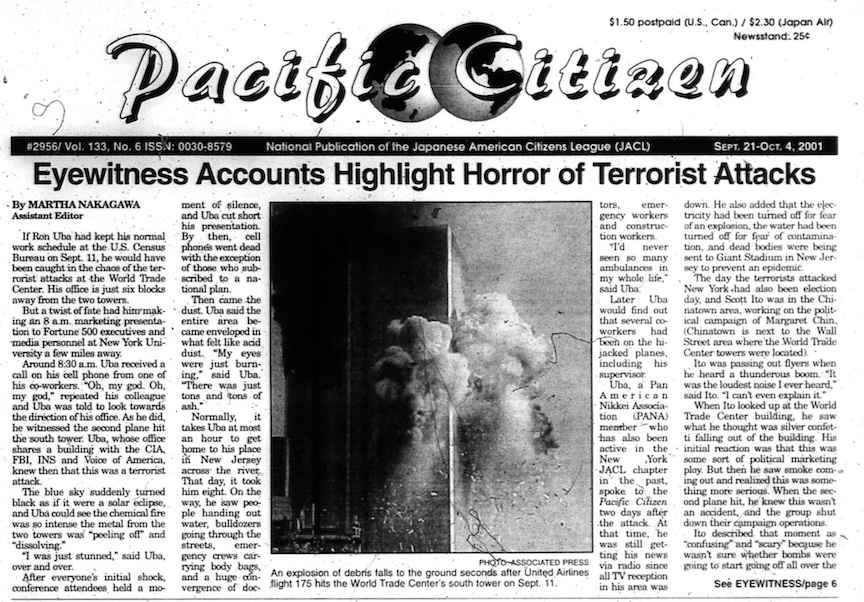
The Pacific Citizen’s Sept. 21, 2001, issue featured Ron Uba’s first-hand experience of the 9/11 terrorist attacks. (Photo: Pacific Citizen Archives)
Although Ron Uba, who was living in New Jersey and working for the Census Bureau in New York City at the time, can corroborate Ideishi’s recollection of how gorgeous the weather was on Sept. 10, he also remembers there was a heavy rainstorm that night because he had dinner with friends Ken Moritsugu, Jeff Yang and Scott Ito. “The rain was so bad, I got home late. Jeff got home late. Scott got home late. We all got home late. So, the next day, we were dragging ourselves out of bed about 8 o’clock in the morning, and so we all showed up at the World Trade Center kind of late. I think that saved us,” Uba recalled.
At the turn of the century, Ito was working for Asian Americans for Equality, “a nonprofit community development organization that builds affordable housing and provides social services to the lower East Side-Chinatown area of New York City,” he told the Pacific Citizen. His first stint was from 1992-96; his second was 2000-03. At the time of 9/11, he was also a volunteer for the city council campaign of Margaret Chin.
In the aftermath of the attacks, Ito had a thought. “I was really worried for Muslim Americans in the United States.” He was “very concerned that more hate crimes and possibly opening detention centers could be a reality again.” In that, he was not alone.
♦ ♦ ♦
At the time of 9/11, Norman Mineta was serving as secretary of transportation, the sole Democrat among Republicans in the cabinet of President George W. Bush. By today’s standards, that would be unheard of. What would likely also be unheard of today: Bush’s explicit announcement and decision to not succumb to the knee-jerk reaction of many to round up and incarcerate Muslims and those of Arab descent living in the U.S., citizen or not.
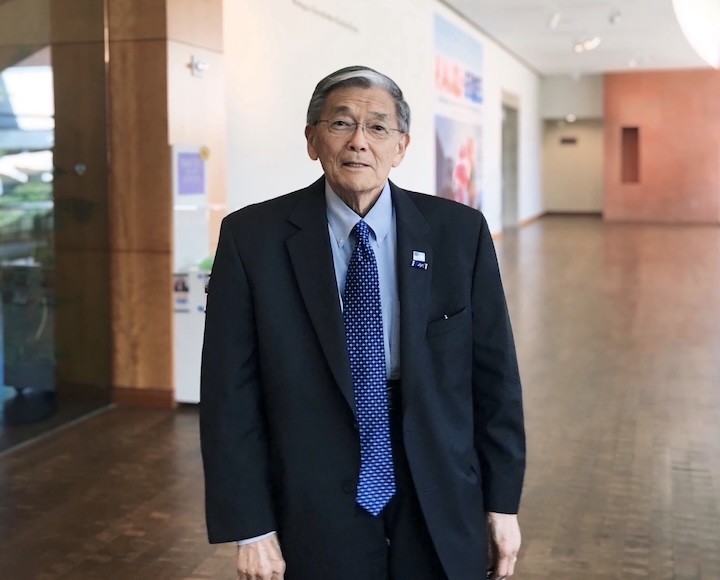
Former U.S. Secretary of Transportation Norman Y. Mineta is pictured at the Japanese American National Museum in Los Angeles in 2019. (Photo: Pacific Citizen Archives
Dianne Fukami, who with Debra Nakatomi produced the documentary “An American Story: Norman Mineta and His Legacy” (see May 10, 2019, Pacific Citizen, tinyurl.com/mupj7vxv), told the Pacific Citizen, “From my point of view, as a Japanese American and as a descendant of somebody of parents who were incarcerated, I think that Norm represented much of what we were thinking in terms of making sure that he had influence over then-President Bush, and the fact that Muslims and Arab Americans were not incarcerated, as many in the country had wanted to do from the outset.”
Fukami described what was related in the documentary. “Shortly after President Bush had nominated Norm to the cabinet, they spent a weekend up at Camp David together with their wives. And after dinner and friendly chat was over, the two men stayed late into the night just talking. And Norm was able to explain, at the president’s request, what it was like to be Japanese American, what it was like to spend much of his youth in the Heart Mountain concentration camp, and those stories really stuck with President Bush.”
Although that showed Mineta’s indirect influence regarding the White House tempering itself against calls for mass round-ups and incarceration of Arab Americans or Muslims in this country, there nevertheless was a spike in anti-Arab, anti-Muslim hate incidents, even against those who were neither but merely perceived as belonging to one or both of those groups.
Mineta would, however, as transportation secretary make deliberate decisions that had immediate effect, such as grounding all commercial air travel. He would later help with the creation of an entity still with us: the Transportation Security Administration. TSA is, of course, part of another legacy of 9/11 also still with us: the Department of Homeland Security.
♦ ♦ ♦
Just as there was a precedent in 1945 of an airplane hitting a New York skyscraper, there was also a precedent of a terror attack on the World Trade Center.
It happened less than a decade before 9/11, on Feb. 26, 1993, when a bomb hidden inside a van detonated in the basement garage of the WTC’s North Tower. That attack killed six people and injured more than 1,000. Although the damage was extensive, the attack fell far short of the terrorists’ goal to have the North Tower collapse into the South Tower, taking out both and killing multitudes. That goal would have to wait and be executed — successfully — by a different group of terrorists.
♦ ♦ ♦
In 2026, Ideishi, Ito and Uba each, of course, have memories of that day, some similar to those of others who survived the attack, some unique to them as individuals. Each also has a perspective on what happened, how what happened affected them and how they have dealt with that day two-and-a-half decades later.
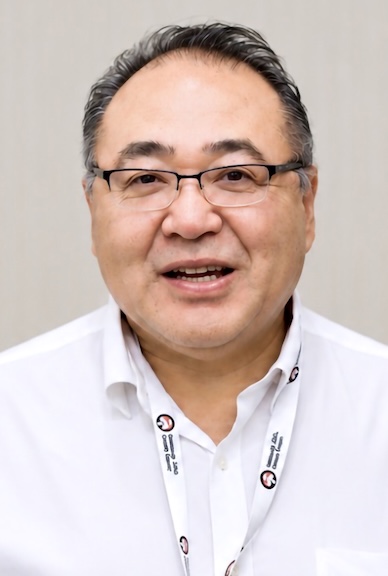
Rob Uba (Photo: Darrell Miho)
“I still have chronic respiratory issues as a result because I was stuck there with all that dust and debris, and the air was toxic. I know that for a fact,” said Uba. He also has severe arthritis in his left leg from when he fell a couple of times trying to return home in New Jersey by boat. He is also resigned to knowing that he can’t do or enjoy things he used to. “At the same time, I’m enjoying being alive every day, knowing that I could do something and make a difference in my little way, working with other people.”
A former member of the New York JACL chapter and current member of the Washington, D.C., JACL chapter, Uba also carries the burden of a double-dose of survivor’s guilt.
At that time, he was working on a program called Strength in Numbers for the Census, which was designed to help small businesses with data from the bureau. He was originally supposed to join his Census colleagues, Marion Britton and Waleska Martinez, on a business trip to San Francisco.
“At the last minute, I got switched,” Uba recalled. “They said, ‘You’re going to be doing this conference in New York City. We’re heading to San Francisco. Sorry, Ron, we can’t take you this time.’” As Uba was at the WTC for the Sept. 11 conference, Britton and Martinez were aboard a nonstop jet headed for the West Coast, United Flight 93; they both were killed. Had the plans not changed, Uba would have also been on that flight.
As it turned out, Uba was in Tower 1 when it was struck by American Airlines Flight 11. When Tower 1 was struck and he tried to evacuate, the exit was blocked. He was, however, able to exit by going underground to Tower 2 and leave via ground level.
Later, Uba and the rest of the world would learn about flight attendant Betty Ong, who was on that flight. She knew it had been hijacked and relayed valuable information in a cellphone call with an American Airlines reservations agent, describing in real-time what was happening inside the aircraft. It would be Ong’s final conversation.
When Uba came out of Tower 2, it was, he recalled, at the same time that “the second plane [United Airlines Flight 175] came out and did a hairpin turn and crashed, and so I could see the belly of the plane. I could actually see the plane right above my head, maybe about 100 feet, because it came down low, and then it swooped up and did like a nosedive.
“After it went back up, it did like a whirring jet straight up, and then it came a hairpin turn, crashed right into the building I just came out of, and the debris started raining down on me. I just remember, I was supposed to come earlier, but they delayed the conference for an hour and a half, and I think that’s what saved me because otherwise I would have been in that building.”
Not only was Uba physically and psychologically affected by that day, he was also affected politically. “I used to be very, very hardcore Democrat. Since then, I switched from being Democrat to independent because I’m a skeptic of both parties,” he said. “I’ve been more critical about the way I look at things, and as a result, I’m being more careful than to passionately jump into something without taking a step back to think about well, ‘Why am I doing this?’”
Uba is also thoughtful about more recent things he has seen. “This past summer, I saw the way ICE agents were just arresting people, dragging people off their scooters for Uber deliveries and for Grubhub, and it’s sad. You know, it’s like the discrimination is still there, and so I know that I have to support JACL.”
♦ ♦ ♦
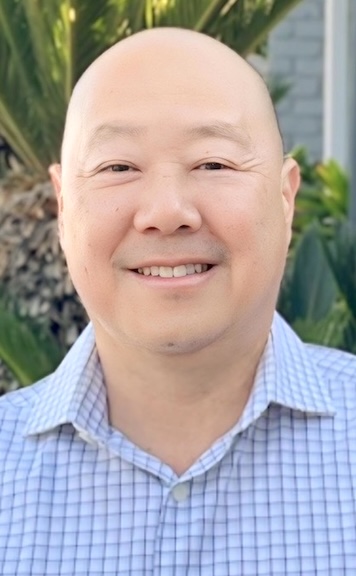
Scott Ito (Photo: Courtesy of Scott Ito)
When the first plane hit Tower 1, Ito was volunteering at a polling place nearby. “When the first plane hit, I think most people thought it was a plane accident. I remember just hearing I think every police car and fire engine start heading toward lower Manhattan — you knew that something was wrong.” In the moment, he said people were worried that bombs had been placed in the building.
In the aftermath, Ito said, “I just remember working nonstop during this time for about a year and half.” He would later move back to his hometown of Pasadena, Calif., after getting married in 2003. “I was newly married and just starting a family right at that time. … Since that time, I now have two daughters in college.”
As for whether he may have had some level of post-traumatic stress disorder, Ito via email said that he did not immediately have time to process the severity of what he had witnessed and “probably repressed a lot of what I had seen (similar to our JA ancestors from the internment camps).” But Ito recalled how, in 2016 — 15 years after 2001 —his family and he visited the lower Manhattan memorial and that prompted “strong emotions and conversations with his children.”
Today, Ito says he still has those memories from when the towers collapsed like it was yesterday. “We should continue to support those that were lost on that day, but at the same time, I am hoping that as Americans we can better differentiate who the real enemy is.”
Ito puts Sept. 11, 2001, into the context of Sept. 11, 2026, when ICE agents can arrest and detain anyone at any time who fits a certain profile, citizen or not. “I hope that as Japanese Americans, we can continue to advocate for those that went through the same atrocities that our families went through.”
♦ ♦ ♦
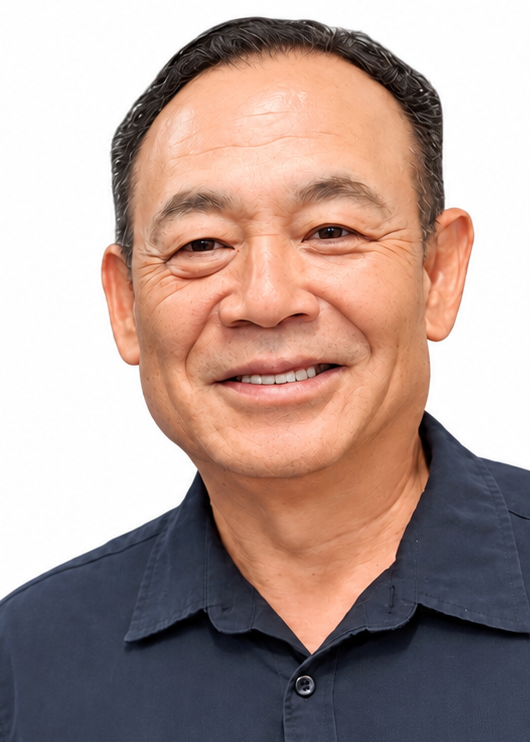
Robert “Bobby” Ideishi (Photo: Courtesy of Bobby Ideishi)
Ideishi experienced a harrowing escape from the North Tower, where his class was taking place. The first jet’s impact shook the building. “When the building started to creak, we thought it was a bomb at first, and we thought another bomb was going to go off,” he recalled. A couple of other thoughts would occur to him later. One was that he was “very, very fortunate to be in the North Tower, the first tower, because that was the one that took the longest to collapse.”
Another thought: “When the building got struck, we didn’t know where to run, and there were three stairwells. There was a maintenance worker that was guiding us into the one stairwell that was still lit,” Ideishi remembered. “The other stairwells had no lights. They were just consumed with smoke. This stairwell had smoke, but it was lit up, and that’s where he directed us.”
To this day, neither Ideishi nor anyone who was in his group knows that man’s name. “When I went back two months later to meet with the people I was with there, they all remembered him. … He saved a lot of people, and I hope he survived himself, that he didn’t stay up there too long.”
After returning home to the Los Angeles area — via bus, thanks to the grounding of all commercial flights — Ideishi remembers his state of mind. “I was a little numb. I wasn’t sure how to deal with my family. I wanted to not look weak and not look like I had fallen apart because I actually hadn’t. But I was a little vulnerable at that time. I couldn’t sleep. I would stay up to the wee hours of the night or just sleep for an hour or two, wake up, and turn on the news because I wanted to hear everything that was being reported about what happened that day and why and who.”
In November of that year, some mutual friends suggested taking some time to bring everyone’s families to a timeshare in Palm Desert. Again, he couldn’t sleep, so he went to the living room and turned on the TV news, Ideishi said. He remembered being triggered by the reports of American Airlines Flight 587 from New York to the Dominican Republic crashing into a neighborhood in Queens on Nov. 12. All aboard were killed, along with five on the ground.
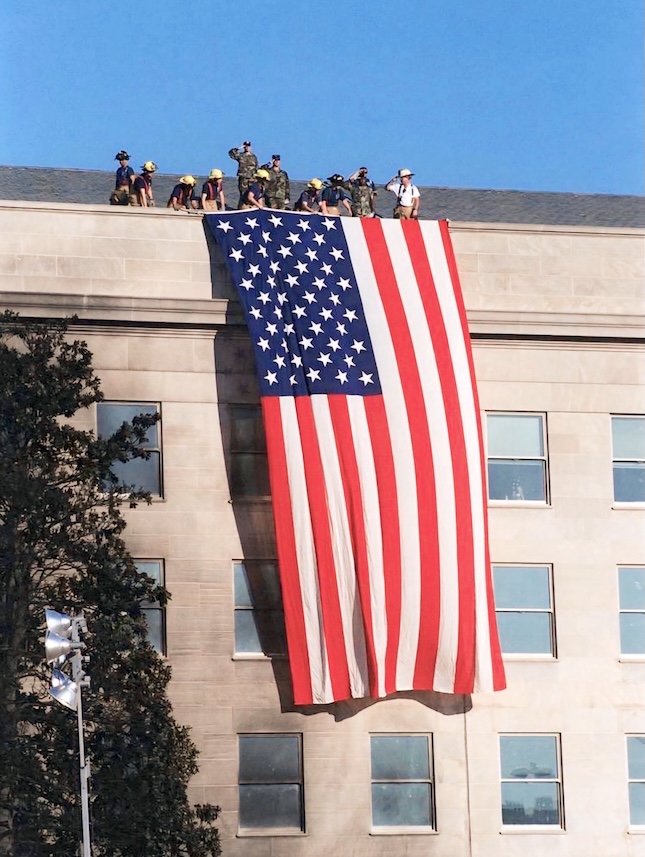
Military personnel and firefighters unfurl a large American flag from the roof of the Pentagon during the Sept. 12, 2001, visit of President George W. Bush in the aftermath of the 9/11 terrorist attack the day prior. (Photo: Courtesy of the Prints and Photographs Division, Library of Congress)
“I wanted to yell at the TV, but I didn’t want to do it, you know, where everybody could hear me,” Ideishi said. Instead, he walked out to his car, rolled down the windows and started driving. “I was screaming, really letting it all out. There were hardly any cars on the freeway, but I was just screaming, and then I said, ‘That’s enough.’
“And I went back to the house, walked in the front door, sat myself down in front of the TV to watch the news again and, honestly, I felt fine. I felt it was weird, but I felt fine.”
That may be why he is committed to sharing his experiences of that day, something Ideishi has done several times since 9/11. “I guess I’ve resigned myself to the fact that I was one of the fortunate ones, and it’ll always be part of my life. I don’t dwell on it, but I am not uncomfortable speaking about it to other people.”
Something Ideishi, who is now retired, admits to nowadays, however, is being uncomfortable in a crowd. “I don’t like being in huge crowds where that might be targeted for something, and I always make up some excuse.”
On the anniversary of 9/11, Ideishi allows how it does still hit him each time. But a couple of other things can trigger those memories. On Sept. 10, in the WTC Plaza, the country act Rascal Flatts played at lunchtime. That and thanks to the wonderful weather, he remembers how everybody was having a “great time” on 9/10. “When I hear Rascal Flatts, when they’re on TV for some reason, oh, that brings me back. That brings me back.”
Another musical trigger is “Take It Easy” by the Eagles. “On my bus ride home, we actually went through Winslow, Ariz. There was a line in there about Winslow. So, whenever I hear that song, I go, ‘Man, that makes me remember the bus ride and everything that happened that day.’ ”
To see the Pacific Citizen’s Sept. 21, 2001, coverage of 9/11, visit tinyurl.com/3843y4pv.
To view “Norman Mineta and His Legacy: An American Story,” visit flysanjose.com/history/norman-y-mineta. The interview with President Bush begins at the 47:33 mark.
To read a detailed report of Ideishi’s experiences on Sept. 11, 2001, published in the Rafu Shimpo, visit tinyurl.com/mr4yud8d.