
Reflections on Pearl Harbor and the Aftermath of the Alien Enemies Act

Katie Masano Hill
I began my journey as the Norman Y. Mineta Fellow with JACL at the end of January, unaware that history would soon echo into the present.
Less than two months into my fellowship, the Alien Enemies Act, a law used to justify the detention of Japanese immigrants immediately after the bombing of Pearl Harbor and during World War II, was invoked.
This law, which allowed the government to arrest, detain and imprison people based solely on their nationality, resulted in the incarceration of thousands of Issei under suspicion, even though not a single person was ever found to be a traitor.
On the 84th anniversary of Pearl Harbor, we must seize this moment to honor their resilience and remember the hardships the Issei faced. These experiences resonate today as we confront ongoing immigration injustices, including the reopening of Fort Bliss as the largest ICE detention center in the United States, reminding us of the dangerous continuity of xenophobia and systemic racism.
While working to repeal the AEA, I discovered that I am a descendant of those affected by it. I had always thought my family’s story was limited to Tule Lake and Heart Mountain, but it reaches far beyond, spanning Fort Missoula, Santa Fe, Lordsburg, Topaz and Fort Bliss, where my relative, Kahei Sam Morikawa, was interned.
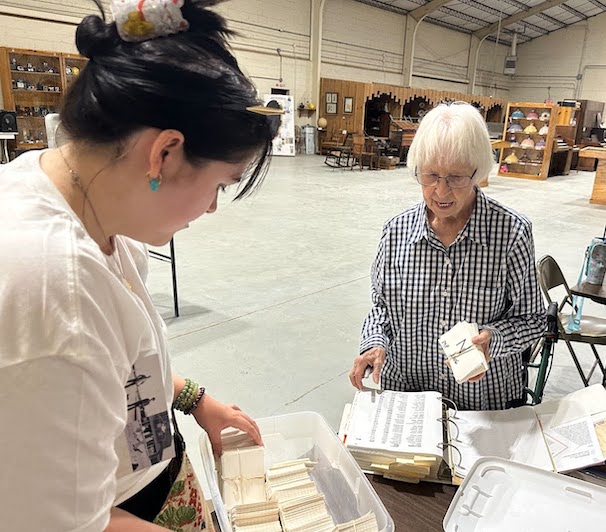
Katie Masano Hill and Mollie Pressler of Camp Lordsburg at the Lordsburg Museum (Photo: Julie Abo)
Kahei’s story, like many others, is essential for understanding the harm and long-term ramifications of the AEA. Through my fellowship, not only have I learned about my own history, but I have also helped share these stories and honor them in person.
I attended the JACL National Convention in Albuquerque, where the AEA Stories project was featured, traveled to Santa Fe to visit the historical marker alongside fellow descendants and joined a remembrance and incense ceremony at the site in Lordsburg where two Issei were killed.
The work continues. Through the AEA Stories Project and efforts to expand the descendant amicus brief, we honor these histories while confronting present injustices.
As you read this reflection, I will be in Japan on the Kakehashi Project, a journey that brings the story full circle. From the Issei who were forcibly interned because of their heritage, to the picture bride Masano I am named after, to me as a Gosei, the effects of the AEA continue to echo across generations.
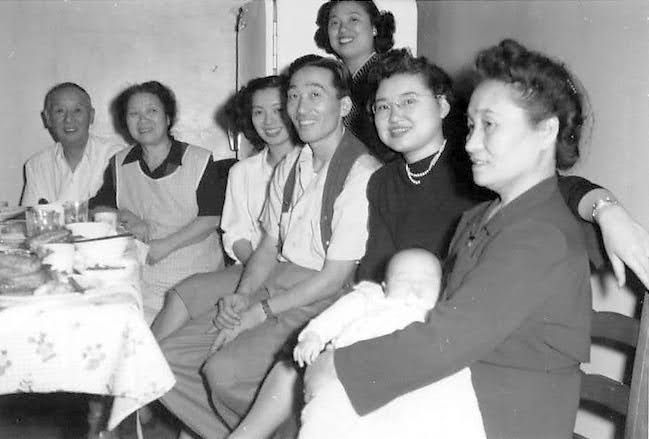
A family photo of Kahei Sam Morikawa, Masano Nakatsuka and family (Photo: Courtesy of the Morikawa Family)
In the wake of the Pearl Harbor anniversary, I am reminded that the Issei endured unimaginable hardship for the sake of their children, kodomo no tame ni. This journey, too, is part of that legacy: a continuation of their hope that future generations might live with dignity, remembrance and justice.
Katie Masano Hill is the JACL’s Norman Y. Mineta Policy Fellow and is based in the organization’s Washington, D.C., office.