
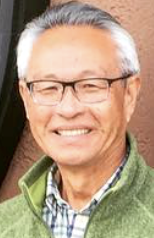
Ron Ikejiri
Growing up in the 1950s, we watched and learned first-hand that the Issei and Nisei never felt entitled.
- They knew that life would not wait for them to be OK!
- They got up, they carried the burden of the day.
- They kept going.
- They did it with patience.
- They did it with dignity.
- They were respectful of others, even if others were not respectful of them.
Issei in their new land of opportunity and facing various forms of hardships, race discrimination and economic struggles . . . The Issei did not wait for things to get better.
- They kept the belief that their sacrifices were for kodomo no tame ni (“for the sake of their children”).
- They exhibited gaman (“perseverance”).
Today, we find a new generation of Yonsei and Gosei that have little or no knowledge, understanding or appreciation of their roots and the sacrifices of the Issei and Nisei.
Simply stated, some feel they are ENTITLED to everything that they may enjoy today by just being.
While time will tell, my observation is that the Yonsei and Gosei may go through life with the unfortunate experience of not making any bold statement of their roots and exude exclamation marks in their respect and pride of their American Japanese ancestry experiences.
To give meaning to the Issei and Nisei experience, one last time (mo ichido), I ask that the Sansei baby boomers make themselves available to be ADOPTED by a Yonsei or Gosei and share with them your personal life stories. We are not talking about formal meetings or seminars. We are talking about one-on-one chats.
Share with them just “how cool” it was to have Bachan’s salty onigiri and cold tempura and karaage chicken sitting at the beach or on a mountain hike.
Share with them just how trendy in your Japanese home, dinner was more often than not,nokori no mono or “leftovers.”
Share with them the truthful meaning of leftovers — that it was all there was to eat with the limited funds that so many Issei and Nisei had during those early years.
Share with them Mom telling you to eat every grain of rice because she reminded you that because of the war on the Korean peninsula in the 1950s, the kids your age had nothing to eat.
During all of these chats, interject a thought or memory of Jichan or Obachan . . . Mom or Dad’s moments of joy, sadness and challenge. It will make the moment memorable for the Yonsei or Gosei that adopted you.
The late-U.S. Sen. Spark Matsunaga from Hawaii once shared with me some 48 years ago that “only through personal suffering will you truly appreciate the sacrifices of your parents and grandparents’ generation.”
What was meant is that through adversity, we learn patience and dignity.
Share with them how appreciation and gratitude was learned and taught not by some grand gift or awesome event . . . but by daily little gestures of kindness and supporting one another, a little bit of kimochi or “heart,” one thoughtful gesture at a time.
We Sansei Baby Boomers may not measure up and be stronger than the Issei and Nisei. But . . .
- We can be the bridge to the Issei and Nisei for the Yonsei and Gosei.
- We need to do it now in 2026, as so many of us are leaving each day.
So, please resolve to be that bridge. Rekindle not only our memories of the Issei and Nisei life stories, but also share them with the Yonsei and Gosei.
The Issei and Nisei made the American dream a reality for the Sansei, and we have a on and giri or “duty and responsibility” to share the roots of that American dream to help them to step up boldly, make an exclamation mark statement and take their “rightful” place furthering the Japanese American contributions to the American way of life.
- Do not guzu-guzu or “put it off.” Do it now.
- Time is fleeting.
- Tomorrow is too late.
- Get it started today.
Onegai shimasu . . . Yoroshiku (I am counting on you)!
Ron Ikejiri is an attorney and the former JACL Washington, D.C., representative.