
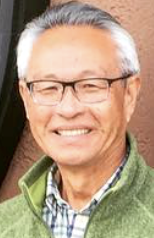
Ron Ikejiri
Recently, a group of old Sansei (yes, I know most think Sansei are “old”) got together to share ideas on the future of the JACL. The question posed to everyone: “Has the time come for JACL to fade into history?”
The bottom line: “Not Yet!”
Collectively, there remains a story to be told about the Japanese American experience past, present and future.
The JACL was founded by Nisei in 1929, with the mission to secure and maintain the civil rights of Japanese Americans. For nearly 100 years, dedicated volunteer boards gave their unselfish support, both in time and resources, to the goals of the JACL. They kept the faith.
Today, that faith is being challenged.
Among the issues that we discussed:
Question: How can the JACL represent the interests of 1.6 million-plus Japanese Americans with a membership of 7,000?
With a membership of 7,000, how credible can the JACL represent the voices and concerns of the Japanese American community at the table of national, state or even local public policy decision-making?
With an enhanced and increased representative membership, the JACL can remain a strong advocate.
Simply stated, we need to increase the JACL membership to have a stronger voice at the table.
JACL GOVERNANCE
In reviewing the JACL Constitution and Bylaws, the essence of the composition of the board is unchanged for 97 years.
- Governors from each district and elected officers
- Currently, you have 15 JACL voting national board members to oversee eight paid staff?
- What is wrong with this picture?
- Are there better governance models that should be considered at the JACL National Convention by the delegates in July 2026?
Among the qualifications for National JACL offices, the elected officers should have established paths to national, state and local public policymakers.
FOCUS ON FISCAL MANAGEMENT
The JACL budget is approximately $2.4-plus million per year.
Summary:
$1 million Legacy Fund Revenue
$455,000 Membership Dues
$1 million Grants/Gifts other
With a combined revenue of $2.4 million, the JACL has been experiencing a deficit of over $200,000-$400,000 or more, with the added cost of sponsoring the July 2026 JACL National Convention in Las Vegas.
Six months ago, a group of Sansei were asked if we could find benefactors, donors or secure in-kind grants to support the JACL to help decrease the deficit.
I asked for basic numbers regarding the JACL operations, and through research and best-guess interpolation, we came up with the values above. It may not be perfect, but it is close.
The most difficult task is to raise money for an organization that has a fiscal deficit. There are not many that will give freely to an organization that is facing a budget deficit.
It is understandable, with any program, that there will be situations where there are unintended deficits. But, what programs are running a deficit, and why?
What identifiable programs in the past decade have made an impact on the lives of Japanese Americans nationally and locally in a substantive manner? What measurable gains have been made to improving political, economic opportunities for Japanese Americans? What is the quantitative measure that the JACL uses to identify the impact of its programs to return a benefit to the membership?
Advocacy? Leadership? Professional Networking? Community Services?
At the JACL National Convention in July, prioritizing the goals and the objectives of the members is the singular most important act of the delegates.
To overcome the tendency to try to accommodate everyone’s wishes, the delegates and, ultimately, the National Board must adopt only those programs that can achieve the collective goal.
Too often, the scattershot approach to have multiple programs in NAME ONLY may make everyone feel good, but the net result is that there is no measurable progress or achievement.
APPOINTING A NEW EXECUTIVE DIRECTOR — NOT NOW
The JACL National Board has been in the process of vetting and will soon consider the hiring of a permanent executive director.
- The question is: What will the new executive director direct?
- So, the JACL National Board hires an executive director (for $180,000-$220,000, the current market rate for nonprofit executive directors nationally of the same size of the JACL) and expect WHAT from the new ED?
- Prepare the JACL for dissolution?
- Increase membership?
- Enhance advocacy?
- Identify programs?
- Recommend changes to the governance board model?
- Oversee staff? What staff?
It appears that the National Board is looking to the executive director to be the problem solver of all things wrong with the JACL. That is not the job of the ED.
It is the JACL National Board’s fiduciary duty and responsibility to provide the direction and solutions.
The executive director implements the direction and solutions of the National Board. The JACL National Board will change at July’s National Convention.
It would be unfair for any new executive director to be hired for three months and then find that the JACL National Board’s direction is 180 degrees opposite to their expectation of the job description.
Professionally and personally, whoever is appointed as the executive director — that job may only be for a short time and may adversely affect that person’s future professional development and opportunities.
Perhaps at that time and on the floor of the convention, the JACL delegates will be able to redirect the focus of the organization in light of today’s ever-changing domestic and international challenges, and a fully informed and suitable executive director can be engaged.
MEMBERSHIP NO. 1 GOAL FOR THE NEXT BIENNIUM
Starting from the July National Convention, propose ALL members of the JACL National Board to pledge and accept the responsibility of recruiting a minimum of 100 new members per year or do not volunteer to become a JACL National Board member.
That is the equivalent of four new chapters per board member per year. Or 60 new chapters by the board every year! (Note: You need 25 members to create a new JACL chapter.) Over four years, that is 240 new chapters. The JACL currently has approximately 70-75 active chapters.
That would be 1,500 new members, and over a four-year period, a total of 6,000 new members!
In addition, ALL members of the JACL National Board commit to raise $100,000 or more every year. That would be another $1.5 million toward the Legacy Fund for operational grants or $6 million over four years.
I recognize that the JACL National Board is a volunteer board, but the reality in today’s nonprofit organizations is that it takes members and funding to sustain goals. Also, by having the board “buy in,” the JACL programs using their personal network, the oversight and success of JACL-approved programs will be kept “on target” and within budget.
Greater efficiencies and success may be achieved.
It is too easy to have the JACL National Board spend “Other People’s Money,” such as the annual expected income of $1 million from the Legacy Fund, without it having any liability or risk in their decisions. If those on the National Board actually raised funds for the national programs, then there would be greater oversight of the program’s success and budget reviews.
No more “throwing money” at a program and not be responsible for raising the funding for the program and not be actively involved in its success. No more budget deficits.
Final note on the JACL National Board: Over the years, we have seen well-intended individuals want to serve on the board to help build up their résumé. We are in SURVIVAL MODE, and the JACL needs problem solvers, not users.
THE PACIFIC CITIZEN — HANDS OFF!
There is only one common glue in the past 97 years that has kept the interests of the JACL together, and that is the PACIFIC CITIZEN. In both print and digital formats, the P.C. represents the single most-important benefit for the JACL membership, as well as a principal communications tool with public policy decision-makers in Washington, D.C., at state capitols and local governmental entities.
While there has been discussion that the P.C. is expendable and should be eliminated for budget reasons, any move toward ending the publication in print or digital form is misguided.
A forensic review of the P.C. and its operations may find that the P.C.’s income stream actually contributes to the net bottom line of the JACL’s overall operations, and characterization of line items and allocations may fit accepted accounting practices but are inconsistent with the reality of actual operations.
In addition, the P.C. has the legacy institutional knowledge of the JACL, which can be the starting point for All Things Digital for the JACL going forward.
Bottom Line: “Hands Off the Pacific Citizen!”
SILOS vs. UMBRELLA
Throughout the United States, there are hundreds of Japanese American local museums, historical societies, cultural programs, speaker events, Days of Remembrances and celebrations that commemorate sports, academics, arts, architecture, literary, military, political musical and entertainment achievements of Japanese Americans.
We have many SILOS, but for anyone wanting to know more about Japanese Americans, they must hunt through hundreds of websites and links for such information. The JACL as the only national organization representing Japanese Americans can become the digital UMBRELLA.
In addition to public policy advocacy, the JACL can be the LINK and resource to direct interested Japanese American and related Japanese topics and issues, past and present. For example, if you want an oral history interview on any subject matter, the JACL will have a direct link to Densho. If you want the history of Go For Broke, JACL will have a direct link. And so forth . . . .
ARTIFICIAL INTELLIGENCE (AGENTIC)
From day-to-day operations, membership, human resource/personnel and development of specific initiatives and programs, the JACL must adopt and be prepared to “buy in” to AI systems to provide efficient delivery to its members.
AI Agents (i.e., AGENTICS) will reduce the staff from ministerial tasks and allow staff to use their creativity to enrich the JACL membership experience.
REVENUE SHARING . . . ‘ALL POLITICS IS LOCAL’
Perhaps the time has come for the JACL National Board to no longer ignore the importance and needs of the District Councils outside of the Pacific West Coast. When I served as the Washington, D.C., representative of the JACL in the late 1970s and early ’80s, the Eastern, Midwest, Intermountain, Central District Councils carried more than 80 percent of the geographical responsibility to advocate the public policymaking positions to their respective local, state and federal elected officials.
Because the JACL’s membership is heavily weighted toward the Western Coastal states, there is an image that the JACL represents the “liberal left coast,” from a Washington, D.C., perspective.
This image and perception must be changed. To truly become a national voice, the JACL should allocate more of its program funds toward these District Councils that have been ignored.
If the JACL wishes to grow its membership, then it can no longer ignore the importance of these vital District Councils. The JACL must have the balance and interaction of regional and local political viewpoints because as the powerful and venerable Tip O’Neill, former speaker of the house from Massachusetts once said, “All politics is local.”
So, has the time come for JACL to fade into history?
Not yet!
The unanimous consensus of the older Sansei that met was that we have a duty and obligation to the Issei and Nisei to continue to not only tell their story but also add to it by continuing their legacy through the national JACL organization.
In the late 1970s to early ’90s, Japanese Americans had a strong voice at the table of national political public policymaking.
During those two decades, Sen. Inouye, Sen. Matsunaga, Sen. Hayakawa, Congressional members Mink, Mineta , Matsui and Mike Masaoka, JACL’s longest-servicing Washington representative, used their respected positions and their personal relationships so that the Japanese American community could have a voice and seat at the public policymaking table. By the mid-2000s, the voice at the table of national political public policymaking became muted.
During this period, in the background, Frank Sato, former JACL national president and one of only two Japanese Americans to ever be confirmed by the U.S. Senate as a presidential appointee (inspector general of the Department of Transportation, appointed by President Jimmy Carter, and inspector general of the Veterans Administration, appointed by President Ronald Reagan), was able to provide the Japanese Americans a voice at the table during the redress years.
The other Japanese American to be confirmed twice by the U.S. Senate was Norman Y. Mineta (secretary of commerce by President Bill Clinton and secretary of transportation by President George W. Bush).
During a 40-year period, the JACL had a presence and access to the West Wing of the White House with Presidents Ford, Carter, Reagan and Bush1, Clinton, Bush 2 and Obama.
Today, in 2026, it does not appear that we have a seat at the table.
We are dismissed or discounted because we lack a base on which political leaders believe can make a difference in how they make their decisions.
The challenge for the JACL delegates at the July National Convention is to commit to undertake programs and initiatives to regain a seat at the table of political decision-making at every level of government.
Going forward in 2026, the new member target of the JACL is not the Sansei. It is the children of the Sansei — the Yonsei, Gosei and Rokusei.
More recently, while watching a Go For Broke interview with the late-Yosh Nakamura, a 442nd RCT Nisei Veteran, with Torch Bearer Juli Yoshinaga (granddaughter of “The Horse’s Mouth,” the late George Yoshinaga), it became clear that Yonsei do have a desire and are curious of their grandparents’ Japanese American experience.
I know that in the future — perhaps not today, not tomorrow, but there will be a day — a Yonsei or Gosei will want to know more of the Issei, Nisei and Sansei experience, whether it be in war or peace.
The JACL, as the only national organization representing Americans of Japanese ancestry, must be there for them. Thus far, the JACL has been there for 97 years. Can we make it to 100?
The time has come to renew our commitment to rekindle the spirit that has always represented the JACL. Just like the Issei upon their arrival in America to a not-so-welcoming hostile environment, where they persevered and sacrificed “for the good of the children … “Kodomo no tame ni.”
Enough talk. Let’s get to work . . . for the next 100 years.
Ron Ikejiri is an attorney and the former JACL Washington, D.C., representative.