The multimedia textbook
‘Foundations and Futures’ brings college-level curricula to all.
By George Toshio Johnston, P.C. Senior Editor
‘There is nothing new in the world except the history you do not know.’
— President Harry S. Truman
Since the inception of Asian American Studies at the university level in the 1960s, the field has grown steadily, overcoming various roadblocks, setbacks and obstacles along the way.
 But Asian American Studies shares a trait with most other fields of study: the printed-on-paper textbook, something that hasn’t changed all that much over the decades. In other words, a textbook printed in the 19th century might not be all that different — with the exception of color and the inclusion of photographs — from a textbook printed in the 21st century.
Someday, however, May 9, 2026, may be seen as akin to the day in the 19th century when a golden spike was used to symbolically and physically link at Promontory Summit, Utah, the transcontinental railroad.
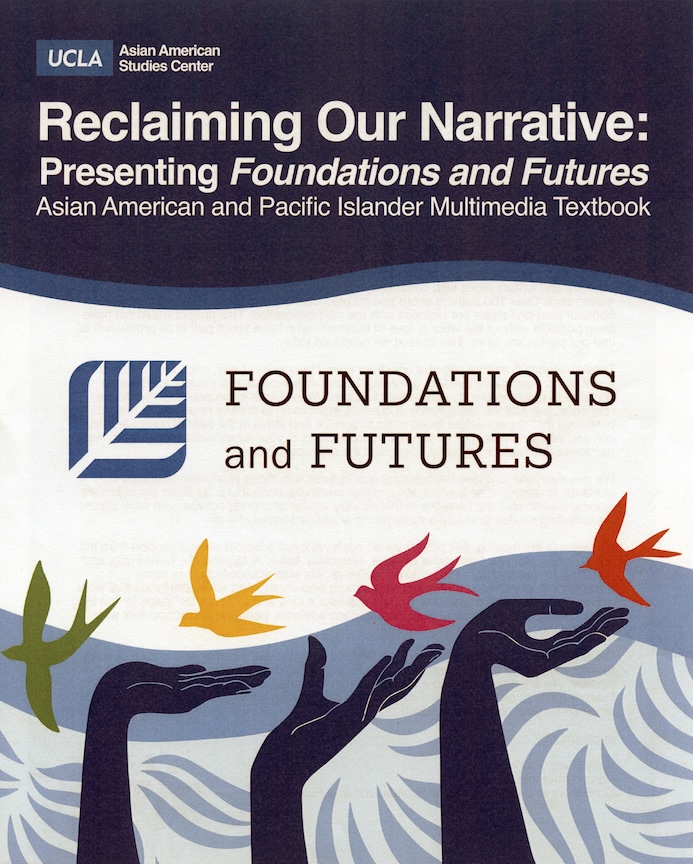
That is because on that Saturday, one day short of what happened 157 years earlier, Asian American Studies became linked with modern communications technologies to launch at the UCLA Luskin Conference Center the Asian American and Pacific Islander multimedia textbook: “Foundations and Futures.”
But unlike that day on May 10, 1869, when the Chinese laborers who worked on the west-to-east leg of the railroad project were excluded from that celebration and photograph — something an Asian American studies major would surely learn about — Asian Americans and Pacific Islanders were present in large numbers to welcome the groundbreaking initiative.
“Today, we launch the inaugural edition of the most-comprehensive single collection of Asian American and Pacific Islander histories and experiences ever published,” said Dr. Kelly Fong, “Foundations and Futures” co-editor and co-director with regard to the $12 million project, six years in the making with 105 authors, numerous curriculum developers and 200 staff, consultants, interns and volunteers who were needed to manifest that “pipe dream to bring Asian American studies into every home.”
To “Foundations and Futures” co-editor and co-director Dr. Karen Umemoto, who is also the director of the UCLA Asian American Studies Center, that dream was encapsulated in a word: “democratization.”
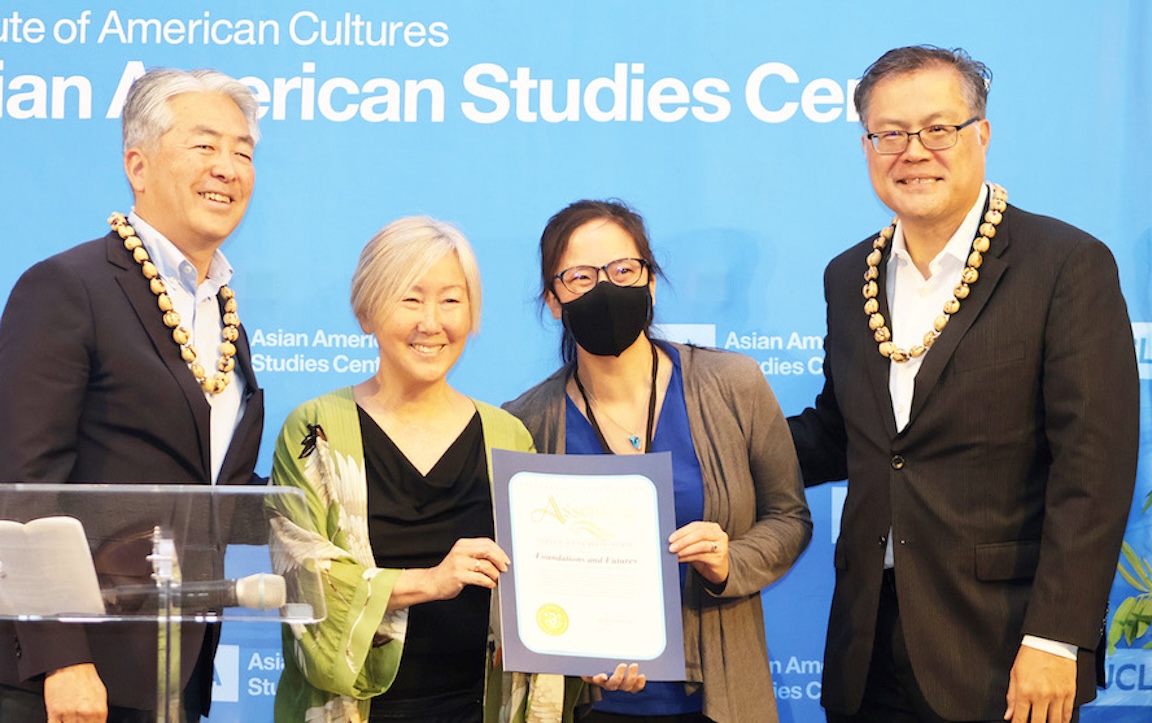
Al Muratsuchi (left) and Mike Fong flank Dr. Karen Umemoto (second from left) and Dr. Kelly Fong as the “Foundations and Futures” co-editors and co-directors show off the certificate of recognition they received from the California assemblymembers. (Photos: George Toshio Johnston)
“Much of our histories . . . remain inaccessible behind paywalls of scholarly journals and in the stacks of university libraries,” said Umemoto. “In Asian American Studies, classes largely remain just at the university level, with a sliver of instruction in K-12 classes. And the current movement against DEI and in the form of book bans and lawsuits have silenced many teachers and educators in school districts across the country.
“So, ‘Foundations and Futures’ is, in many ways, an intervention,” she continued. “It represents the democratization of knowledge to make little-known Asian American and Pacific Islander histories visible and accessible.”
Umemoto underscored the importance of the multimedia textbook’s launch by twice invoking a quote by George Orwell from his novel “1984”: “The past was erased, the erasure was forgotten, the lie became the truth.”
A visit to the site — foundationsandfutures.org — immediately demonstrates why, as a multimedia textbook, “Foundations and Futures” is so groundbreaking, especially when compared to a traditional textbook.
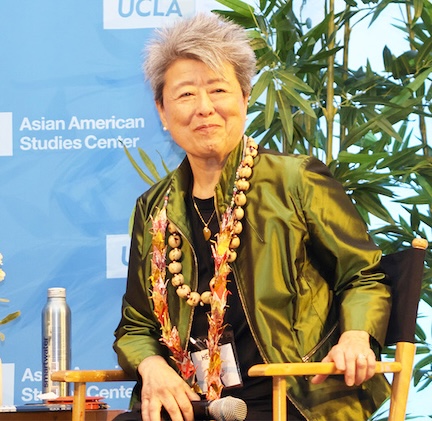
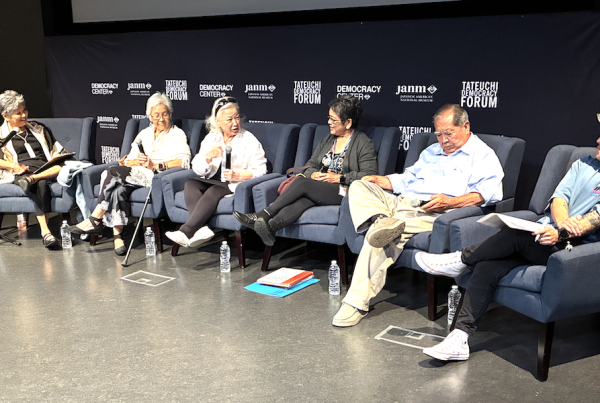
Journalist and activist Helen Zia was part of the panel titled “The Power of Story: We Are Legacy Bearers.”
To wit: Anyone, anywhere in the world, with a broadband connection may access the site’s content, whether the interface is a computer, a tablet or a smartphone. Next is the inclusion of not only photographs but also audio and video. A viewer can also change the point size, font and use Google Translate to change the language. And if a correction or addition is needed? No need to wait until the next print run of a traditional textbook.
Reinforcing how a multimedia textbook offers more than a traditional printed textbook, journalist and documentary filmmaker (“Free Chol Soo Lee”) Julie Ha (see March 22, 2022, Pacific Citizen, tinyurl.com/ms7wbpsc), who authored the chapter titled “Free Chol Soo Lee: How a Lone Immigrant on Death Row Sparked a Movement,” wrote in a Facebook post: “The chapter actually features some clips from the documentary, as well as compelling images from the Free Chol Soo Lee movement, quotes from activists and lines from Chol Soo Lee’s poetry, which he penned while in prison.”
The kicker: Unlike a traditional college textbook, which can literally cost more than a hundred dollars, the cost to utilize “Foundations and Futures” is zero, as long as one has the requisite internet-capable device.
But with a $12 million price tag, that doesn’t mean making it was without cost. Far from it.
“We were writing grants chapter by chapter. At the very beginning, it would have taken us 50 years to finish it,” Umemoto noted. Thanks, however, to some Asian American politicians, financial help was available.
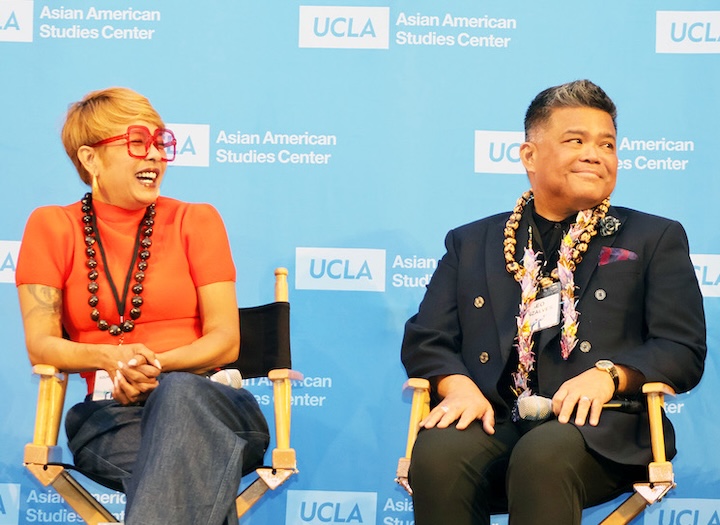
Akemi Kochiyama-Ladson and Theodore S. Gonzalves during the “Power of Story: We Are Legacy Bearers” panel discussion
“The California API Legislative Caucus championed a $10 million allocation to the Asian American Studies Center to create a multimedia textbook so that when ethnic studies graduation requirements in California public schools would go into effect, teachers and professors would have easy access to our stories,” said Umemoto.
Umemoto credited Assemblymembers Al Muratsuchi, Mike Fong and Phil Ting for making that happen. “We wouldn’t be here without them,” she told the audience.
Muratsuchi and Fong were then welcomed to the stage and would present to Kelly Fong and Karen Umemoto a certificate of recognition. “It was my privilege to be able to work with Assemblymember Fong and Assemblymember Phil Ting, who was the budget chair at the time, and the Asian Pacific Islander Legislative Caucus to deliver this $10 million for this very important project,” Muratsuchi said. Waxing personal, he added, “Asian American Studies gave me a sense of identity. It gave me a sense of purpose. And it’s what really triggered my student activism, which eventually led to my political activism.”
Added Mike Fong: “These are challenging times that we’re in right now, with the federal administration targeting so many diversity initiatives. Today is a day to celebrate our history, to celebrate our narrative and to reclaim that narrative and to share that narrative going forward.”
Umemoto and Kelly Fong would later point out, however, that they were still raising funds to ensure completion of “Foundations and Futures” and implored those in the audience to fill out a donation form. They also touted a crowdfunding campaign, which ended June 30 but is still accepting donations (see tinyurl.com/nhdhaazt).
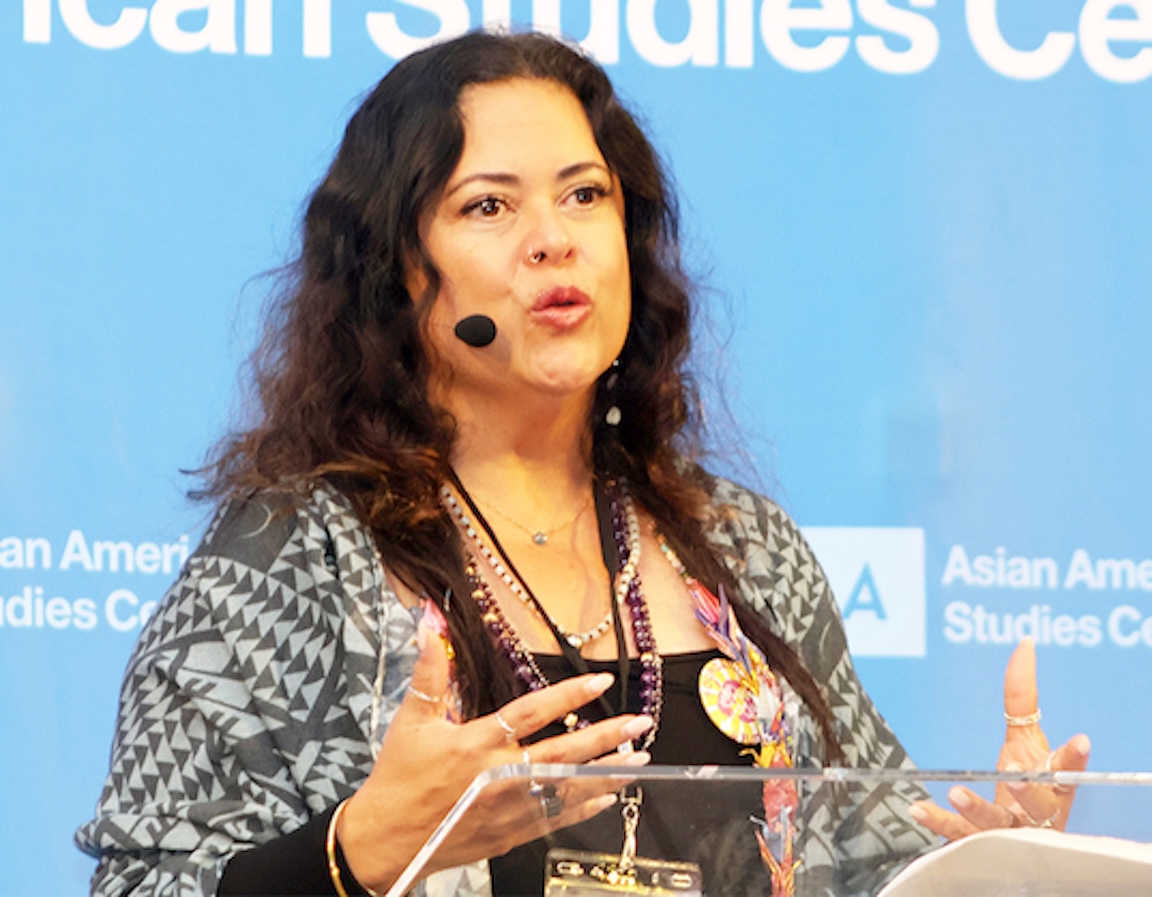
Keynote speaker Dr. Maya Soetoro
One of the highlights to the program was the keynote address by Dr. Maya Soetoro, faculty specialist in the College of Social Sciences at the University of Hawaii at Manoa and UH’s liaison to the Obama Foundation. She was introduced by Institute of American Cultures Vice Provost David Yoo.

Virginia Nguyen speaks during the Storytelling Pair-and-Share part of the program.
Another was a panel discussion titled “The Power of Story: We are Legacy Bearers,” moderated by Thuy Vo Dang and featuring Akemi Kochiyama-Ladson, Helen Zia and Theodore S. Gonzalves. That was followed by a Storytelling Pair-and-Share featuring Virginia Nguyen, who served as a curriculum writer of the textbook’s Vietnamese American chapter.
Providing video messages were actor Randall Park, Reps. Judy Chu (D-Calif.) and Ted W. Lieu (D-Calif.) Serving as the event’s masters of ceremony were Arlene Inouye and Christian-Joseph Macahilig. Providing entertainment were a cappella group Naya Zamaana, Kyodo Taiko at UCLA and Tasi of One Man Band.
As for whether “Foundations and Futures” achieves all of its stated objectives, as well as reaching its remaining fundraising goals, Kelly Fong expressed hope that at the very least, it “activates discussion, heightens curiosity and prompts all of us to engage in the world around us, to be better informed by our past and to be more equipped to shape our futures.”
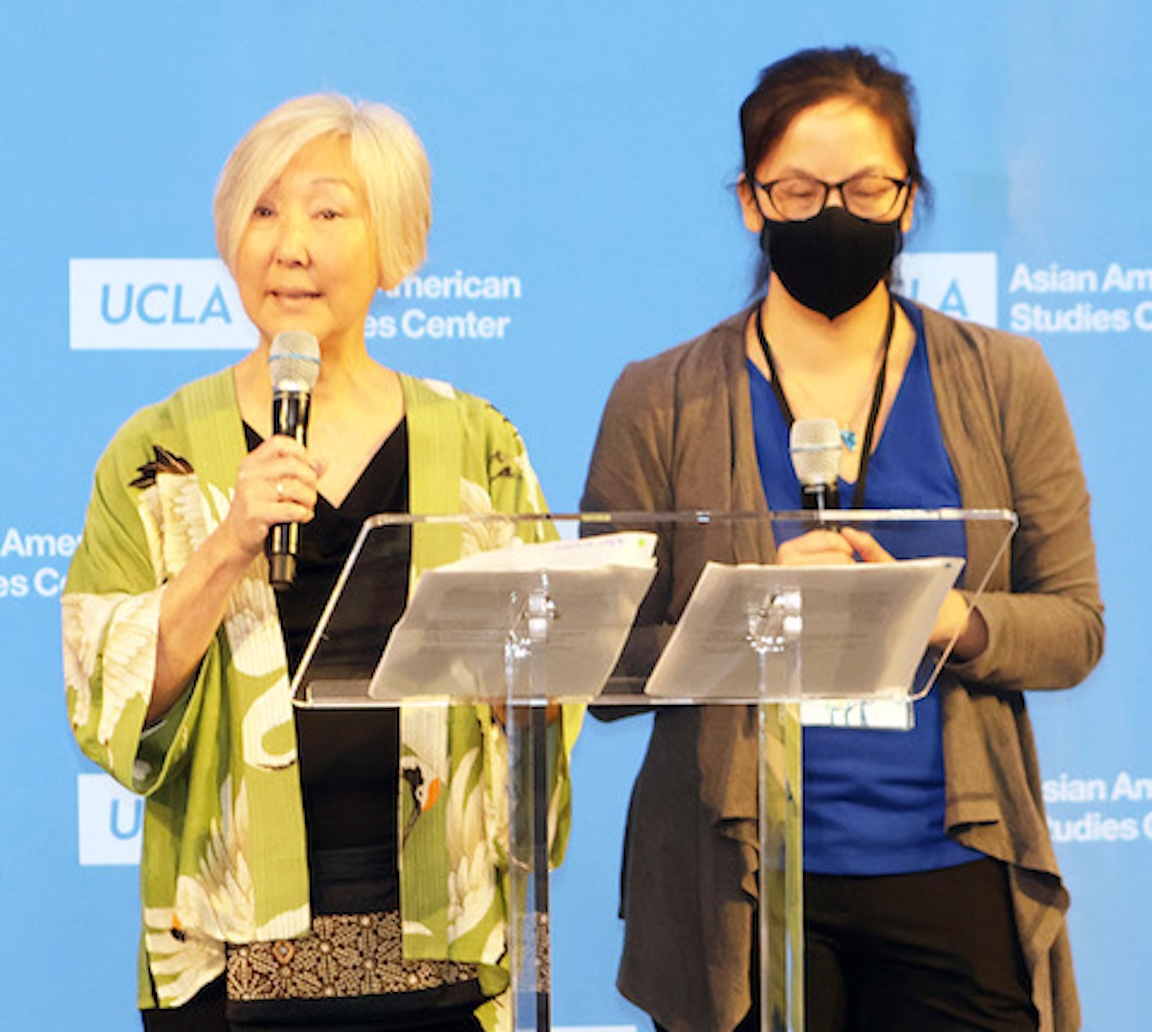
Dr. Karen Umemoto (left) and Dr. Kelly Fong share the stage at the “Foundations and Futures” multimedia textbook launch.