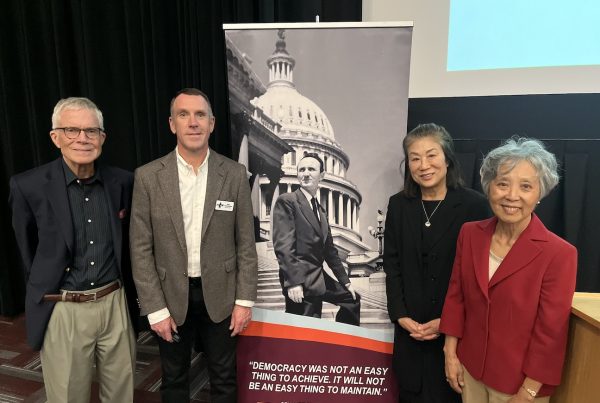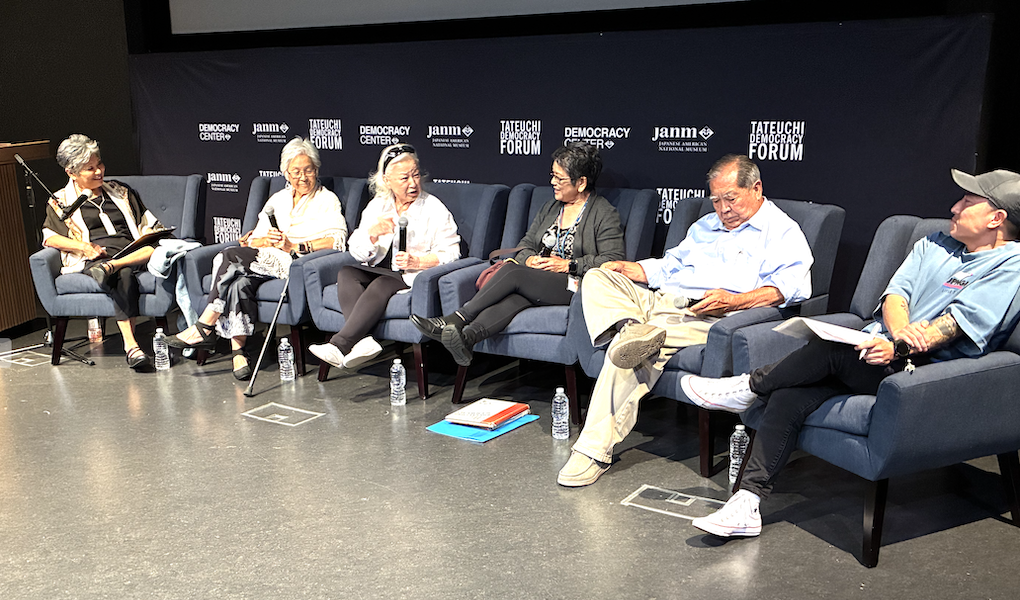
Far left, Wendy Tokuda moderates a discussion on intergenerational trauma in the Japanese American community on Sept. 27 at the Democracy Center in Little Tokyo. From left: Tokuda, Satsuki Ina, Janice Tanaka, Janice D. Tanaka, Ron Wakabayashi and Peter Gee. (Photo: Gwen Muranaka)
Panel discussion follows screenings
of films that addressed post-WWII challenges.
By Gwen Muranaka
“Well, who the f—k wouldn’t be paranoid!?” exclaimed filmmaker Janice Tanaka, as she recalled how her father Jack Koto Tanaka went from writing a letter to the president protesting the incarceration to being institutionalized in a mental health institution to living on Skid Row.
Two of Tanaka’s deeply personal films that delve into her family history were screened on Sept. 27 at the Democracy Center at the Japanese American National Museum in Little Tokyo as part of “When You’re Smiling: Screenings of the Intergenerational Impact of Incarceration,” an emotional day of exploring the many ways the trauma of wartime incarceration was passed from the Nisei generation to their Sansei children.
In a nod to the difficult subject matter, attendees were given advance access to the films in order to be able to watch them privately at home. Journalist Wendy Tokuda led a discussion which featured psychotherapist Satsuki Ina, filmmakers Tanaka and Janice D. Tanaka, Ron Wakabayashi and Peter Gee, co-executive director of the Little Tokyo Service Center. Tokuda noted that as the Sansei age, it seemed to be the right time to look back and explore the ways the experiences of their parents shaped their lives.
Each panelist had been touched in some way by the camp experience and seen the ways it had affected both family and peers. Suppressed anger, shame, isolation and the pressure to assimilate were common themes throughout the day.
The presentation was conceived by Janice D. Tanaka, whose 1999 film “When You’re Smiling” explored 31 mysterious deaths in the early ’70s among the Sansei who came of age during the Vietnam War. Many were later revealed to have been suicide or drug overdoses. In interviews, Sansei shared struggling with issues such as drug abuse, racism and violence. Vietnam veteran Mike Nakayama spoke of how a Marine Corps drill sergeant told him to stand up and cruelly made an example of him, telling the other enlistees, “This is what a gook looks like.”
“One of the reasons I spent so much time in the movie about the Vietnam guys is they were angry. They were really angry,” Janice D. Tanaka said.
“Especially Mike Nakayama, I so appreciated his story about being put in front of a training class, saying ‘This is what a gook looks like.’ I could tell in the back of their minds, you know, this is what happened during World War II. We were the gooks, we were the enemy, and so I felt that that was such an important part of the Sansei story.”
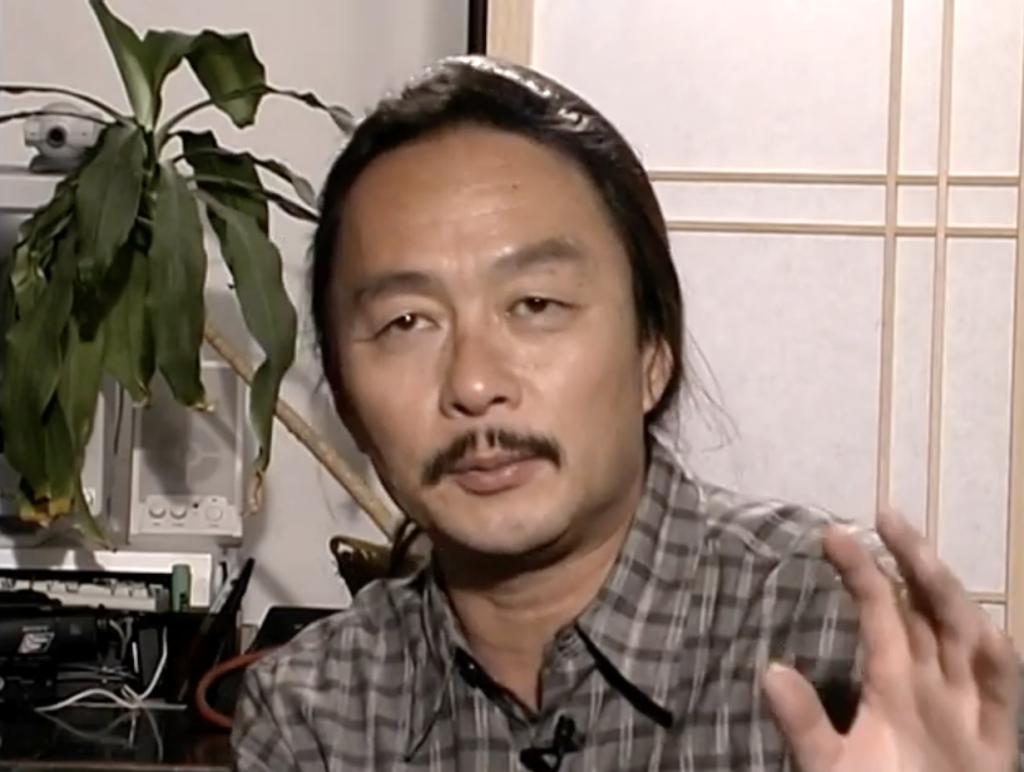
Mike Nakayama explains how he was treated by a Marine Corps drill sergeant in Janice D. Tanaka’s “When You’re Smiling.”
Drugs were ubiquitous at the dances of the late 1960s, recalled Wakabayashi, a former JACL national director and a regional director with the U.S. Department of Justice. He used the expression ki ga chiisai 気が小さい (timid) to explain why so many Sansei used drugs at the time.
“They felt inadequate because they were suppressed. You know, like … being Japanese isn’t good. I mean it’s a subtle message that comes out of you know the child reeling from the camps that you don’t feel a lot of confidence. So how do you do that, man? You got a magic pill, and you can feel brave as hell. But then you build up tolerance to it, and you take more and more and more, and then we lose kids,” Wakabayashi said.
Even as the Sansei and Nisei suffered tremendous trauma, from that came many of the leaders and institutions that continue to support the Japanese American community. An example is the Asian American Drug Abuse Program which was founded in 1972 to address the drug problems in the community.
“We’ve got more infrastructure, more storytelling. All the 10 camps have listening centers. They have their own pilgrimages. You have ‘Defining Courage.’ You have the museum. You have Democracy Center … I think the end product is that the trauma that we had, the community is taken back, and the healing is self-healing, and the healing is in the sense of becoming community because without the story, there’s no community,” Wakabayashi said.
In her two films, Janice Tanaka, relates the stories of her parents, Jack Koto Tanaka and Yuriko Yamate. Her early short “Memories From the Department of Amnesia” is dreamy and experimental. Images of her mom from various stages of her life appear as a figure rides a bicycle in a restaurant. Born in Manzanar, Tanaka hadn’t seen her father Jack since she was 3 and her mother, who had to raise two kids alone, refused to talk about the war.
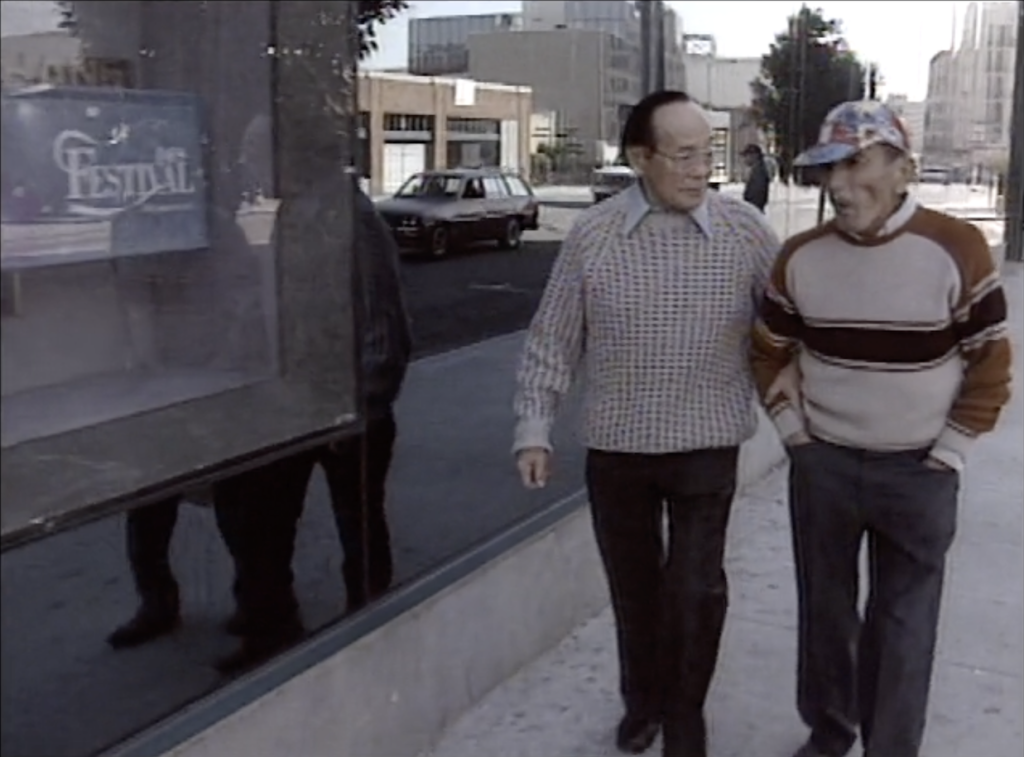
Brothers Togo Tanaka and Jack Koto Tanaka reunite in “Who’s Going to Pay for These Donuts Anyway?”
“I suppose it was because when I was a child, I never had dreams. I had nightmares. I was always running and running and running, and never knew where I was running from. And they could never take a photo of me because whenever anything was pointed at me, I would run and hide,” she said.
She didn’t search for her dad until after her mom passed away. Tanaka’s 1992 documentary “Whose Going to Pay for These Donuts Anyway” documents the reunion with her father. She said he was “extraordinarily intelligent” but quick to anger; the film shows father and daughter, now a mother herself, reconnecting and forming a family.
“Now it was the FBI who first said this man is mentally ill because he was paranoid. Well, who the f—k wouldn’t be paranoid? I mean, look what’s happening now? You know, it’s crazy. At any rate, he lost his temper, as I tend to do. And so, I was angry for him. I was angry for myself. I was angry for the fact that I grew up without a father,” she said.
“When I began looking for my father, that’s when I actually started understanding everything about the camps and what happened. Again, I wasn’t thinking of it as a total group, but only in terms of my father. I was angry and hurt and hungered for him. And the more that I got to know him, the more sane he became.”
For Ina, an activist and author who has worked extensively with camp survivors, the collective trauma of the Japanese American incarceration is so complex and massive that she likened it to being attacked and bitten by a Tyrannosaurus Rex.
“What happened to us was a form of collective trauma, so significant and severe that the community trauma created a culture of survival. And so much of the righteous anger got suppressed because when people were released from camp, they had to figure out how they’re going to move on with their lives, and there was no space or place where it was safe to express the anger,” Ina said.
Her 1999 film “Children of the Camps” documents one of her group therapy sessions for camp survivors. The men and women each describe feelings of abandonment, isolation and anger, even as their own personal stories vary with the vagaries of how the injustices of Executive Order 9066 played out.
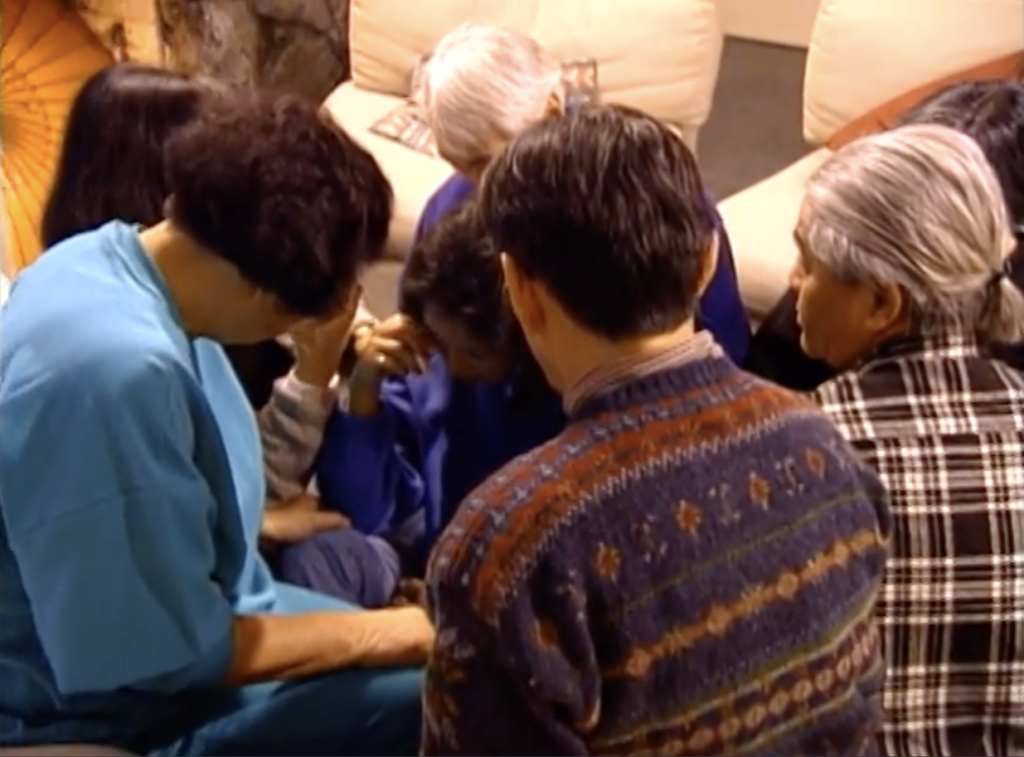
“Children of the Camps” documents a therapy session led by Satsuki Ina. The former inmates discuss the ways racism and the incarceration impacted their lives.
At one point, Ina directs the camp survivors to form a circle to be totally present for one another to empathize with their individual and collective hurt and anger. She said Japanese Americans lost much due to forced assimilation, but today she sees a movement to reclaim our culture and identity.
“We lost our language as a result of that. We lost our community, we lost our sense of pride in being Japanese, and you know there’s a lot of grief for people about the sacrifices that were made in order to be safe,” Ina stated. “So there is a period now I think that we’re, we’re going through a reclamation process, people are wanting. My grandson is wanting to learn Japanese. Younger folks are wanting to revitalize Obon.”
Tokuda grounded the day’s discussion in the work of Dr. Donna Nagata, a psychology professor who has done research on how the historic trauma has been passed down from Nisei to Sansei and also to the Yonsei grandchildren of camp survivors. Nagata is among the speakers at the Kintsugi Healing Conference in Japantown, San Francisco on Oct. 15-18.
The program also highlighted resources for individuals experiencing mental health crises or thoughts of suicide. While much of the day was devoted to the Sansei, the issues they experienced continue to resonate for today’s youth.
Peter Gee, co-executive director of the Little Tokyo Service Center, whose mom Ann Ogawa was born in Heart Mountain, shared research that suicide is the leading cause of death of Asian American Native Hawaiian and Pacific Islander youth; while at the same time few Asian Americans receive mental health treatment. He gave a call to action to address the crisis among today’s youth and young adults.
“I encourage you just to go ask a young person or young adult that is in your life the question itself about how they’re doing. What are things that they might be feeling right now? Because all the research does also say is that for youth and adults, having one positive adult role model in their life that cares about them and their well-being outside of their parents and other, you know, like just having that one adult has a huge impact on their overall well-being. So, just having a conversation with a young person is something that I encourage you all to do,” Gee said.
LTSC offers social and homeless services. To reach a staff member call (213) 473-3035. If your matter is urgent and relates to service programs (Social Services, Homeless Services, & Child Development), please contact Kat Espinoza at kespinoza@ltsc.org.