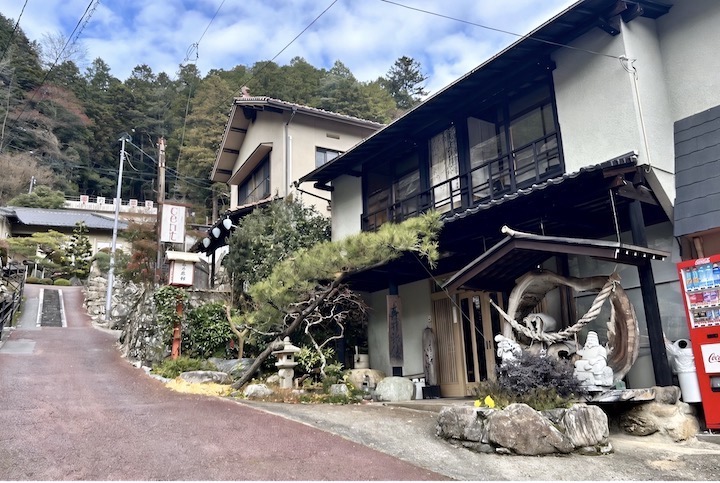
Kakehashi participant Nicole Saito stayed at the Morii family ryokan in Yuki Town. (Photo: Courtesy of Nicole Saito)
One participant in the December 2025 program learns that
‘being in-between was also an opportunity to connect people.’
By Nicole Saito
My name is Nicole Saito, and I am half-Korean (second generation on my mother’s side) and half-Japanese (fourth generation on my father’s side). In December 2025, I had the immense fortune of participating in the Kakehashi Program as a member of the Hiroshima group. Because I grew up in a large AJA (American of Japanese Ancestry) community in Oahu, Hawaii, I have always felt connected with my heritage and history — particularly my family’s experiences during World War II.
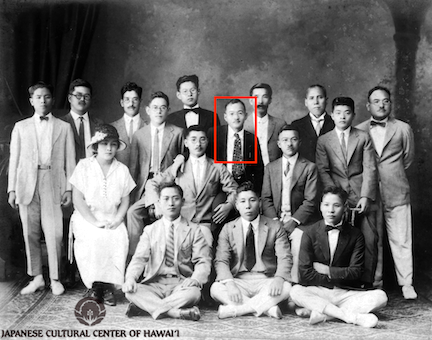
A photograph of Nicole Saito’s great-grandfather, Haruto Saito, alongside fellow members of the Silver Rain Poetry Society (Photo: Courtesy of the Japanese Cultural Center of Hawaii’s Otokichi Ozaki Archival Collection)
Related story here.
My father’s paternal grandfather, Haruto Saito, was born in Yamanashi-ken and immigrated from Japan to Hawaii along with his wife, Sadano, who was originally from Hiroshima. Shortly after the bombing of Pearl Harbor in 1941, Haruto was arrested by the government and imprisoned at Camp Livingston in Louisiana. As a Japanese language schoolteacher, he was one of a few thousand Issei interned from Hawaii for holding a position of cultural influence.
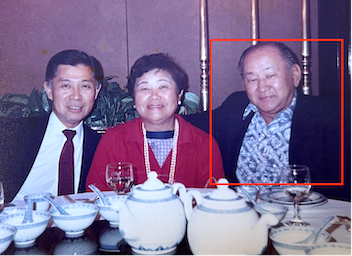
Nicole Saito’s grandfather, Harold (right), alongside her grandmother, Amy, and Amy’s brother, Dale.
At the time of Haruto’s arrest, his oldest son in the house — my grandfather, Harold — was only 16 years old. Harold dropped out of school to find work to support his mother and younger siblings. Later, he volunteered for the Military Intelligence Service to aid the U.S. in the war effort. His fluency in the Japanese language — which served as the basis for his father’s unjust incarceration for nearly four years — was the mechanism through which he proved his patriotism.
During his service in the MIS, my grandfather was tasked with the interrogation of Japanese POWs. Like many other AJA members of the MIS, my grandfather was able to connect with the Japanese soldiers on the basis of shared culture; he even befriended some of them.
I am told that after the war’s end, my grandfather traveled to Japan and visited one former POW with whom he was particularly close: The man happened to be an artist and gifted my grandfather some of his paintings as a symbol of their friendship.
My paternal grandmother, Amy, was a third-generation Japanese American, born and raised in Kona on the island of Hawaii. She was one of seven children born to Shuzo and Sueno Ikeda; her grandparents immigrated to the U.S. from Fukuoka Prefecture. At the time of the war’s onset, her eldest brother, George Ikeda, was a premed student at the University of Hawaii.
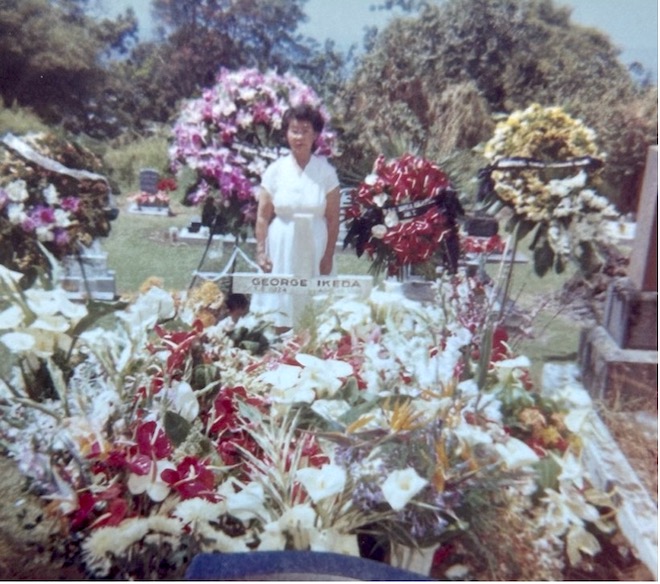
His mother (Nicole Saito’s great-grandmother), Sueno Ikeda stands at his grave, sometime after 1948 following the return of his body back to Hawaii.
Shortly after George’s 18th birthday, he volunteered for the military. In 1943, George formally enlisted in the 442nd Regimental Combat Team, dropping out of the university against the advice of military recruiters who emphasized the need for medical professionals in the war effort.
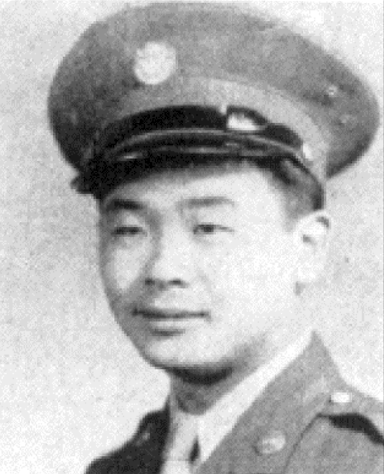
George Ikeda photographed in his military uniform.
He would go on to become a technical sergeant in the 3rd Battalion of the 442nd and participated in military operations in Italy, including the rescue of America’s “Lost Battalion” (the 141st regiment) from German troops. In April 1945, during efforts to liberate northwestern Italy, George was killed in combat. He was just 20 years old.
My family’s history gave me my first impression of how the U.S. viewed Asian Americans: We were fundamentally foreign, despite assimilation and citizenship. This notion further concretized during the explosion of anti-Asian hatred during the onset of the coronavirus pandemic, particularly in the violent hate crimes against elderly Asian Americans.
When the news media reported on an Asian American veteran named Lee Wong — who protested against anti-Asian hate by publicly baring the scars inflicted upon him while serving our country — it ignited deep feelings of grief within me for my Great-Uncle George: a man I’d never met but whose story had shaped my life.
George gave his life for the U.S. when he was just 20. In 2021, he would have been 97. That elderly Asian Americans were becoming victims of callous violence, with many losing their lives to prejudice fundamentally the same as that which ignited the internment of Japanese Americans, felt singularly representative of an exceedingly cruel message. It was as if the nation was telling me that my great-uncle’s sacrifice — his life — was utterly meaningless.
Constantly being labeled Asian and never American generates a misconstrued sense of identity. Yet, the other side of the double-edged sword is that, as the term perpetual foreigner implies, reconnecting with one’s roots can be just as isolating.
Upon my first trip to visit my Korean side of the family with my mother in 2017, I had a rather illustrative interaction with a Korean shopkeeper. She looked at me, and — presumably based off of my features — addressed me in Japanese. When it became clear I did not understand, she paused, then switched to Korean. I threw a helpless look toward my mother on the other side of the store. At this, the shopkeeper must have realized what I was and finally switched to English.
That trip to Korea, along with my first visit to Japan the following year, complemented my later experiences in the U.S. To be Asian American meant being a perpetual foreigner: always Japanese or Korean or simply Asian in the United States.
But upon visiting the countries from which my ancestors originated, I quickly learned that despite looking Japanese or Korean, I was neither. There — and only there — I was an American.
With this understanding came a deep sense of shame, particularly with respect to my Japanese ancestry. My family’s history is saturated by the consequences of anti-Japanese discrimination, yet I had come to realize that I could only ever be a tourist in the country my ancestors were ostracized for.
I was fully resigned to this idea until I participated in the Kakehashi Program in December 2025. The Kakehashi Program, which is coordinated by the JACL and the Japan International Cooperation Center (JICE) and supported by funding from the Japan Ministry of Foreign Affairs, marked the first time I was led to re-evaluate the Japanese American identity against the notion of the perpetual foreigner. And the way it led me to this realization was embedded deeply in its name — kakehashi, or “bridge.”
The first major revelation of the trip came via the program’s construction of an extremely diverse community of young Japanese Americans. I had become somewhat isolated from the AJA community during college in Southern California, and furthermore upon moving to the Midwest to pursue doctoral studies — ironic, given my thesis is centered around the economic impacts of the internment. Perhaps in a way, with my professional career focused on Japanese American history, I had become resigned to viewing the AJA community only as it existed in the past.
The Kakehashi Program was a much-needed glimpse of the Japanese American identity as it exists in the present. I was surprised to see how diverse the program cohort was: geographically, ethnically and professionally.
On the first night in Tokyo, I was elated to meet a fellow Japanese-Korean American: my roommate for our hotel stays during the trip, Emily Taketa, who quickly became a friend. I learned that our cohort spanned California, Colorado, Florida, Hawaii, Illinois, Tennessee and beyond; that we consisted of artists and animators, students and academics, activists, analysts, marketers and more; and we all brought myriad interests and experiences to the table.
The comradery of the Hiroshima group made the dive into cultural exchange — and with it, the reality of my own ignorance of Japanese culture and language — less daunting, precisely because I was not alone.
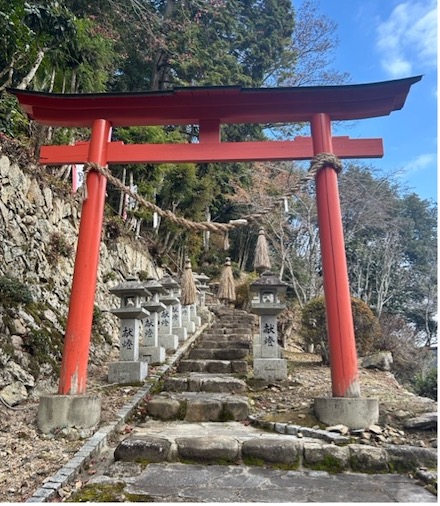
The torii gate leading to the shrine at the top of the mountain in Yuki Town.
This was most salient during the homestay experience in Yuki Town, roughly an hour from Hiroshima City, where we were assigned by groups to host families. I had the great fortune of being in the same group as Emily Taketa, Akemi Lucas and JoAnne Migaki. We stayed with the Morii family.
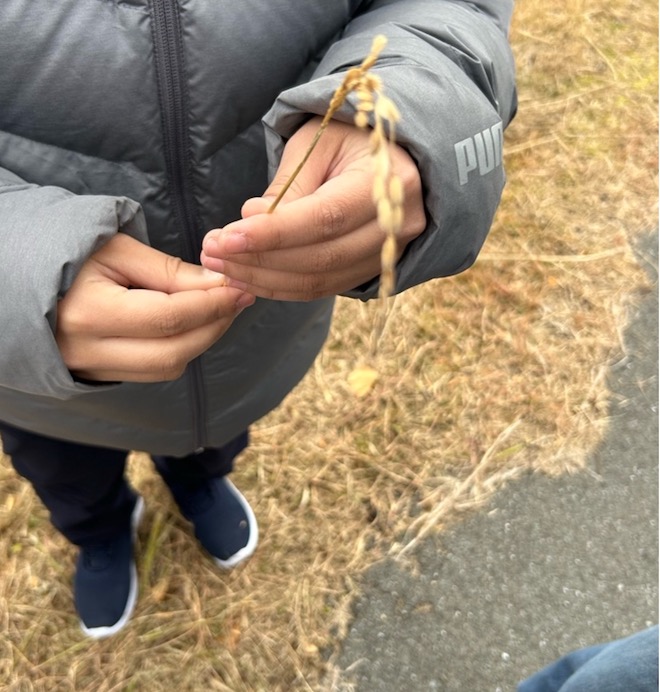
Rice from Morii Family’s farm.
Our host family owned a ryokan, or traditional Japanese inn, along with a small rice farm. Both had been in their family for 300 years. Although no one in our group was fluent in Japanese, which would have been intimidating on one’s own, in a group, navigating communication and the logistics of our daily schedule became a collaborative exercise.
Despite our reliance on Google Translate, it felt very easy to make deep connections with the Morii family, who showed us abundant patience, empathy and kindness, as well as demonstrated a genuine interest in our experiences as Japanese Americans.
The Morii family shared with us the history of their ryokan and the Yunoyama onsen in Yuki Town, starting with feudal Japanese history — when Lord Yoshinaga Asano of Hiroshima patronized the Yunoyama onsen — to modernity, when survivors of the atomic bomb sought relief under the cool water from the natural springs at the top of the mountain.
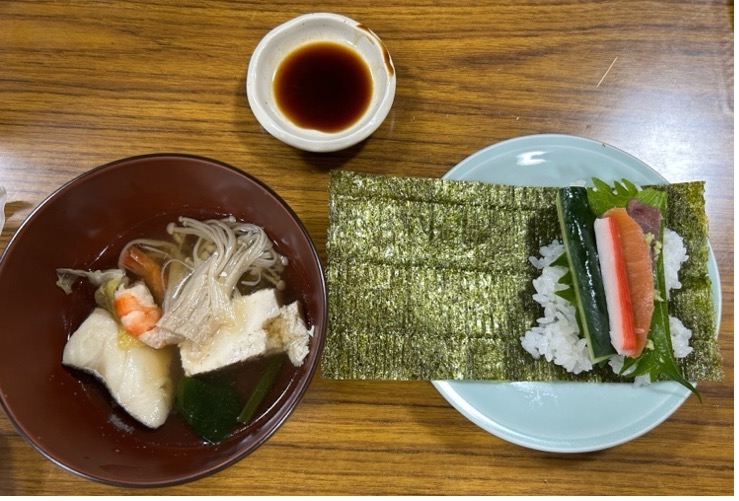
Seafood hotpot and handrolls for dinner
They also taught us about Japanese culture through cooking, explaining to us the ingredients of the traditional meals they prepared for us (such as the differences between red and white miso) and showing us how to make onigiri, takoyaki and handrolls. They also introduced us to cultural pastimes such as the traditional art form of kagura and the card game Hyakunin Isshu Karuta — and to our enjoyment, guided us to the beautiful temple at the top of their village, followed by a tour of their rice farm.
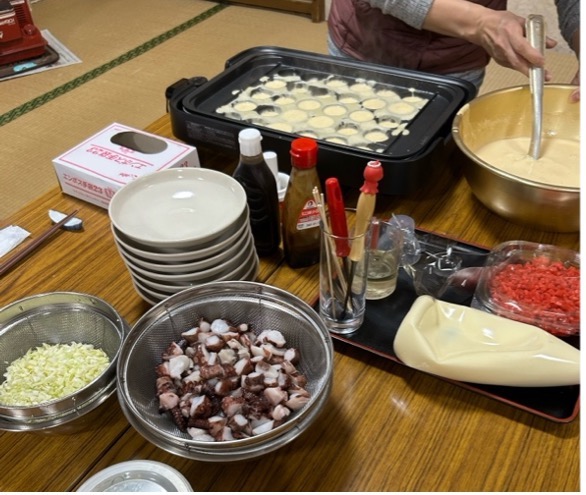
Takoyaki ingredients for Nicole Saito’s first meal with the Morii family
In the evenings, we patronized the Yunoyama onsen, a short walk upward from the ryokan, where we enjoyed the hot baths followed by a cold plunge of sorts, under the natural water flow from the top of the mountain.
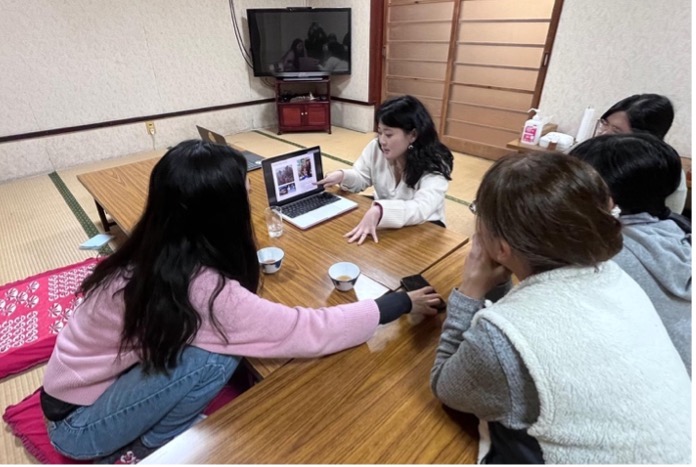
Nicole Saito also gave her family history presentation to her host family, with Emily Taketa assisting with Google Translate.
Being paired with three other Japanese Americans in the homestay made the experience very meaningful. We were all learning together, as part of a larger group who had similar experiences of isolation from Japanese culture.
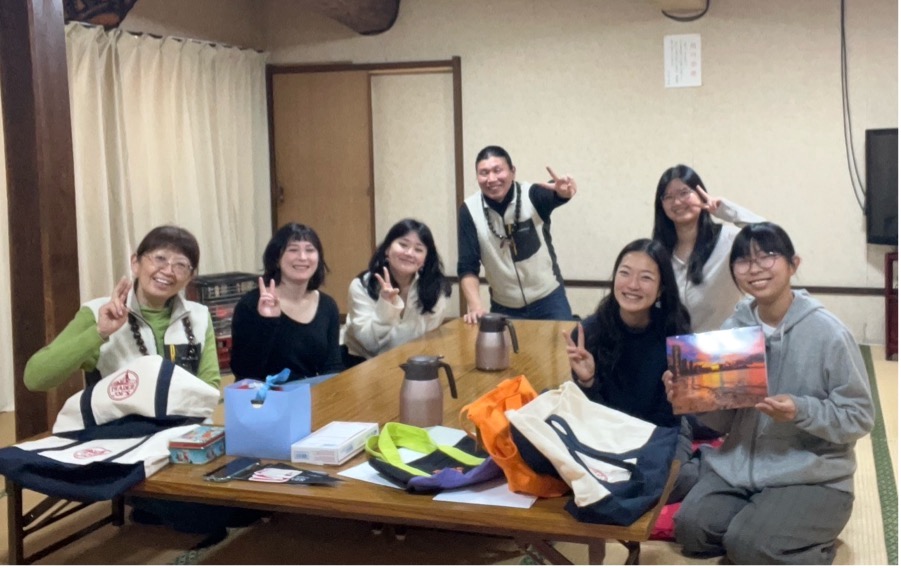
Kakehashi participants and their host family on the final day of their homestay visit. Pictured (from left) are Junko Morii, Akemi Lucas, Nicole Saito, Kazuya Morii, Emily Taketa, JoAnne Migaki and Chiaki Morii.
In this way, I felt like I had a community, both with my fellow Japanese Americans and in the homestay at Yuki town. This was invaluable in teaching me to let go of the shame I’d harbored for so long: Admitting my own ignorance of Japanese culture was the first step to learning, and learning should never be something to be ashamed of.
Following our departure from Yuki Town, our group drove back to Hiroshima City and visited the Hiroshima Peace Memorial and Museum. It was deeply humbling to learn about Japanese civilians’ experiences during the war and painful to see the immense suffering brought on by the bombings.
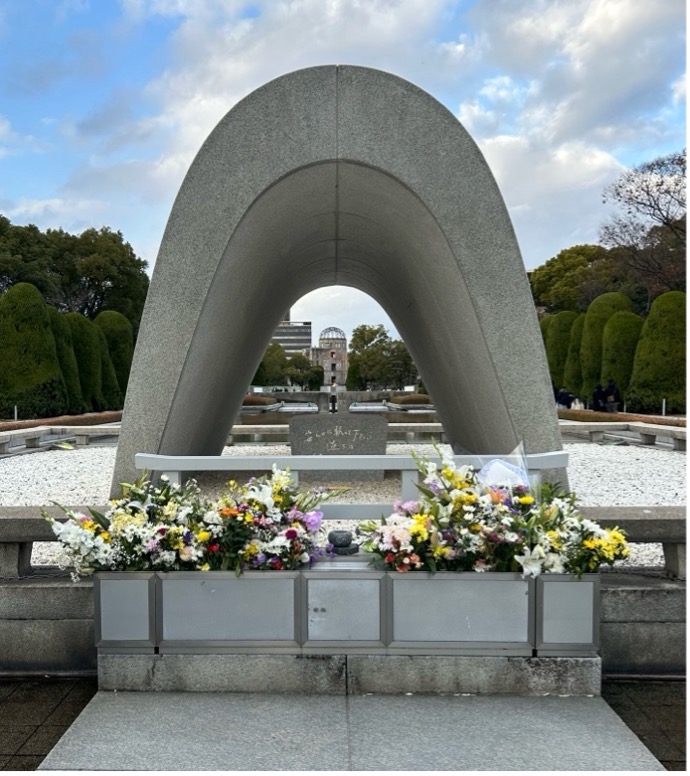
Hiroshima Peace Memorial Park
From the tattered scraps of children’s school uniforms singed from the blast, to harrowing artwork crafted by survivors of their experiences, to the battered lunchbox left behind by a young boy whose mother was never able to find his remains — the devastating gravity of human suffering conveyed by the museum, even through small glimpses given by material history, transformed the goal of global peace from a philosophical ideal to a pressing imperative. Yet, I was not sure of what individual civilians could do to help achieve this.
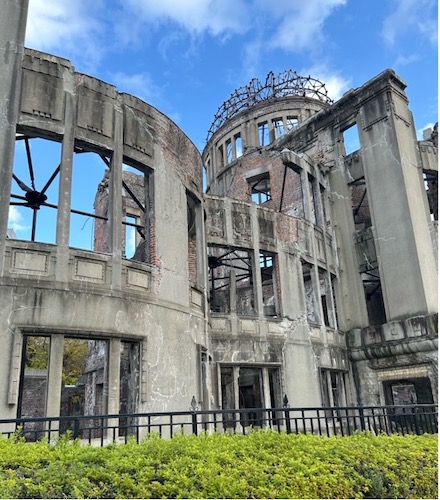
The view under the arch forms a straight-line to the Atomic Bomb (Genbaku) Dome, the only structure that survived the atomic bombing.
On the penultimate day of the trip, we presented our findings from the program and our action plans to Hikari Kobayashi, director of the Youth Exchange Division of JICE. This is where the meaning of kakehashi became clear — and seemed to offer an answer to the questions left by the Hiroshima Peace Museum.
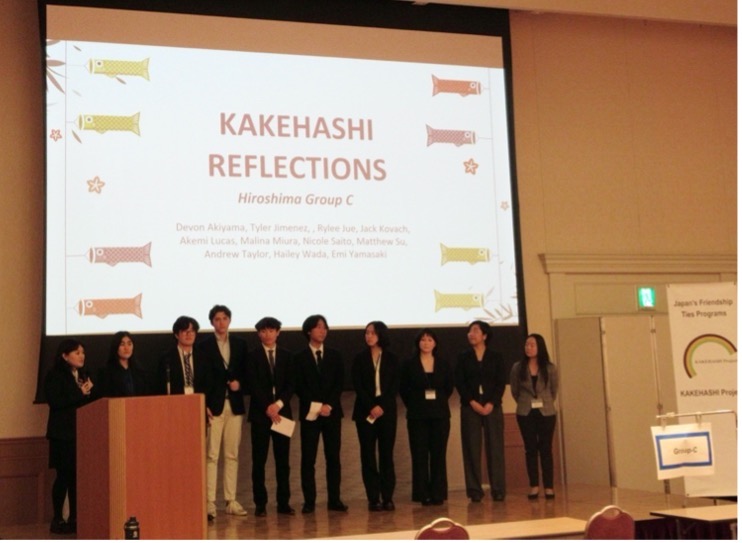
Reporting session presentation for Hiroshima Group C (left)
The Okinawa groups presented first, and one began the report by overviewing Okinawa’s history during WWII: focusing on the poignant story of the Shimuku Gama and Chibichiri Gama caves, where Okinawans took refuge as American soldiers arrived on the island.
Okinawans in both caves feared brutality by American soldiers and contemplated suicide. In Shimuku Gama, two Okinawan civilians who had spent time working in Hawaii assured them that this would not happen if they surrendered peacefully.
But this message was not able to reach Chibichiri Gama, where innocent civilians took their lives in fear. It is hard to imagine more tangible proof of the value of cultural understanding: At its peak, it can prevent the loss of human life.
After our presentations, Kobayashi told us that we should think of Japan as a second home, then went on to say a word of thanks to our ancestors who immigrated to the U.S. It was because of their sacrifice and perseverance that we could be here today as Japanese Americans — an identity between two cultures, with the unique opportunity to form meaningful connections between the people of Japan and the U.S.
Kobayashi also noted that Hiroshima and Okinawa were uniquely known for their painful experiences during WWII, yet they were also uniquely known for becoming champions of peace.
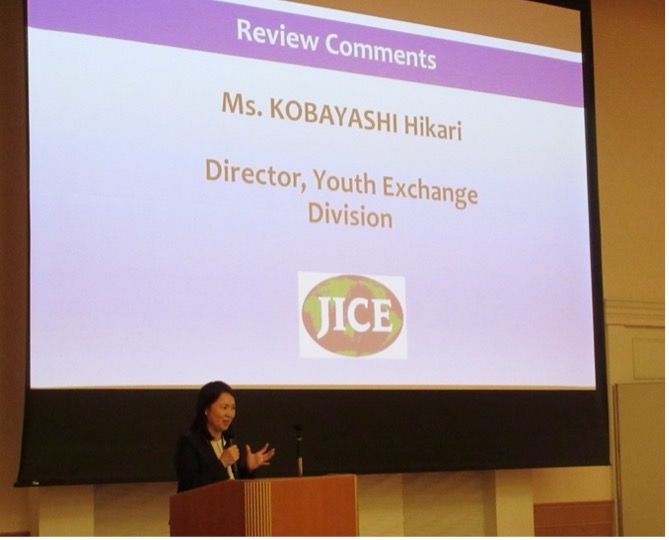
Kobayashi-san, director of the Youth Exchange Division of JICE, gives remarks following the reports.
Her thoughtful words, combined with our experiences at the homestay and Hiroshima Peace Museum, convinced me of Japanese Americans’ unique and tangible opportunity to affect change.
It’s not always a treaty, or a diplomatic visit, or two leaders shaking hands on television that creates meaningful relations between two countries. These are important, of course, but it’s rare that these things alone can foster long-lasting relations.
Interpersonal connections are key: like the Okinawans of Shimuku Gama, who drew on their experiences in Hawaii to save their fellow civilians’ lives, or the hibakusha, survivors of the atomic bombing, who went on to advocate for peace and disarmament around the world.
To be Japanese American means being a perpetual foreigner, yes. But it also means being a bridge. Rather than viewing the identity’s “in-betweenness” as solely meaning exclusion, not belonging in Japan nor the U.S. — the Kakehashi Program taught me that being in-between was also an opportunity to connect people.
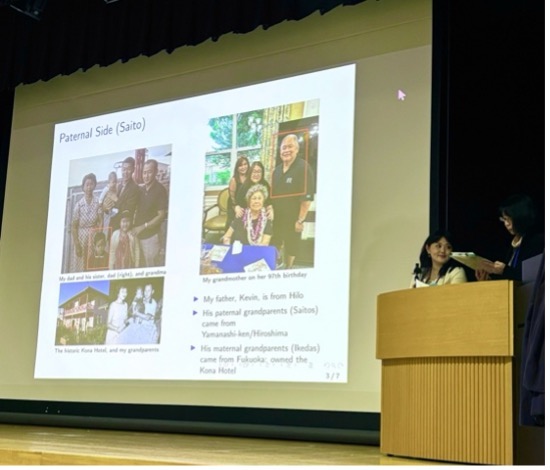
Nicole Saito’s presentation of her family history at Hijiyama University. Behind the podium are Nicole Saito (left) and Sudo-san, a program guide from JICE who translated Saito’s presentation into Japanese.
This also led me to reflect once more on my family history. My Great-Grandfather Haruto and my Great-Uncle George’s stories exemplify the bleak consequences of being a perpetual foreigner. But the hardships they suffered and the sacrifices they made gave me the freedom and privilege to reconnect with my Japanese ancestry in the present — an opportunity that would be wasteful not to embrace.
Moreover, I have been able to reflect on my grandfather’s work in the MIS with a greater appreciation of his accomplishments and how he reconciled his identity as both Japanese and American. A picture is worth a thousand words, and the realization from the Kakehashi Program, which has taken me more than a few thousand words to express, are succinctly exemplified by the paintings my grandfather passed down to us, gifted to him some 80 years ago by a friend made on the opposite side of war.
A symbol of peace and of his embodiment of the opportunity to serve as kakehashi — a bridge — as a Japanese American.
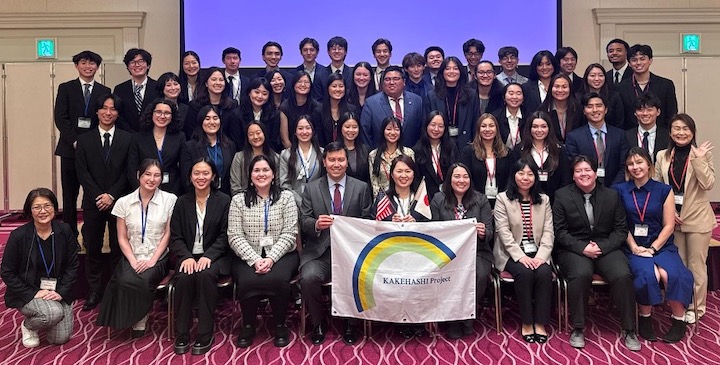
A group photo of the 2025 Kakehashi cohort along with program chaperones and JICE staff.
Nicole Saito is currently a fourth-year PhD student in the economics department at Northwestern University, researching the economic impacts of the Japanese forced incarceration of World War II.