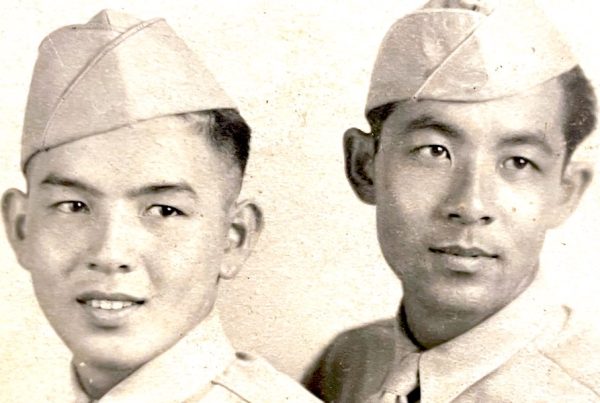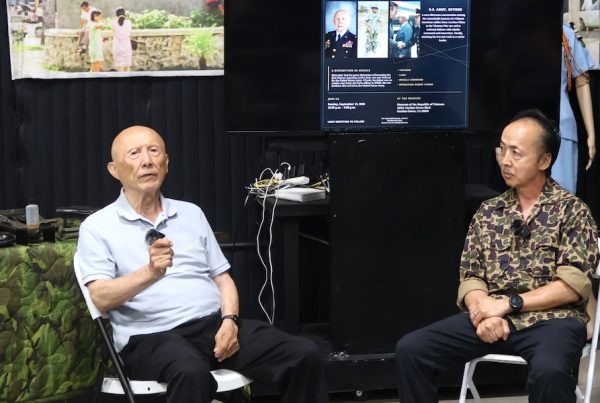
Promotional poster for “The 100th: Seeds of Aloha”
Test screenings for ‘The 100th: Seeds of Aloha’ to be held throughout
California in November for new film on 100th Infantry Battalion.
By Gwen Muranaka, P.C. Contributor
With live music and a lot of Aloha spirit, the team behind a new documentary on the 100th Infantry Battalion will be showing a rough cut of the film at locations in Japanese American communities throughout California in November, starting at the San Jose Buddhist Church on Nov. 8 and concluding at the Venice Japanese Community Center on Nov. 29.
“The 100th: Seeds of Aloha” follows the journey of the men of the famed “One Puka Puka” from Hawaii to the battlefields of Italy and France and explores the ways their heroism and sacrifice continues to resonate today. The film also highlights the formation of the 442nd Regimental Combat Team and the 522nd Field Artillery Battalion. The film’s production team interviewed more than 40 individuals and also utilize archival interviews, photos and letters from the soldiers.
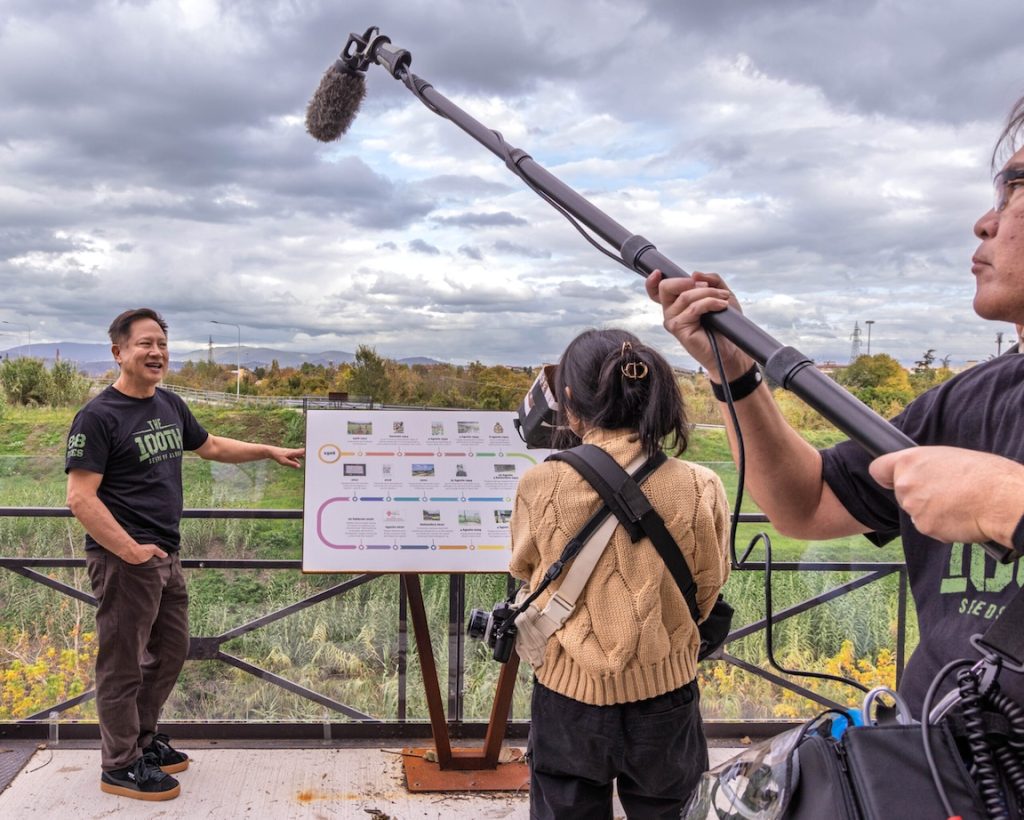
Steve Sue shot by Kristle Backe and Patrick Quinlan at Mantignano, Italy (Photos: Courtesy of ID8)
“My goal was to make the soldiers real, so that you know them not as statistics,” explained director Steve Sue.
The result thus far is a comprehensive look at the battalion, which descendants of the 100th say has often been overlooked in the retelling of the wartime experience. Sue’s documentary strives to capture the Japanese American soldiers’ stories in new ways for new audiences.
“Everybody’s been pleasantly surprised that the story is deeper than anybody could have ever imagined,” said Sue. “We brought to light many things that I think all of the units are extremely proud of, and most importantly, you know, every single one of those units were really the epitome of sacrifice, honor and valor.”
Sue is hoping as many people as possible view the film before a final cut is completed early next year. He notes that many of the veterans and their descendants reside in California, particularly those of the 442nd RCT. Sue founded the nonprofit ID8 Studios in 2012, and “Seeds of Aloha” is the third documentary in a series exploring the meaning of Aloha. His earlier films highlighted the foods of Hawaii in “Ono, Foods of Aloha” and the shaka hand sign in “Shaka, A Story of Aloha.”
Free Test Screenings for “The 100th, Seeds of Aloha,” in California
(Reservations are required for the following dates and locations.)
Nov. 8: San Jose Buddhist Church 5-8 p.m.
Nov. 10: San Francisco Public Library (Main Branch), 1-4 p.m.
Nov. 12: San Francisco Public Library (Western Addition, Japantown), 12-2 p.m.
Nov. 13: San Francisco Japanese Cultural & Community Center of Nor Cal, 6-9 p.m.
Nov. 14: Sacramento, Buddhist Church of Sacramento, 1-5 p.m.
Nov .15: Emeryville, J-SEI. 1-4 p.m.
Nov. 21: Torrance, Faith Methodist Church. 1-4 p.m.
Nov. 29: Venice Japanese Community Center. 1-5 p.m.
“I thought there was a really strong thread of how the 100th/442nd used the concept of Aloha throughout the theaters of battle. And so, you know, the question is can Aloha survive a World War,” Sue said.
Last June, in a hangar at the Pearl Harbor Aviation Museum in Honolulu, the film crew unveiled a massive 6,000-square-foot map and filmed as descendants placed round medallions with the names of their loved ones on sites where they fought and, in some cases, perished.
The map, three months in the making, provides the framing device for the story, following the men on a 2,000-mile journey through the early days of the war and the battles of Monte Cassino in Italy, where they earned the nickname the “Purple Heart Battalion.” “Seeds of Aloha” also explores how the Nisei returned home and became leaders in Hawaiian society.
Kathi Hayashi, president of the 100th Infantry Battalion Veterans (Club 100), placed a medallion near the city of Rome with the name of her late father, Tokuichi “Toku” Hayashi. He served as a cook in Able Company in the 100thand was among the first to enter Rome after the Germans fled in June 1944. After the war, Toku Hayashi returned to Aiea, where he served as a trustee for the Aiea United Methodist and participated in the Kuakini Hospital Hawaii Heart program, a decades-long program that has led to medical breakthroughs in good and bad cholesterol and Alzheimer’s disease.
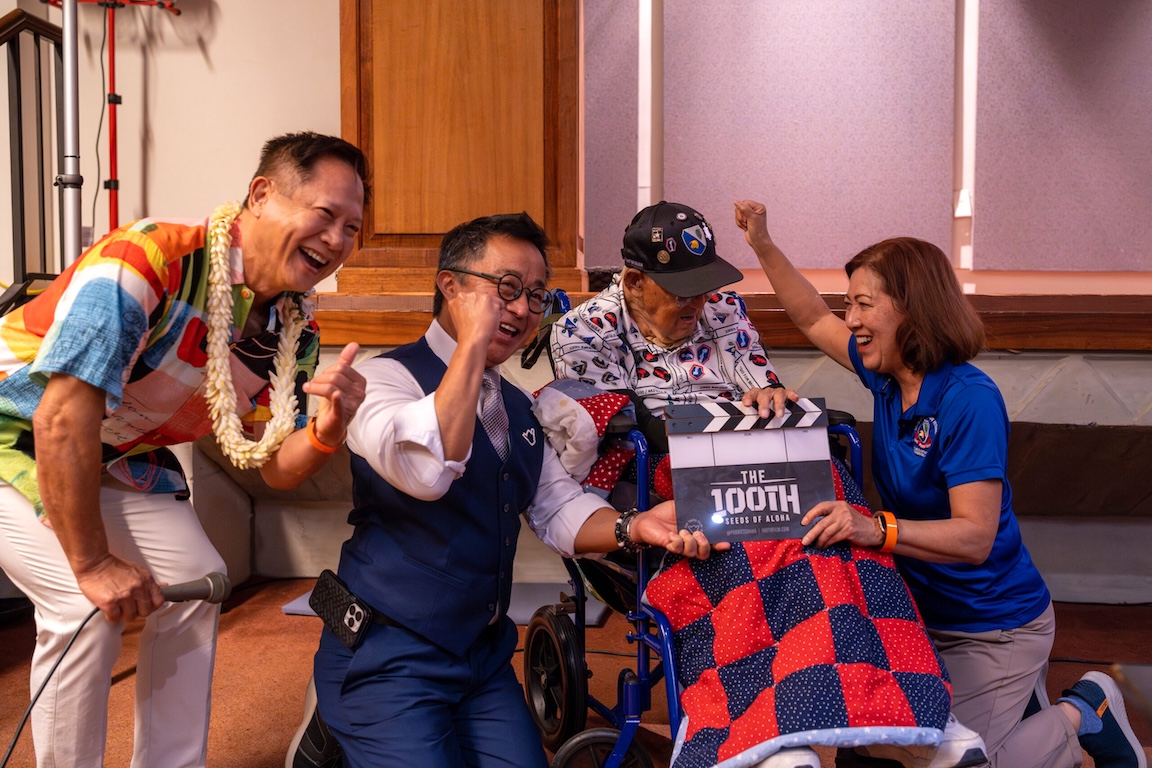
Pictured (from left) are Steve Sue, Sen. Glenn Wakai, Dr. Taka Manago and Kathi Hayashi kick off “The 100th: Seeds of Aloha” production at the Hawaii State Capitol.
Hayashi said her father is an example of the ways the Nisei led lives of purpose after the war. A retired senior vp from Verizon, she sees the film as a case study on how the Nisei embodied leadership by overcoming tremendous obstacles. The 100 Club provided initial seed money for the film, and she said she hopes to use it to educate the public.
Under Kathi Hayashi’s leadership, Club 100 launched Legacy2Action in 2022, which challenges students at local high schools to identify problems facing Hawaii and create a service project utilizing Japanese values such as gaman and gambare.
“I told Steve that to me, this is more like a Harvard Business Review study about leadership, about overcoming obstacles, about end result thinking and setting affirmations,” she said. “This Nisei story is something that we need to share with our keiki, with our children, not just in Hawaii, but for the world, about believing in yourself.
“I truly believe it’s something that can help everybody, whether you’re a student or you’re in a company,” Kathi Hayashi continued. “Having to work through conflict, and they worked as a team. They would succeed even though you have a temporary setback. They’re going to figure out and get it done, no matter what. And unfortunately, they lost a lot of lives to make that happen.”
Filmmakers of “Seeds of Aloha” spent three weeks in France and Italy last year, following in the footsteps of the 100th/442nd. Led by the tour group Nisei Legacy Tours (nisei-legacy-tours.com) the filmmakers climbed steep terrain where the Nisei soldiers fought and made connections in the small villages where they are still celebrated as heroes. They were there for the dedication of the Daniel Inouye Piazza in the town of San Terenzo Monte in Italy and later participated in a celebration at neighboring Tendola.
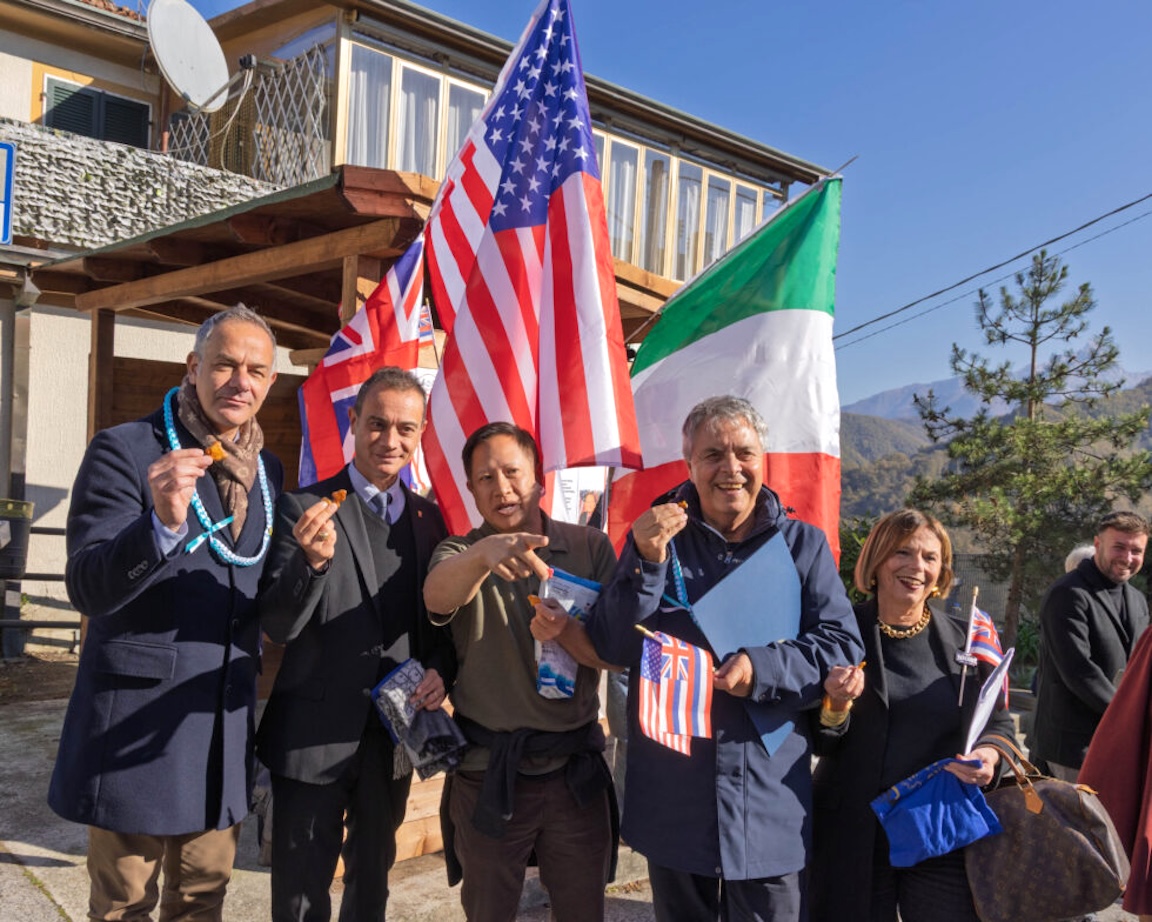
Dignitaries with Steve Sue (center) at the dedication of Daniel Inouye Piazza, San Terenzo Monte, Italy
“There’s just a lot of fondness for what these guys did. We kind of felt like rock stars going to all these towns, and you know the mayors would come out, and the whole towns would come out and party with us. They’d sing to us, and we’d sing back to them,” Sue said.
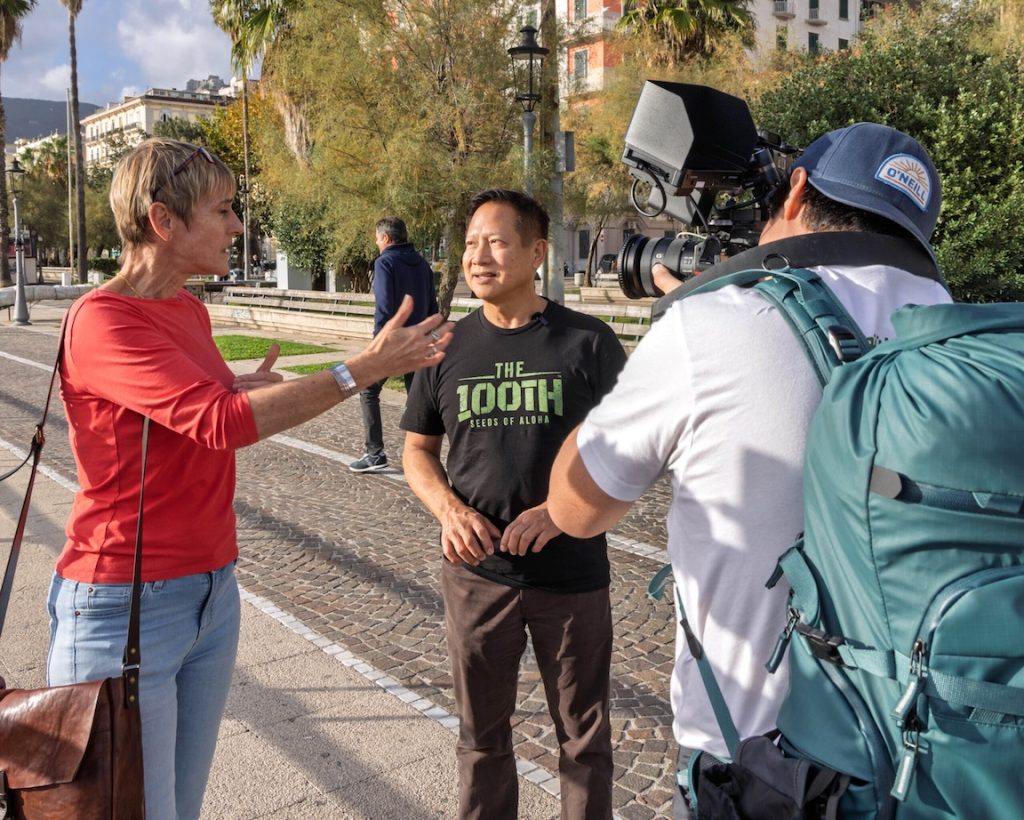
Nora De Bievre is interviewed by Steve Sue in Salerno, Italy
Musicians Harold Payne and Dave Kopatz traveled with the film crew to Europe and performed and were often composing music for the score as they went along. They will be playing songs from the soundtrack during the California screenings. Brian Yamamoto, who provides vocals for two tracks, will also be joining at select locations.
Payne grew up in Gardena, Calif., alongside members of the 442nd, who never discussed what they did during WWII. Sue contacted Payne after seeing a video for his song “Quiet Heroes,” a tribute to the 100th/442nd.
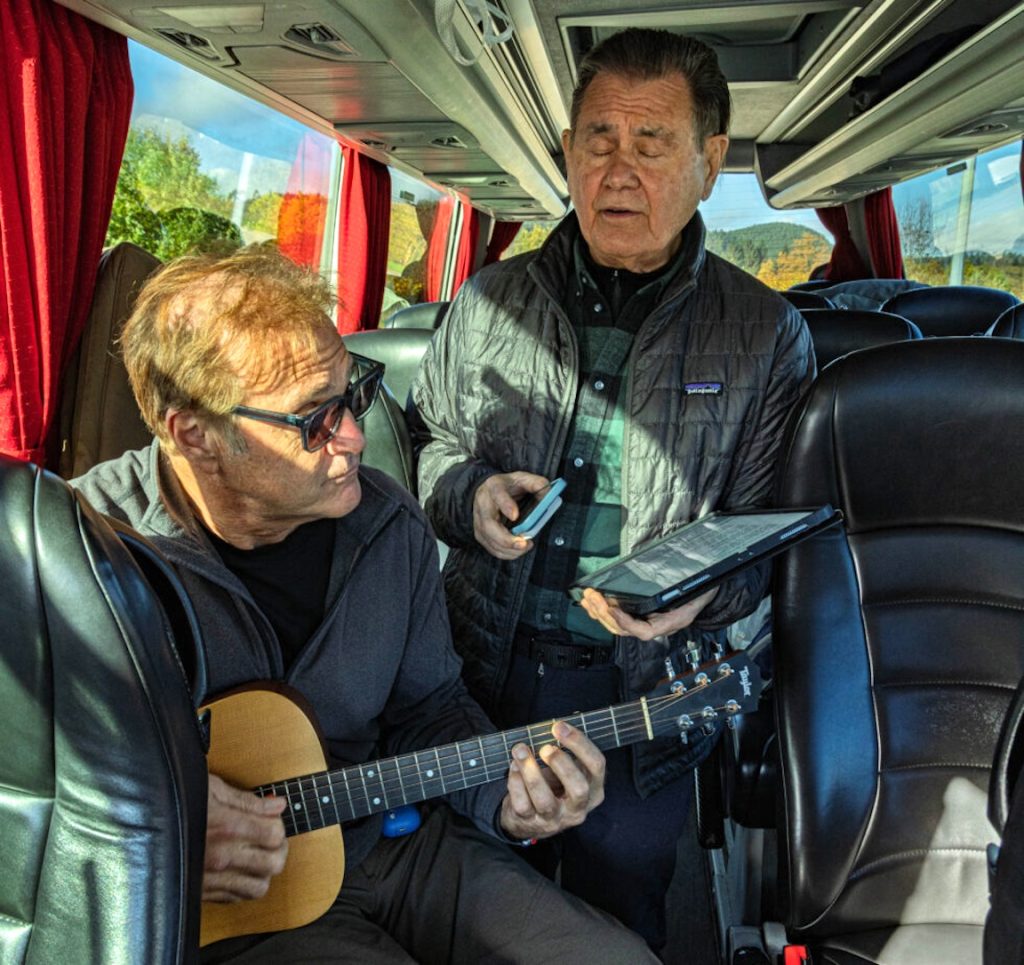
Dave Kopatz (left) and Harold Payne rehearse at Le Baldie, Hill 140, Castillina Marittima, Italy
In instances, the songwriters would compose on the spot to specific emotional beats. Payne said “Eyes of a Friend” was written to convey the disbelief of the liberated townspeople that their rescuers were Japanese.
“One of the things that was so touching was the reverence that the local people in these towns held for the Japanese American soldiers because these guys came in and saved them,” he said.
For Payne, the Nisei story has been with him for most of his life. He recalled going to neighbor Harry Komatsu’s Texaco gas station when he was 18 or 19 and saying he hadn’t seen Komatsu in a long time. In fact, Komatsu was in France for a celebration for the 442nd. Payne asked why the French were honoring his neighbor.
“He goes, ‘Well, we chased the Nazis, we liberated their town from the Nazis,’” Payne said, recalling his conversation. “I went, ‘What?’ I didn’t even know that Japanese American soldiers had been there, and I didn’t know about the camps. It turned out that I had three of these guys on my block. They were already kind of role models to me as human beings.”
“Seeds of Aloha” also interviewed military leaders, who provide insight into what made the 100th such a special battalion. Among those include Maj. Gen. Kenneth Hara, Maj. Gen. Suzanne Vares-Lum, Lt. Col. Don Seta, Col. Walter Ozawa, Terry Shima of the 442nd and Takashi Manago, who served as a staff sergeant with the 100th.
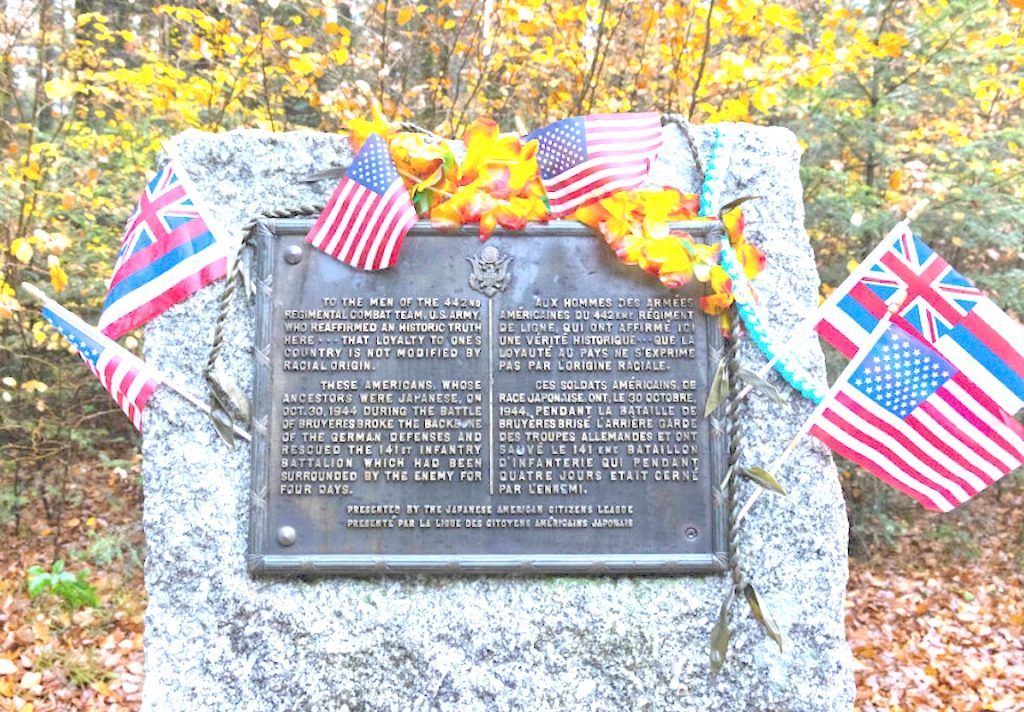
One of the countless European monuments dedicated to the 100th/442nd RCT units of World War II (Photo: Courtesy of Cliff Kimura)
The film was made in conjunction with the 250th anniversary of the Declaration of Independence. While “Seeds of Aloha” avoids the politics of this current moment in American history, it’s an important, necessary story to tell of soldiers that did not fit the stereotype of what a soldier is supposed to look like and yet became the most-decorated unit in military history.
“What I want to underscore and have people come away with is good values. You know, kind of the ‘Greatest Generation’s’ set of values, which weren’t about greed. They weren’t about getting ahead. They certainly wanted to get ahead and provide for their families, but I don’t think they were ever greedy in that sense, and they would always be looking out for others,” said Sue.
“I never knew what the term ‘Greatest Generation’ really meant until I made this picture.”
Upcoming screenings will feature live music and a Q & A with Producer/Director Steve Sue. Visit 100thfilm.org for event details and registration.