
By Dr. Paula Fujiwara and Matthew Kojima
As an ethnic group that has historically faced barriers to medical care and access to the profession, Japanese Americans bring special insights to policy changes that are now occurring. JACL members Dr. Paula Fujiwara is a Sansei who has spent more than 30 years as an expert in global tuberculosis prevention, and Matthew Kojima is a first-year medical student at Boston University. They shared recently their views with the JACL Berkeley chapter on funding cuts to medical research, language policy impact on medical care and implications for these changes to global health.
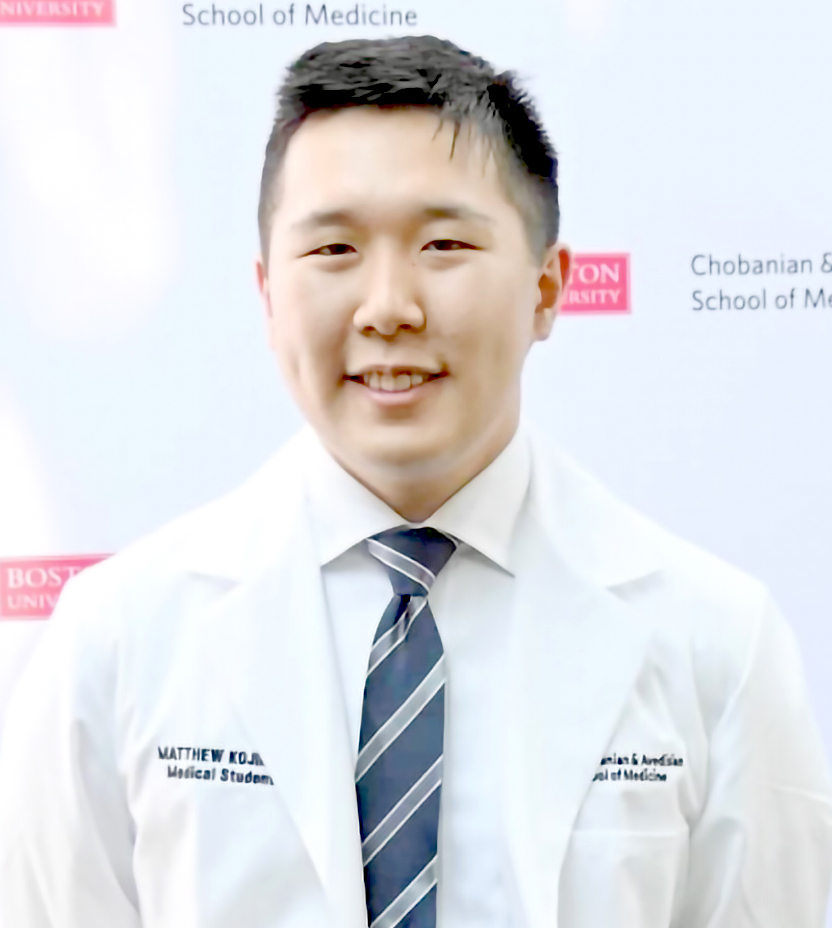
Matthew Kojima on his first day of medical school at BU Chobanian & Avedisian School of Medicine on Aug. 5, 2024, in Boston
Photo: Courtesy of Matthew Kojima
JACL Berkeley Chapter: How do the current federal funding cuts impact the medical profession and aspiring medical professionals?
Matthew Kojima: Frozen and reduced funding for research has made it difficult for students and young professionals to find research opportunities. Previously, agencies like the National Institutes of Health and the Centers for Disease Control and Prevention have provided internships and jobs to current college students and college graduates interested in medical or graduate school. However, the new administration canceled these internships and implemented hiring freezes, resulting in fewer students getting essential work experience to prepare them for a career in research and medicine. Due to these uncertainties, universities have had to consider reduced funding of their graduate programs. For some, the result has been devastating. At the University of Massachusetts Chan Medical School, all admission offers for the biomedical sciences Ph.D. program have been rescinded for this year. This reduces opportunities for young people to become researchers and help advance scientific knowledge (National Institute of Arthritis and Musculoskeletal and Skin Disease Internship Program; University of Massachusetts Chan Medical School PhD Applicant Information).
Dr. Paula Fujiwara: Recent funding cuts have affected my life’s work in tuberculosis prevention. For example, the United States’ most important TB research project was stopped when the funding agency, the United States Agency for International Development (USAID), was dissolved. A TB project submitted to the National Institutes of Health for which I was a consultant has had its review meeting canceled twice. Colleagues in Zimbabwe were told that Secretary of State Marco Rubio has determined that continuing their program is “not in the national interest.”
Berkeley Chapter: How do government funding cuts to medical research disproportionally impact underrepresented and historically devalued populations?
Kojima: As a first-year medical student, I have learned about the various ways in which some populations have been disproportionately affected by socioeconomic inequities. For example, to be eligible for a kidney transplant, the patient’s kidney function must be below a certain threshold. Until recently, kidney function was assessed using an algorithm that incorporated race. For many years, physicians believed that their algorithm underestimated kidney function for Black patients, so this meant that a Black person would be less likely to be eligible for a kidney transplant. Some recent research has been used to show that using race in the algorithm is inaccurate, and thus, this variable is no longer used in new versions, which may negatively impact Black people’s access to kidney treatment (Delaware Academy of Medicine – Delaware Journal of Public Health: The Case Against Race-Based GFR).
Loss of federal funding disproportionately hurts research focusing on diseases that mainly impact marginalized communities. For example, sickle cell disease and cystic fibrosis primarily impact those with African and European ancestry, respectively. Despite more people in the U.S. having sickle cell disease and the life expectancy of the two diseases being similar, cystic fibrosis receives 75 times more in private funding per person with the disease, while on the other hand, sickle cell disease receives the bulk of its funding through federal grants. Therefore, the majority of funding for cystic fibrosis will likely be preserved regardless of what the federal government does, while federal grant cuts would devastate sickle cell research, disproportionately hurting Black communities (American Journal of Managed Care: Study Finds Funding Disparities Between Sickle Cell Disease, Cystic Fibrosis).
Fujiwara: One-quarter of the world’s population is infected with the germ that causes TB, the world’s No. 1 infectious disease killer. TB is a social disease with medical manifestations. People at increased risk include those who live in poverty; suffer from undernutrition; have diseases such as HIV or diabetes; smoke tobacco; or misuse alcohol. Reaching these groups requires targeted educational messages, food support and diagnosis and treatment that people understand and are receptive to. Until the funding of USAID ended, the United States was the key donor for global TB activities, supporting countries with some of the highest burden of disease, such as India, Indonesia, the Philippines, Uganda and Zimbabwe. Since the start of the Global Fund to fight AIDS, Tuberculosis and Malaria (GFATM) in 2002, the U.S. has provided one-third of its U.S. $5 billion annual budget. In mid-May, countries receiving support were told to plan for a downsizing of their programs in light of the closure of USAID. The U.S. government’s withdrawal of support has negatively impacted the fight against these infectious diseases, affecting access to treatment and prevention, care programs and community education.
Berkeley Chapter: President Donald Trump signed an executive order this year naming English the official language of the U.S. What impact could this have on medical care?
Kojima: Doctors and patients must be able to communicate in order to achieve the best outcome. At present, when a patient’s first language is not English, federal guidelines require a professional medical interpreter to be provided. However, with the move to make English the official language of the U.S., there is concern regarding what this means for this guideline. Without interpreters, it would become substantially more likely for there to be a major misunderstanding between a patient with limited English proficiency and their health-care team, which could lead to a devastating health outcome.
Fujiwara: When I was the director of the New York City Department of Health’s TB Control Program, I had to link with local communities with high rates of TB where English was not their native tongue. I gave talks to members of medical societies who served the Chinese-, Haitian- and Spanish-speaking communities. I encouraged them to work with the Department of Health, offering free laboratory services and medications in return. We provided culturally appropriate educational materials, oral presentations and outreach for the communities mentioned above. We hired staff who spoke these languages and used phone interpretation services. Without these interventions, we would not have had the great success in decreasing the number of persons diagnosed with TB, particularly the ones with difficult-to-treat multidrug-resistant tuberculosis (MDRTB).
Berkeley Chapter: How has that changed the way we approach medicine and access to health care and treatment?
Kojima: During the Covid-19 pandemic, we learned how a virus that started in China could spread around the world and have a devastating impact at home. To protect our national health, we should use our substantial research and financial capabilities to support researchers studying diseases across the globe [to] hopefully eradicate them before they spread and kill more people. Unfortunately, the drastic reduction in funding for USAID programs and our government’s departure from the World Health Organization may not only hurt those who live in the world’s most vulnerable regions but also allow for dangerous diseases to spread more rapidly, eventually entering the U.S. and potentially causing another pandemic-level event.
Fujiwara: The fight against TB requires collaboration across political borders. At the national level, my first job was working as a CDC medical officer assigned to address the disease in New York City, the ground zero of MDRTB in the 1990s. Many of the people I cared for were from other countries with poor TB control programs. People with MDRTB flew to New York City from other countries, with the specific goal of receiving care that they could not get at home.
The lessons I learned In New York informed my career addressing global tuberculosis.
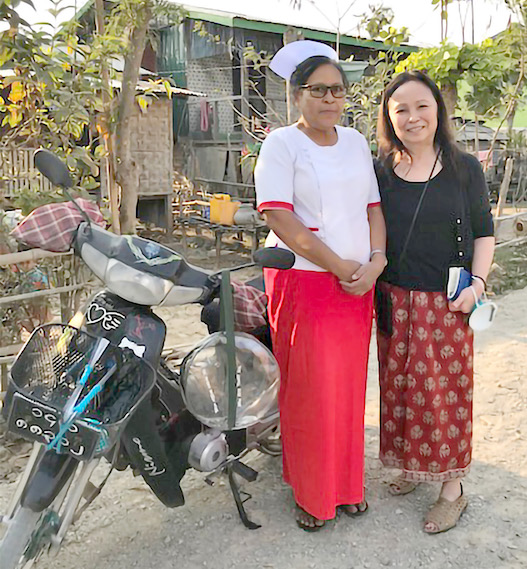
Dr. Paula Fujiwara (right) in Myanmar with a local nurse who administers TB medications, traveling by motorbike and sometimes walking through waist-high water to reach patients.
Photo: Courtesy of Dr. Paula Fujiwara
For the U.S. to think that it should only concentrate on issues within its borders and not support global TB prevention efforts is extremely short-sighted. TB is an airborne disease, and we are all connected by the air we breathe.
Dr. Paula Fujiwara is a member of the JACL Florin chapter. In 2023, she was awarded the Princess Chichibu Memorial Global Award of the Japan Anti-Tuberculosis Assn. for her contributions to TB control worldwide. Matthew Kojima was co-president of the JACL Berkeley chapter in 2023.