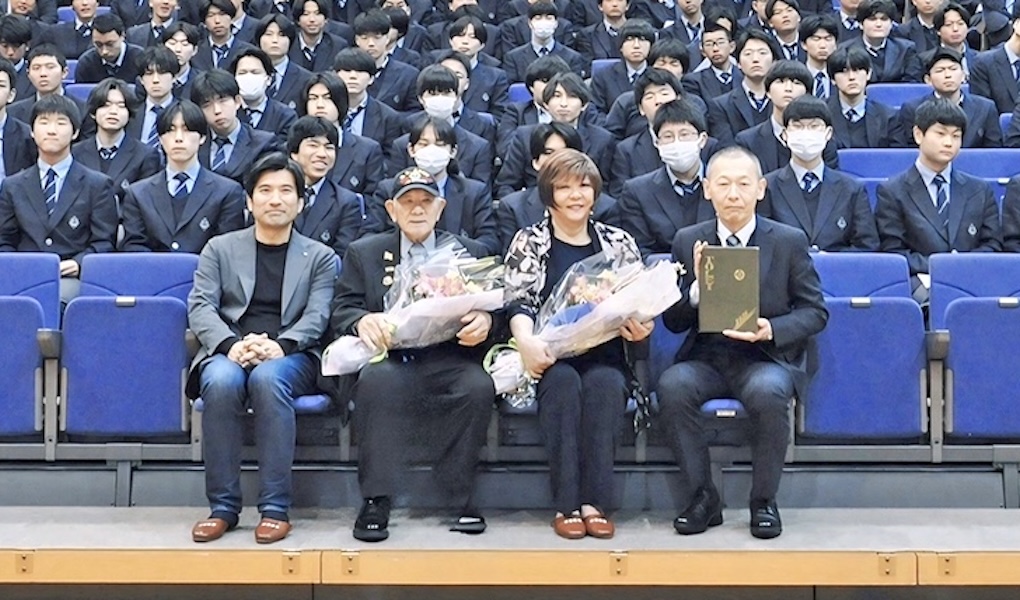
Three-hundred-and-fifty Tohrei Gakuen freshmen and sophomore junior high school students were present for the 1936 yearbook donation presentation and 90-minute program. Pictured with the students (from left) are Daisuke Igarashi, Norio Uyematsu, Patti Hirahara and Manabu Hayashi. (Photo: Courtesy of T. Isogai)
The 2026 pilgrimage focuses on the importance
of speaking out and its essential role in preserving freedom.
By Patti Hirahara, P.C. Contributor
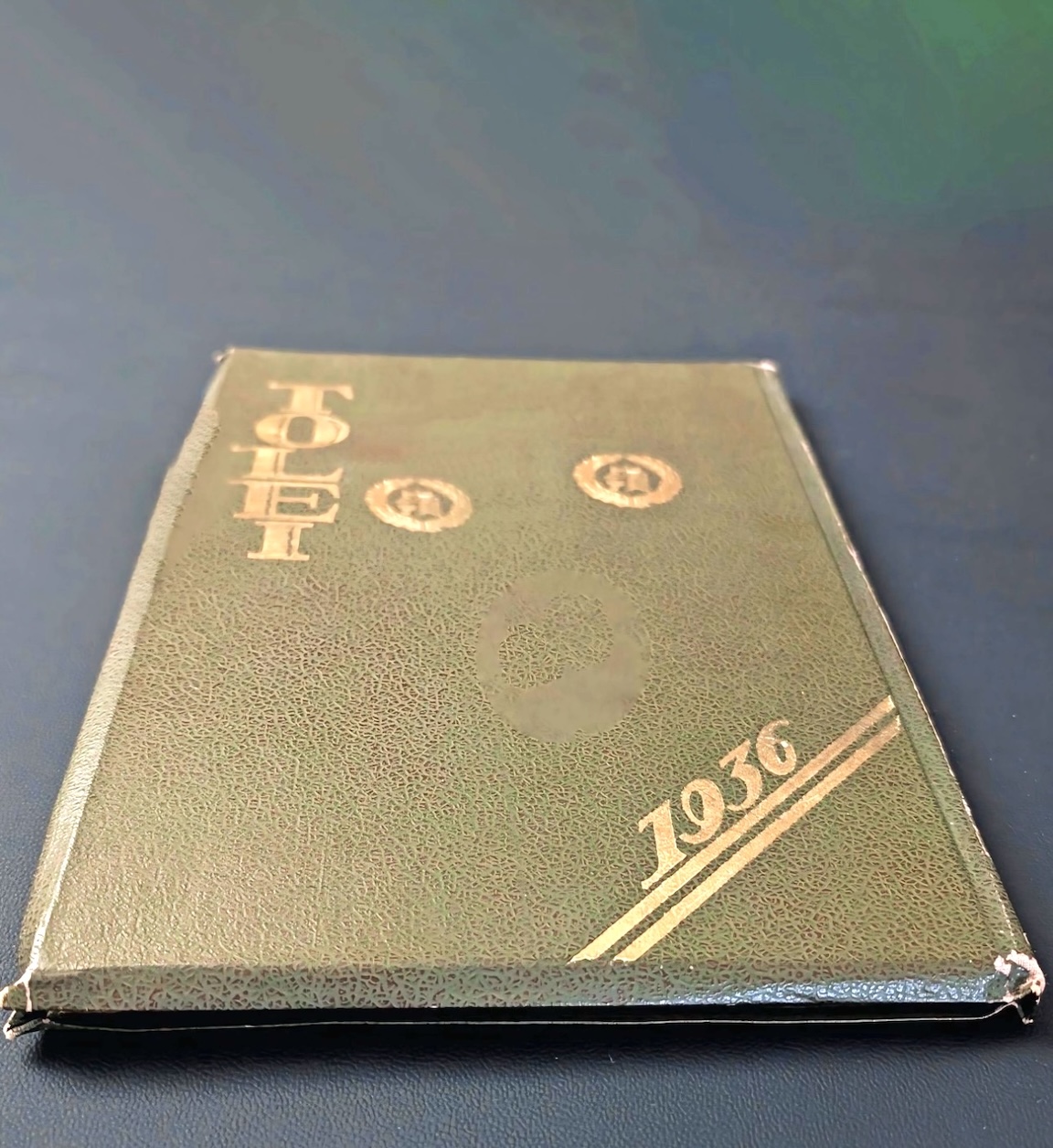
Chuji Eto’s 1936 yearbook was donated back to Tohrei Gakuen Fujisawa Junior High School in Japan on March 10. (Photo: Patti Hirahara)
During the course of our lives, we are faced with the difficult task of cleaning out our descendants’ homes and not knowing what to keep and what to throw away.
I was faced with this dilemma after my late husband’s uncle, Chuji Eto, passed away, and his executor gave me a box and a fabric bag containing Eto and Matayoshi family memorabilia and asked if I could find a good home for these items.
What intrigued me was a 1936 yearbook for Tohrei Gakuen Fujisawa Junior High School in Japan, which was in incredible condition for being 90 years old and without any handwriting on the inside. Although the edges were slightly frayed and a paper shadow appeared inside the cover, a paper cover sleeve probably preserved its overall condition.
I then reached out to Daisuke Igarashi, who was the former San Francisco bureau chief of the Asahi Shimbun. He had returned to his head office in Japan in March 2025, so I asked if he could be an intermediary between the Tohrei Gakuen Fujisawa Junior High School, located in Fujisawa-City in Kanagawa Prefecture, and me, to see if the school was interested in acquiring its 1936 yearbook back.
It was perfect timing, as my friend, Norio Uyematsu, and I had plans the next month to visit Japan and would be close enough to Fujisawa City to donate the yearbook back to the school in-person during our time in Tokyo.
The response was quick once the school heard about the discovery of the 1936 yearbook.
Tohrei Gakuen is a private all-boys junior high school and in learning that I would donate this yearbook back to the school, they were overjoyed, since this would become the oldest yearbook the school would possess in its 121-year history.
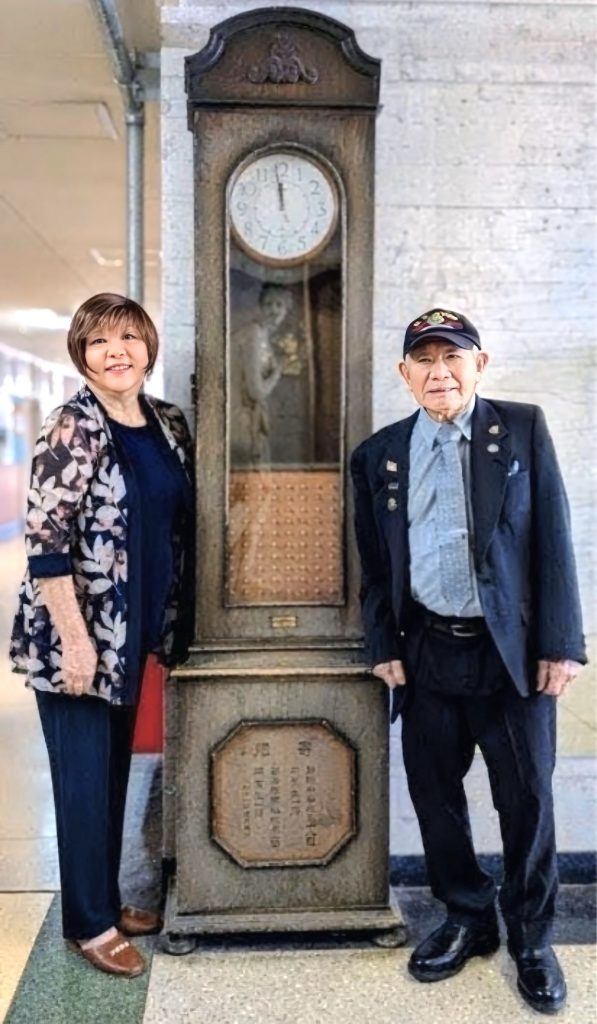
Patti Hirahara and Norio Uyematsu stand next to the 90-year-old congratulatory clock from the Tohrei Gakuen Class of 1936. Chuji Eto’s name is etched in the bottom of the front of the clock. (Photo: Courtesy of Tohrei Gakuen Fujisawa Junior High School)
Earlier books were lost, destroyed or damaged over the years.
It was also amazing to find out that the school’s principal in 1936, Gizen Hayashi, was the grandfather of its current principal, Manabu Hayashi.
This discovery meant a great deal to Hayashi, as well as myself, in knowing that my husband’s uncle’s legacy would be remembered, as well as that of Hayashi’s own grandfather, who contributed so much to the school during its early years, including writing the school song, which is still sung to this day.
Additional historical ties were also discovered in Chuji Eto’s Class of 1936 yearbook — the class donated a grandfather clock that still stands in the entrance of the school after all these years. The face of the clock was changed due to its age, but the remaining parts remain original.
No one realized the historical significance of this 90-year-old clock until school Vice Principal Yoshiyuki Kozai noticed a faded emblem on the clock glass and realized there was an inscription detailing its donation by the 1936 class — it even contained my husband’s uncle’s name, Chuji Eto, in the message.
With only a short time to prepare before Norio and I would arrive in Japan, Tohrei Gakuen set the yearbook ceremony date for March 10 and announced that 350 of its freshman and sophomore students would also be in attendance.
In addition to witnessing the return presentation of the yearbook, Tohrei Gakuen students would also hear from 95-year-old Nisei and Japanese American Korean War veteran Norio Uyematsu, who was incarcerated as an 11-year-old child at the Heart Mountain Concentration Camp in Wyoming during World War II. (Heart Mountain is also where Igarashi gave his impressions of the Japanese American incarceration camps, which he researched and wrote about when he was on assignment during his stint in America.)
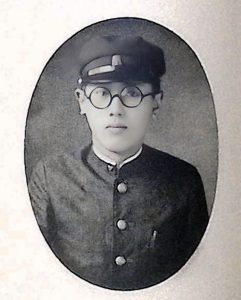
Chuji Eto was born in Hollywood, Calif., in 1917, and graduated from Tohrei Gakuen in 1936. Upon graduation, he boarded a boat in Yokohama, Japan, and returned to San Pedro, Calif. He was the only American-born student in his class.
I was also able to explain my feelings as a Yonsei (fourth generation) who was born 10 years after WWII. I also suffered discrimination as a Japanese American growing up but found my husband’s family, Norio Uyematsu and my own family had one thing in common — they were all incarcerated at Heart Mountain.
The irony of this story is about the life of student Chuji Eto himself. He was the youngest of three children who was born in Hollywood, Calif., in 1917. His oldest sister, Hisako, was my late-husband Terry K. Takeda’s mother.
When Chuji was young, his mother sent him and his two sisters, Hisako and Chiyeko, to live with relatives in Japan. Once he graduated in 1936, he boarded the Chichibu Maru ship in Yokohama to come back to San Pedro, Calif., according to a passenger manifest I found documenting his voyage on April 10 of that year.
He returned to his father’s rooming house in Hollywood until fate stepped in and forced him into the Heart Mountain Concentration Camp as a bachelor at the age of 25, where he also took on the English name of Johnny. When he was able, he found work in Chicago and left Heart Mountain on April 13, 1944.
“Johnny” returned to Hollywood and passed away in 1952 in a car accident just shy of his 35th birthday.
The 90-minute event at Tohrei Gakuen was filled with traditional Japanese pomp and circumstance, and I wanted to make sure that when I presented the 90-year-old yearbook back to the school, I showed my full respect to Principal Hayashi by bowing at 90 degrees and conducting myself not only as a Japanese American but one that was taught in traditional Japanese manners and customs.
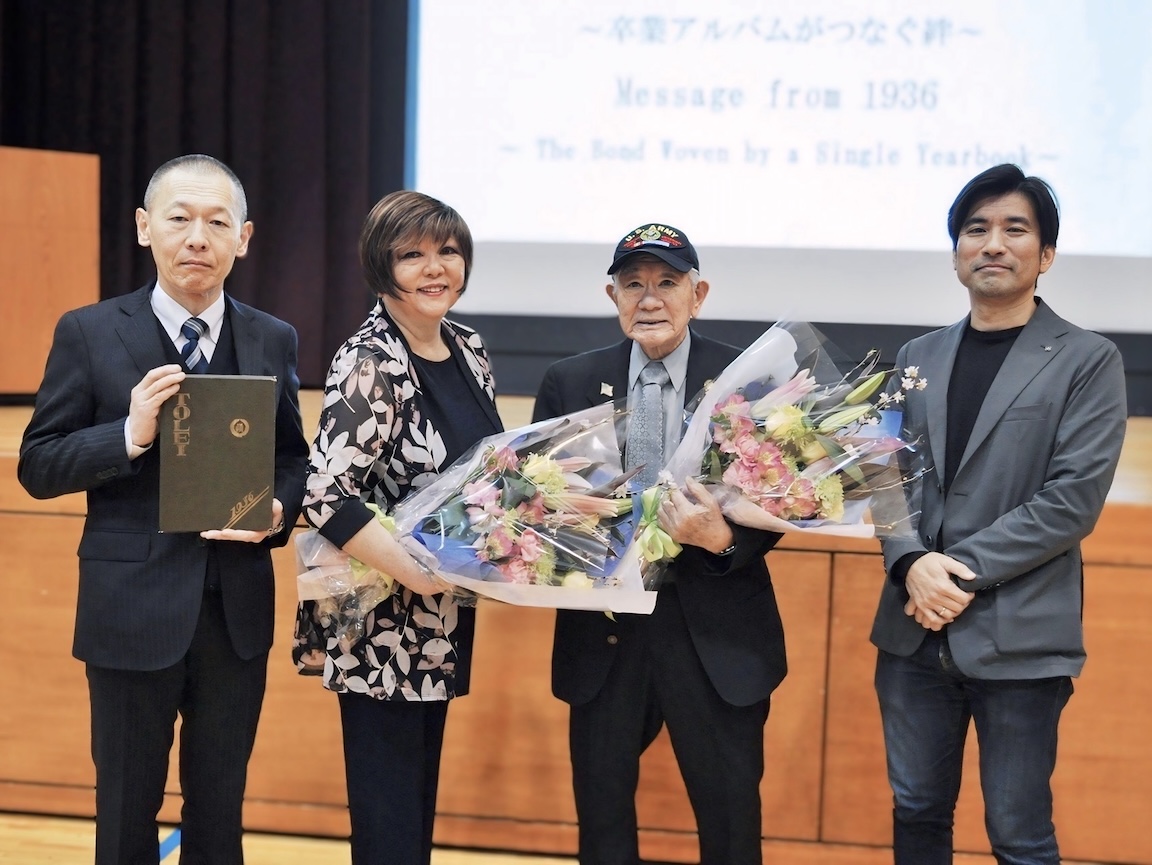
Principal Manabu Hayashi (left) holds the 1936 yearbook presented to Tohrei Gakuen by Patti Hirahara, who is also pictured with Norio Uyematsu (center) and Daisuke Igarashi. (Photo: Courtesy of T. Isogai)
The presentation was followed by a question-and-answer session where students asked questions about Japanese Americans, diversity, ideas with an international perspective and how life was like for JAs who were forcibly incarcerated during WWII.
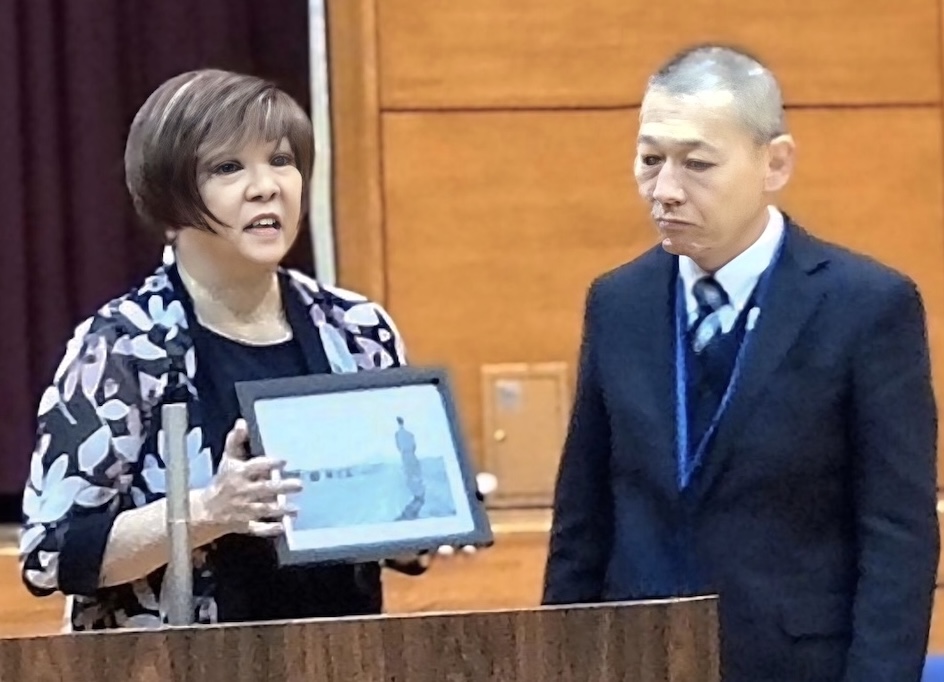
Patti Hirahara explains her family’s story at Heart Mountain and the more than 2,000 photos her grandfather and father took while forcibly incarcerated there from 1943-45. She donated a photo to the Tohrei Gakuen as a remembrance of student Chuji Eto and his incarceration at Heart Mountain. (Photo: Courtesy of Shigehiko Shiramizu)
As part of the presentation, I was also able to show them actual pictures from Heart Mountain through my family’s extensive collection of more than 2,000 photos that were processed and developed in a secret underground darkroom by my grandfather, George Hirahara, and my teenage father, Frank C. Hirahara, who was a high school student at that time.
Patti Hirahara donates Chuji Eto’s 1936 yearbook on behalf of the Eto family to Principal Manabu Hayashi, who is holding the yearbook. (Photo: Courtesy of Tohrei Gakuen Fujisawa Junior High School)
The students were amazed in seeing people who look just like them being forced to live behind barbed wire 83 years ago. I also told them that I donated the largest private photo collection of Heart Mountain to my father’s alma mater of Washington State University.
Representatives from the local newspaper Town News, the Asahi Shimbun Kanagawa Section and the Kanagawa Shimbun covered the event. Shared Kozai, who is vice principal of both Tohrei Fujisawa Junior and Senior High Schools, immediately following the event: “Thank you very much for visiting our school and giving us such a meaningful and inspiring talk to our students. It was truly a great honor for us to welcome you.
“Your story about your family’s experience in the incarceration camps and your life as a fourth-generation Japanese American deeply moved both the students and the staff,” he continued. “The message you shared about respecting one another and stepping outside our own world to understand others left a strong impression on our students.
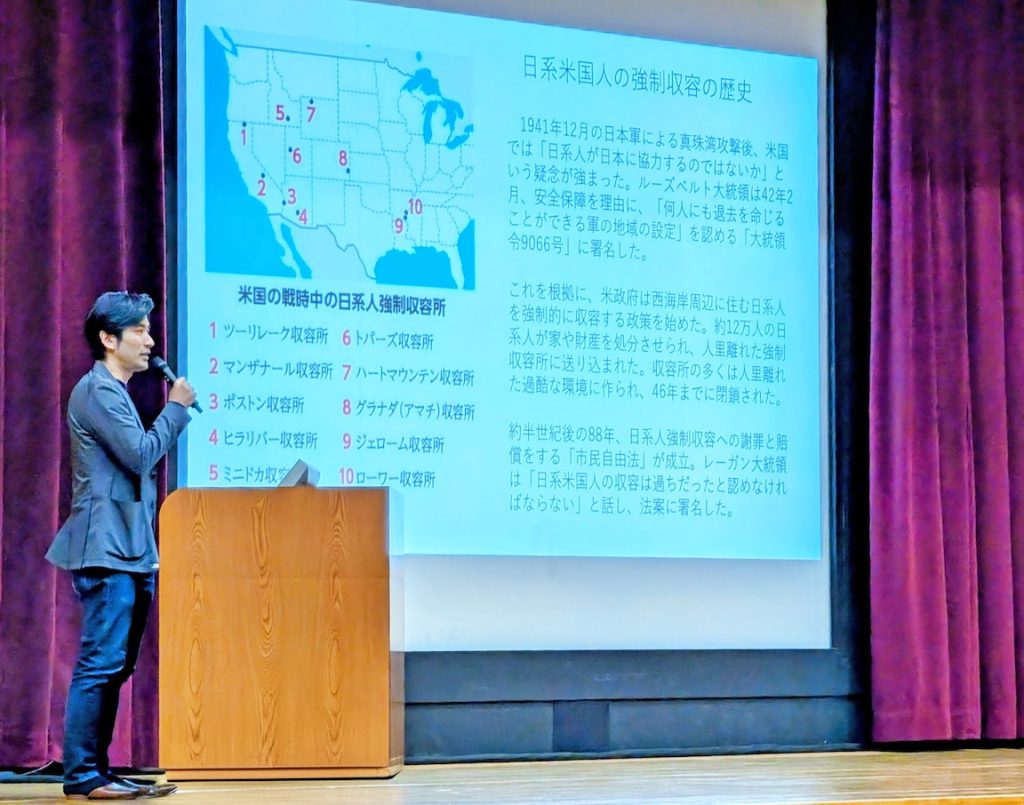
Daisuke Igarashi, staff writer for the Asahi Shimbun in Japan, discusses the Japanese American incarceration sites in the U.S. and what he learned as the newspaper’s San Francisco bureau chief before he returned to Japan last year. (Photo: Courtesy of Patti Hirahara)
“The return of the 1936 yearbook was also a very special moment for Tohrei Gakuen. It reminded us of the long history of our school and the connections that continue across generations and across countries. Personally, it also gave me a renewed sense of pride in being part of this school community.
“I believe this event helped our students realize that they are part of a long history and that each person has their own story to create in life. It was truly a valuable opportunity for them. We were also very grateful for Norio Uyematsu’s meaningful talk and for sharing his family’s history with us,” he concluded.
Principal Hayashi also shared his sentiments: “It was very moving for me and our school community to see the 1936 yearbook return to our school 90 years later from America. We deeply appreciate your kindness and the connection between our families.”
The most moving conclusion to the event was having the students sing the school song written by Gizen Hayashi. It was a moment I will never forget but also bittersweet, as my husband, Terry K. Takeda, passed away six years ago and was not by my side to witness how the Eto family was honored.
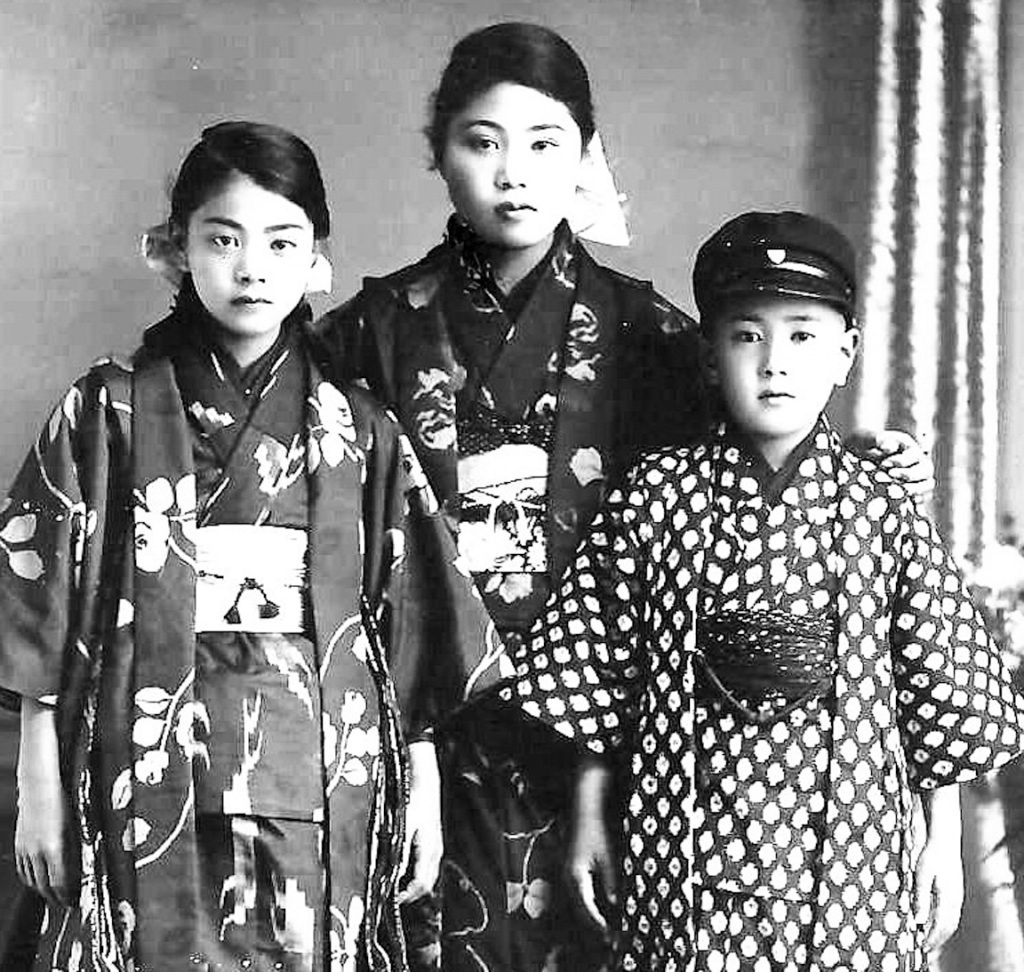
The Eto children in an undated photo taken in San Pedro, Calif. Pictured (from left) are Chiyeko Eto, Hisako Eto (Terry K. Takeda’s mother) and Chuji Eto. (Photo: Courtesy of Patti Hirahara)
Chuji Eto’s life was short-lived, but one could only imagine how he would have felt to see how his prized possession brought two countries together and now will forevermore be shared by generations to come.