
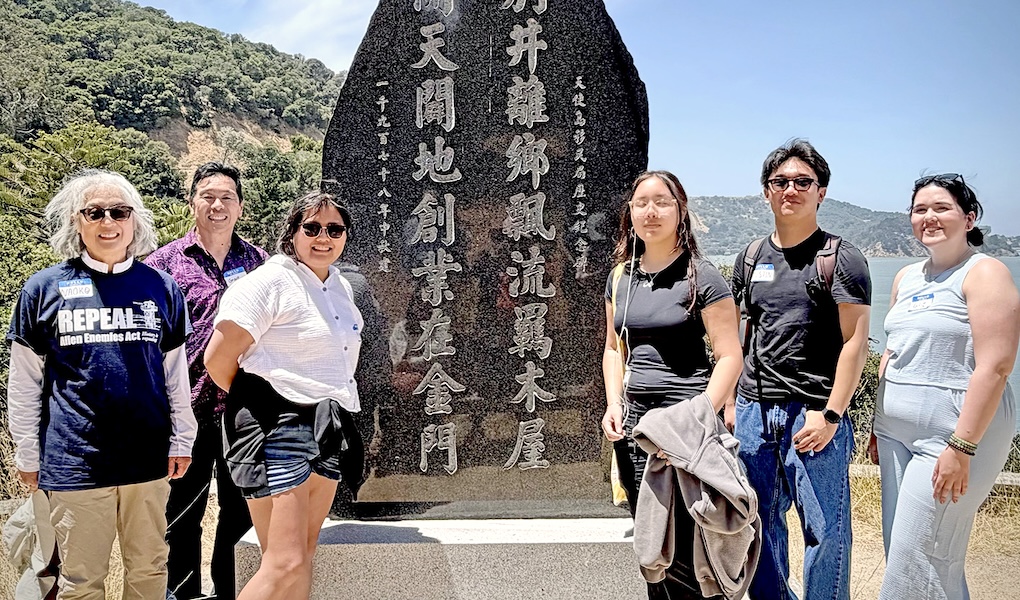
Tour guide Grant Din (second from left) with (from far left) Naoko Fujii
and JACL youth Kiyone Tanaka-Gacayan, Mayu Alketar-Okazaki, Austin Fujii and Katie Masano Hill (Photos: Lisa Kajisa)
A special tour visits the Angel Island
Immigration Center, where 700 Japanese Issei were detained in 1941-42.
By Katie Masano Hill, JACL Norman Y. Mineta Fellow, and Mayu Altekar-Okazaki, San Jose JACL Youth Intern
SAN FRANCISCO, CA The visit was more than a history lesson. A group of 23 JACL interns, parents and youth program volunteers participated in a special Alien Enemies Act tour of the Angel Island Immigration Center on July 2.
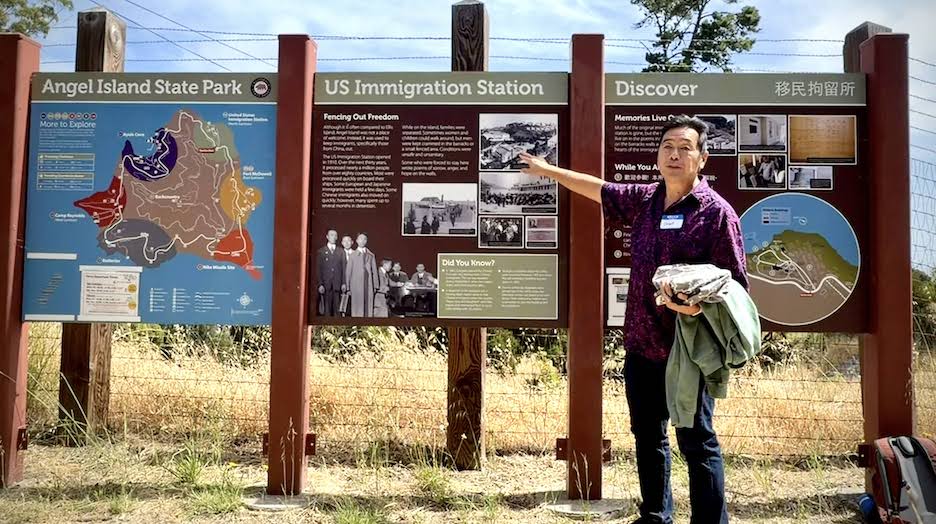
Tour guide Grant Din points out Angel Island Immigration Station facts.
Led by genealogist and historian Grant Din, the trip was organized by Naoko Fujii and Katie Masano Hill for JACL youth to experience where 700 Japanese Issei individuals were detained in 1941-42 under the Alien Enemies Act.
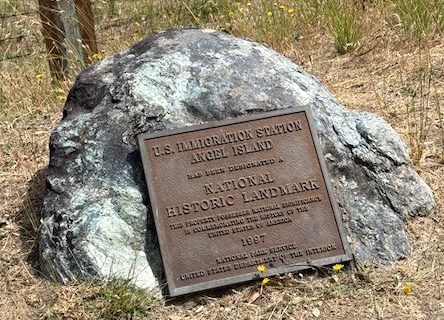
The National Historic Landmark plaque for the U.S. Immigration Station on Angel Island, a designated National Historic Landmark. (Photo: Dan Mayeda)
The special tour was a reminder that Angel Island was once a site of exclusion twice over — first as an immigration station that operated from 1910-40, and later as a place where 700 Japanese Issei were forcibly detained by the U.S. military under the Alien Enemies Act in 1941-42 without meaningful due process.
The Issei held there were part of a larger group of 17,000 Japanese and Japanese Latin American “enemy aliens” detained under Proclamation 2525 invoking the Alien Enemies Act.
They were community and business leaders, clergy or others identified by FBI surveillance. Proclamation 2525 (Dec. 7, 1941) preceded Franklin D. Roosevelt’s issuance of Executive Order 9066 (Feb. 19, 1942), which authorized the forced removal and wrongful incarceration of 120,000 people of Japanese descent during World War II.
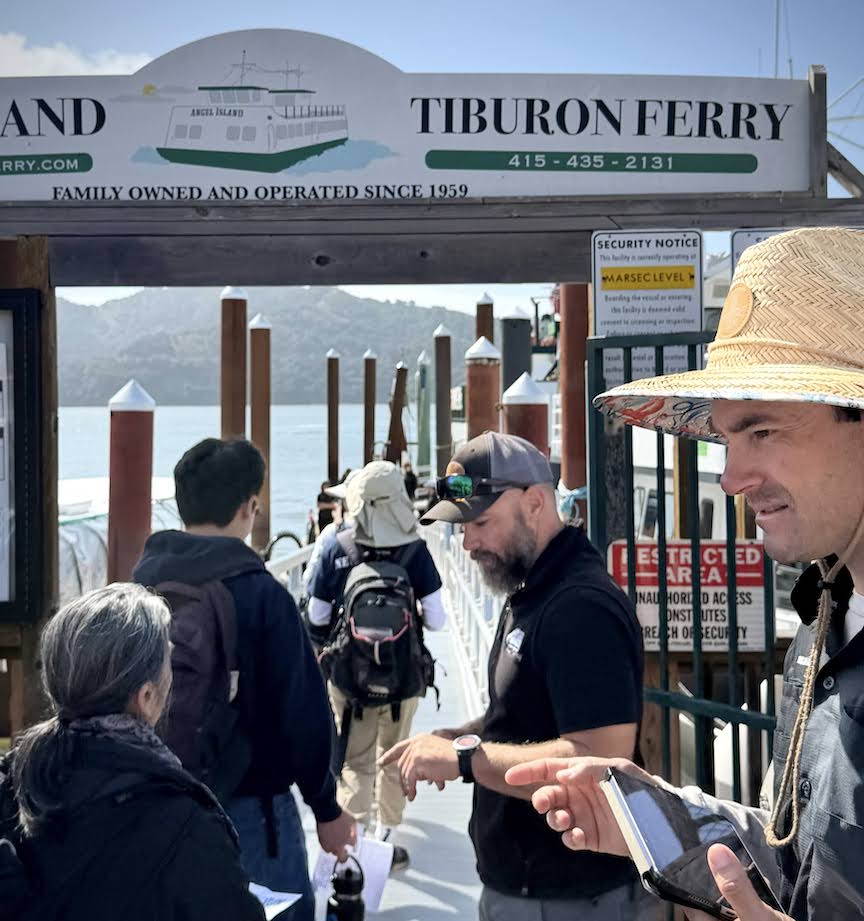
Tour participants board the Angel Island-Tiburon ferry to Angel Island in San Francisco Bay.
“Seeing the actual ship manifests and photos of my family upon arrival made the history feel real in a way no textbook can,” said Hill, a JACL Norman Y. Mineta fellow, who traced her own family’s records before the trip. “It was heartwarming and distressing to learn what my great-great-grandmother went through when she arrived as a picture bride and was held at Angel Island for three days.”
During the tour, Din described diaries written by detainees about their experiences there and showed participants how the station processed more than a million immigrants, mostly from Asian countries, between 1910 and 1940. Din also helped create the permanent exhibit “Taken From Their Families,” which documents Japanese detainees held under the Alien Enemies Act.
The student interns on the tour trip are currently researching stories of hardship suffered by Japanese detained under the Alien Enemies Act for inclusion in amicus briefs prepared in support of cases challenging the invocation of the Alien Enemies Act for the first time since WWII in the deportation of Venezuelan immigrants, reigniting concern that the law can still be used to detain and remove people with minimal judicial review.
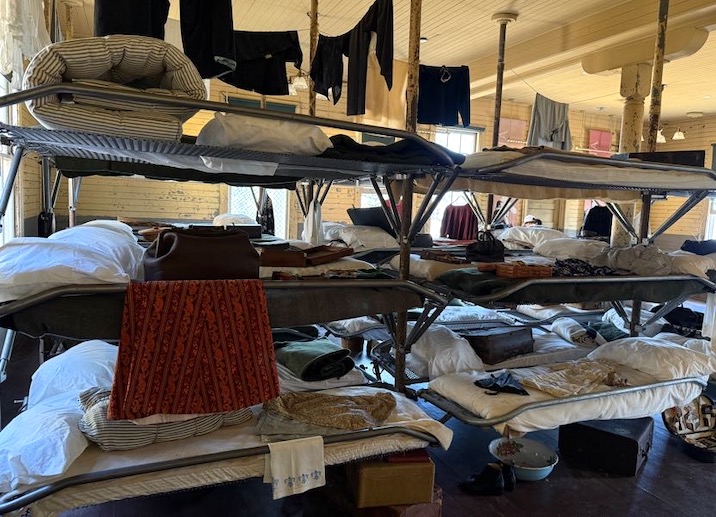
This photo shows the re-created detainee barracks/dormitory inside the Angel Island Immigration Station’s detention building.
The group also toured the re-created detainee barracks/dormitory located inside the Angel Island Immigration Station’s detention building. The tightly stacked bunk beds show how immigrants were housed while awaiting interrogation and decisions on their entry status. Also found there were hundreds of Chinese poems that were carved into the building’s walls, documenting the frustration, hope and despair of those held there.
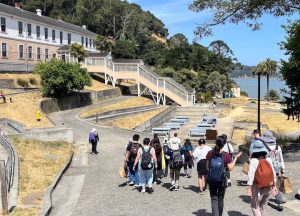
Tour participants walk toward the main Immigration Station detention barracks building, which houses the historic barracks and carved wall poems from detained immigrants.
Photo: Courtesy of Ted M.
“Taking the interns to Angel Island was incredibly moving. Standing where their relatives were once detained in 1941-42 — you can feel the weight of their stories in a deeply personal way. There was grief in that space, but also a powerful sense of connection and resilience that lives through this generation,” said Fujii.
For the students, the lesson is clear: History is not safely sealed in the past. From Angel Island’s barracks to today’s courtroom battles, the question remains how easily history repeats itself.
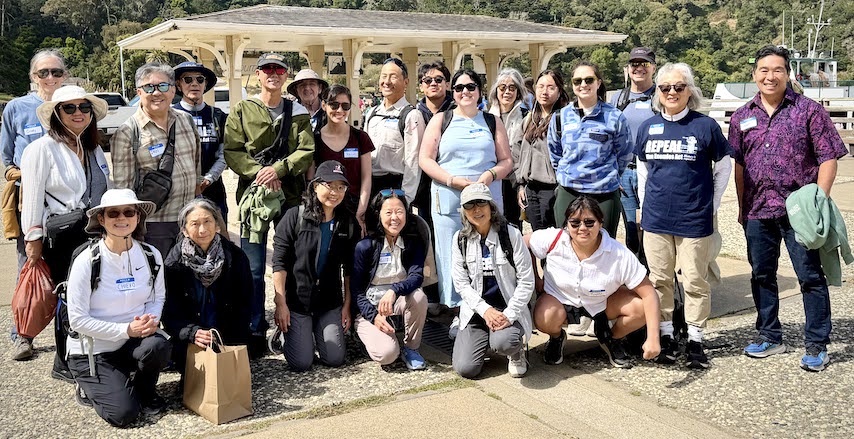
The Angel Island excursion welcomed 23 participants, including JACL Social Justice Action Committee Members Carol Kawase (front row, second from left), Dan Mayeda (standing, third from left) and Naoko Fujii (standing, second from right), as well as Norman Y. Mineta JACL Policy Fellow Katie Masano Hill (standing, center in blue).