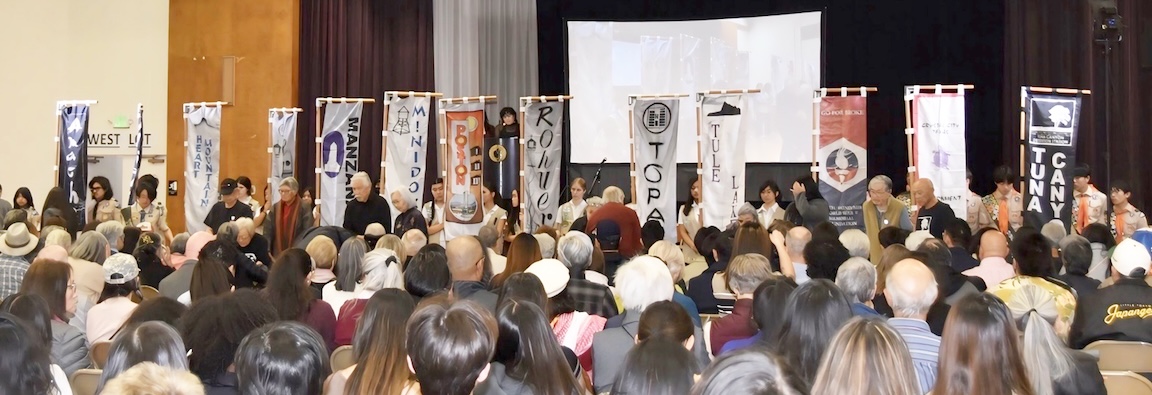
The “Camp Roll Call” at the Los Angeles Day of Remembrance event on Feb. 21, held at the Nishi Hongwanji Los Angeles Betsuin in Little Tokyo. (Photos: Richard Watanabe)
The Los Angeles community gathers for
Day of Remembrance 2026 and urges action against modern injustices.
By P.C. Staff
Community members, activists, World War II incarceration survivors and their descendants gathered in Los Angeles’ Little Tokyo for the 2026 Los Angeles Day of Remembrance observance at Nishi Hongwanji Los Angeles Betsuin on Feb. 21.
See related stories:
Boise Valley JACL Presents 25th DOR Observance
The Government Made Them Neighbors, Their Connection Made Them Family
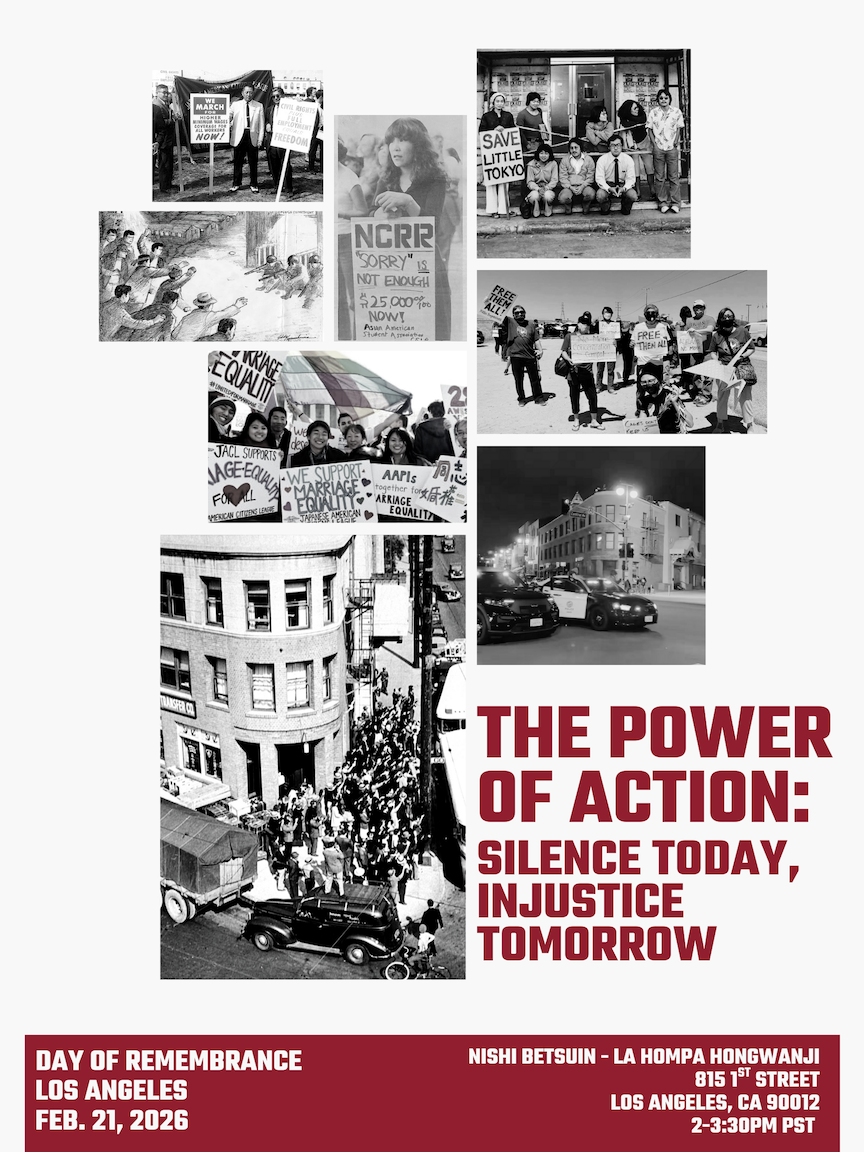
This year’s theme, “The Power of Action: Silence Today, Injustice Tomorrow,” served as a poignant reminder that the lessons of the past must be actively applied to the present.
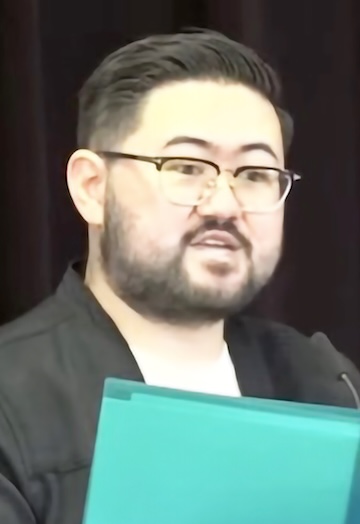
JACL’s Matthew Weisbly was the committee chair for Day of Remembrance Los Angeles.
The program began with a welcome introduction by Matthew Weisbly, education programs manager at JACL National and committee chair for Day of Remembrance Los Angeles, who recognized indigenous peoples and acknowledged “.… the intergenerational trauma that all indigenous peoples have faced. We are grateful that we can be present on these ancestral lands.”
Weisbly went on to share the mission of the day’s program, which was to “teach the incarceration story and the experiences of those who came before us to a new generation while also using our community’s unique history to highlight ongoing injustices plaguing our nation today.”
Drawing stark parallels between the historic injustices of Executive Order 9066 and the contemporary struggles of marginalized groups, Weisbly noted the ongoing threats of historical erasure and the current use of detention centers for immigrant and refugee communities.
“Our community knows all too well a time when others did not speak up or stand up to support us,” he told the packed audience. “And because of that, it is why we have made a commitment as a community to support all those in need. . . . So, let us remember that not only today, but every day. We have a voice. We have an opportunity to stop injustice, hatred, violence. . . . Let us take action today, so that we prevent that injustice tomorrow.”
The traditional “Camp Roll Call” followed, recited by Elizabeth Morikawa and Lisa Akiyama Robinson. Local Boy Scouts, carrying banners displaying the names of the War Relocation Authority concentration camps, Department of Justice camps and citizen isolation centers, as well as banners representing the 100th Infantry Battalion, the 442nd Regimental Combat Team and the Military Intelligence Service, were accompanied by a WWII camp survivor:
- Amache, Colo. (7,318 prisoners)
- Gila River, Ariz. (13,348)
- Heart Mountain, Wyo. (10,767)
- Jerome, Ark. (8,497)
- Manzanar, Calif. (10,046)
- Minidoka, Idaho (9,397)
- Poston, Ariz. (17,814)
- Rohwer, Ark. (8,475)
- Topaz, Utah (8,130)
- Tule Lake, Calif. (18,789)
- 100th Infantry Battalion, the 442nd Regimental Combat Team and Military Intelligence Service; Department of Justice Camp at Crystal City, Texas; Tuna Canyon Detention Station, Los Angeles; and the other Department of Justice Camps and Citizen Isolation Centers (5,500).
The program then held an “In Memoriam” tribute for Japanese American community leaders and friends who passed away since 2025’s L.A. DOR event and paid special tribute to Day of Remembrance committee member and community organizer Andie Kimura, who was remembered for her fierce advocacy for sustainability, livable wages and social equity in Little Tokyo.
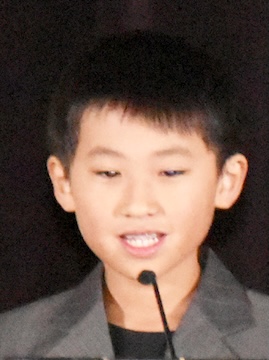
Fourth-grade student Lucas Morita wrote a PSA about the WWII incarceration experience.
Next up, Jenny Chomori introduced event special guest Lucas Morita, a fourth-grade student and recipient of the Manzanar Committee Sue Kunitomi Embrey Student Award, who wrote a public service announcement as a third-grader about Japan’s bombing of Pearl Harbor on Dec. 7, 1941, and the bleak realities of life behind barbed wire for those of Japanese ancestry who were forcibly incarcerated as a result of EO 9066 and the divisive loyalty questionnaires forced upon them.
“Let me remind you, these people had done nothing wrong. Babies, young kids, old grandmas and everyone in between were considered the enemy by the U.S. government,” Morita pointed out.
“Locking up innocent U.S. citizens was a mistake. We can ignore this dark time in our history, or we can learn from it,” he declared to the audience. “Only then can we do better and get stronger in the future. Do not let history repeat itself.”
The formal presentation then concluded with a moving spoken-word segment performed by Mia Barnett, Richard Katsuda, Vivian Matsushige, Kyoko Nakamaru, Deena Umeda and Weisbly. The performance explored themes of inherited resilience, the grief of generational trauma and the drive to continue fighting for civil rights in their ancestors’ honor.
“Because of our ancestors and all they went through and endured so that we would not have to, we cannot stand idly by while millions are at risk, people not that dissimilar to use, or in some cases, exactly like us. You fought back against the enemy. Lend us your strength, wisdom, power and humility. Let us fight the fight once again, hopefully for the last time,” the group said.
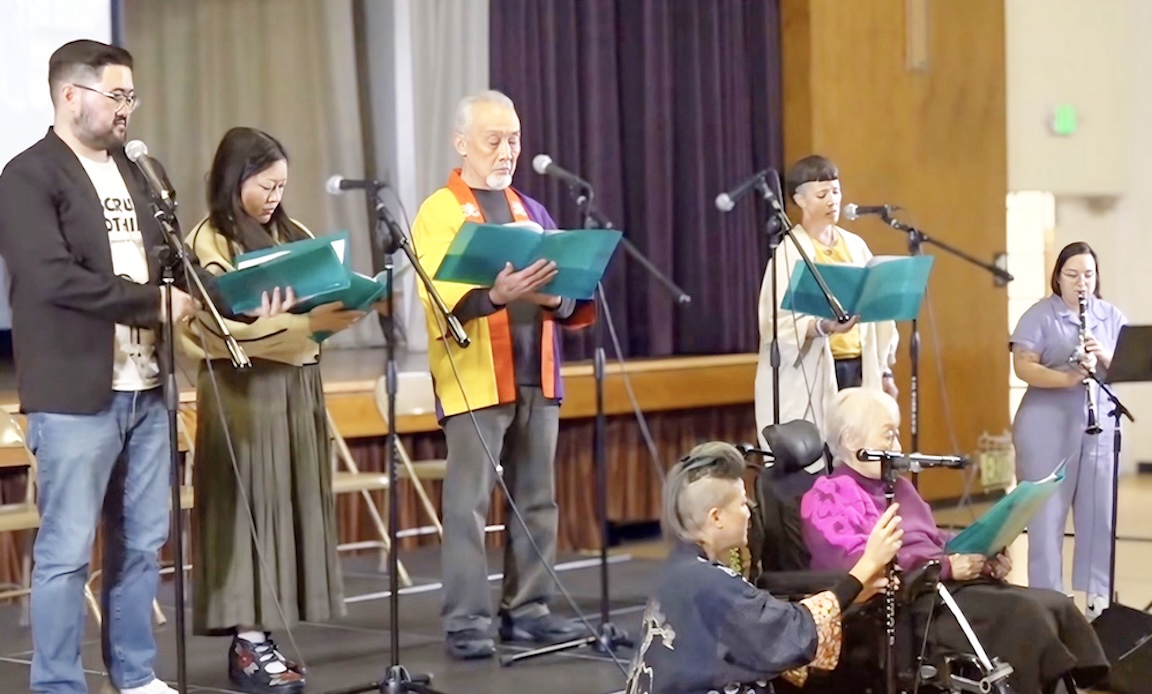
A moving spoken-word performance concluded the Los Angeles DOR observance presentation.
To close the event, organizers then invited the audience to participate in a community dance before breaking the room into interactive, small-group discussions. Attendees were asked to share stories of the ancestors they brought into the room with them, cementing the event’s goal: transforming collective memory into collective action.
The Los Angeles Day of Remembrance was presented by Go For Broke National Education Center, JACL — Pacific Southwest District, Japanese American National Museum, Little Tokyo Service Center, Manzanar Committee, Nikkei for Civil Rights & Redress and Nikkei Progressives, OCA — Greater Los Angeles.