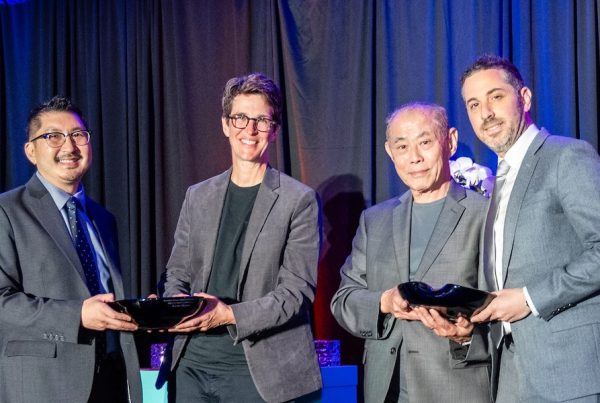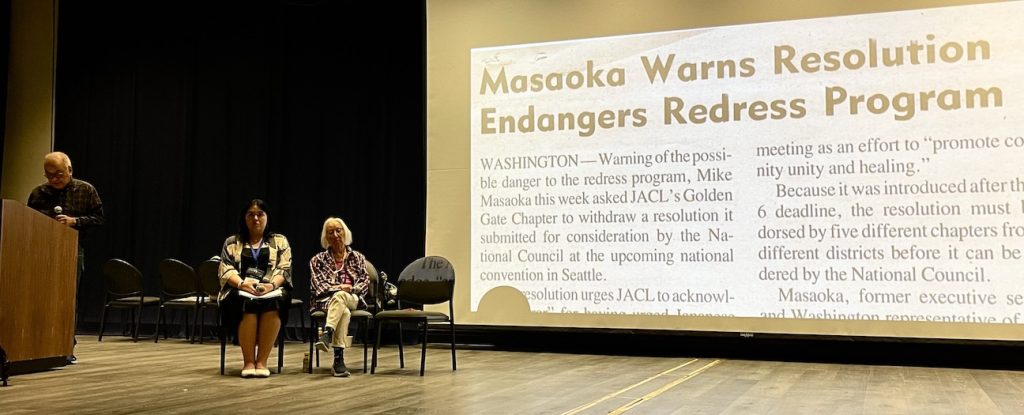
Frank Abe, left, moderates the panel titled “The Lim Report in the 21st Century, and What It Says to Us Today” featuring Tule Lake descendant and JACL Norman Y. Mineta Fellow Katie Masano Hill, and civil rights activist and filmmaker Chizu Omori. (Photo: Nancy Ukai)
Pilgrims unite to heal, learn and remember past
injustices that occurred at the site during WWII.
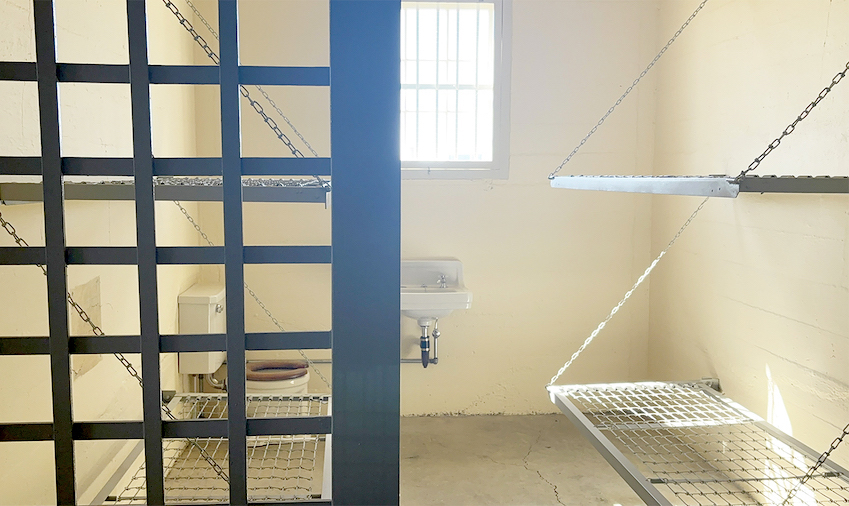
Interior of a cell within the historic Tule Lake jail (Photos: Katie Masano Hill)
Nearly 400 survivors, descendants, historians and community members gathered July 3-6 in Klamath Falls, Ore., at the Oregon Institute of Technology and the Tule Lake Segregation Center site for the 2026 Tule Lake Pilgrimage, themed “Resistance & Solidarity.”
The weekend’s programming included memorial events, historic site tours, educational panels, cultural programming and reflection sessions, with many first-time pilgrims attending the event that coincided with the observance of the 250th anniversary of America’s independence from England.
A featured program highlight was the plenary session “Japanese American Voices of Resistance,” moderated by Tule Lake preservationist and public historian Barbara Takei. The panel examined how government narratives during and after World War II portrayed Japanese American resistance as disloyalty while obscuring the injustice of incarceration.
Panelists included filmmaker Emiko Omori, director of “Defiant to the Last: Resistance at the Tule Lake Jail”; Dr. Satsuki Ina, author of “The Poet and the Silkgirl: A Memoir of Love and Incarceration”; and Tamiko Nimura, author of “A Place for What We Lose: A Daughter’s Return to Tule Lake.” The speakers highlighted the experiences, resilience and courage of Tule Lake resisters.
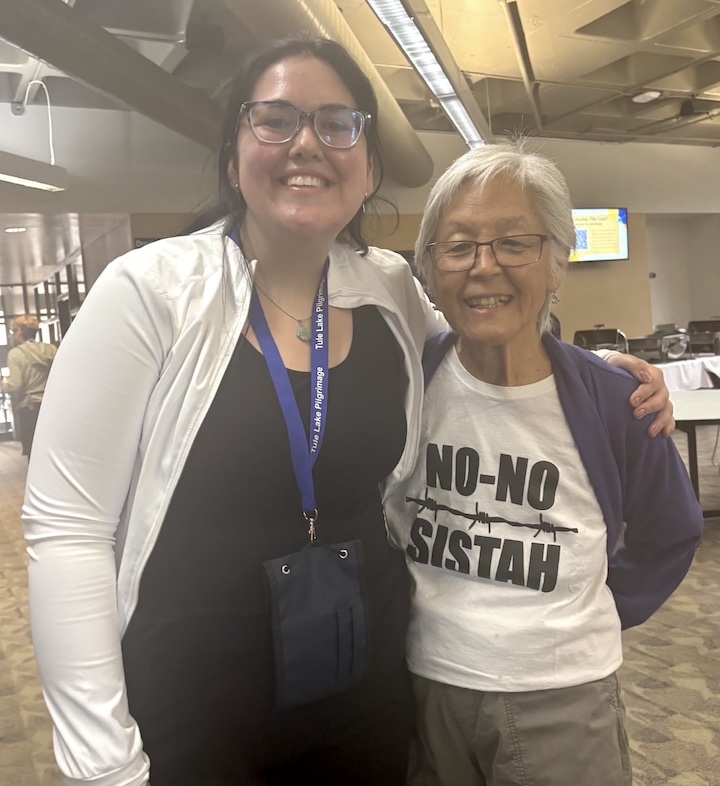
Katie Masano Hill and Dr. Satsuki Ina, Tule Lake survivor and co-founder of Tsuru for Solidarity.
Another session, titled “The Lim Report in the 21st Century, and What It Says to Us Today,” featured moderator Frank Abe along with panelists Chizu Omori and Katie Masano Hill.
Abe gave a history of the research report on JACL’s wartime policies and actions that were compiled in 1990 by attorney Deborah Lim, (Editor’s note: Read related links here and here.) while activist Omori reflected on the report’s findings and Tule Lake descendant Hill spoke about how a new generation at JACL is addressing this difficult legacy.
Additional sessions examined archaeological discoveries, the Tessaku Translation Project and ongoing efforts to preserve Tule Lake’s history, in addition to a hike to Castle Rock; a memorial service to honor those who died at Tule Lake and who survived the wrongful treatment of the U.S. government for their dissent and protest of their unconstitutional incarceration; tours of the site; and reflection discussions.
Following is a personal reflection piece by Tule Lake Descendant
and JACL Norman Y. Mineta Policy Fellow Katie Masano Hill.
The Sky Above Block 73
Show me the way to go to home. Words etched and carved into the surface of the infamous jail at Tule Lake Segregation Center by a prisoner incarcerated within a prison in a prison.
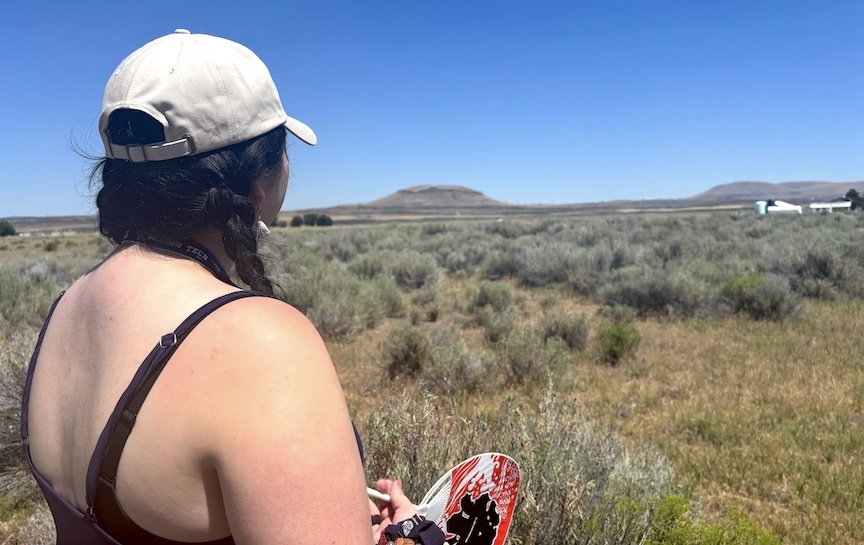
JACL fellow Katie Masano Hill stands at the original Block 73 latrine foundation, where her family’s barrack (73-07) was located, facing Abalone Mountain. Photos: Courtesy of Katie Masano Hill
What is home in a concentration camp? What does home mean to those who were forcibly removed from their homes, sent to assembly centers, placed on trains and incarcerated behind barbed wire in War Relocation Centers?
While completing my master’s thesis on mental health at Tule Lake and the administrative response to those suffering within the camp, I found myself confronting a question I was never sure I could answer as a Gosei. How could I ever fully understand what home meant to those who had it taken from them?
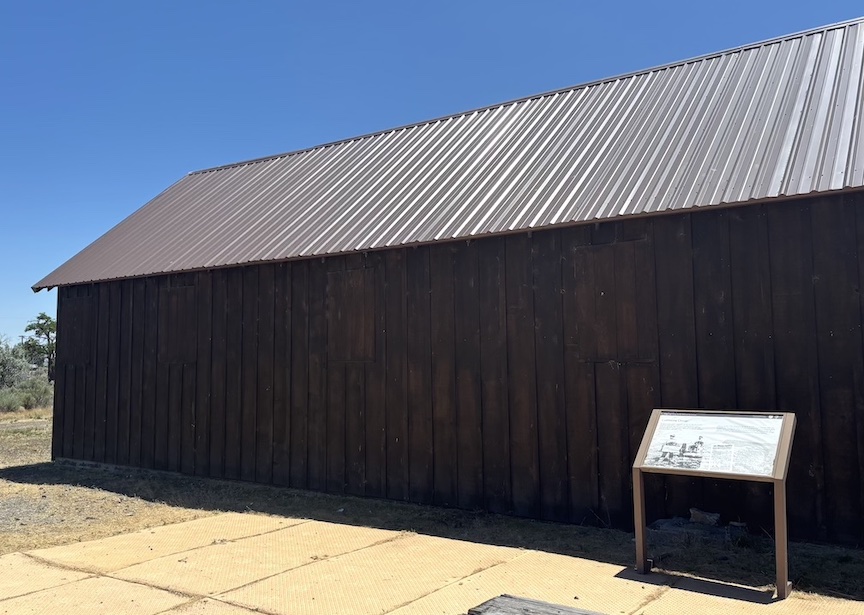
Barrack at the WRA Citizen Isolation Center (Camp Tulelake). Originally constructed by the Civilian Conservation Corps in the 1930s, the site is now part of Tule Lake National Monument.
On my first-ever pilgrimage, let alone my first time at Tule Lake, I prepared myself for my upcoming facilitation of Tsuru for Solidarity’s Healing Circles and my participation on a panel centered on the Lim Report in the 21st century by reviewing my family’s records.
My great-great-grandparents, the Nakatsukas, and their Nisei children’s barracks were at 7307 in Tule Lake. Before the bus tour led by the incredible all-volunteer docent team of the Tule Lake committee, I wanted to ground myself and prepare for the site of shame.
As I studied the map, I noticed that Block 73 was highlighted in yellow. It is the only block at Tule Lake where the foundation of the original latrine remains, a physical reminder of the inhumane and dehumanizing conditions endured by those imprisoned there.
I didn’t expect to be standing exactly on the earth and land where my family was. Where my Great-Uncle Yoshi last saw his family. Where he was taken against his will from Tule Lake and his family, never knowing that it would be the last time he would stand among them. Two years later, at just 24 years old, he died alone at Napa State Mental Institution.
Now, at 24, the same age Yoshi was when his life ended, I get to stare at the same Abalone Mountain and Castle Rock. Feel the same dust cling to my eyelids and the same breeze ruffle my hair. The landscape has changed. The barracks are gone. The structures have disappeared. But the sky remains. It is the only link between me and him.
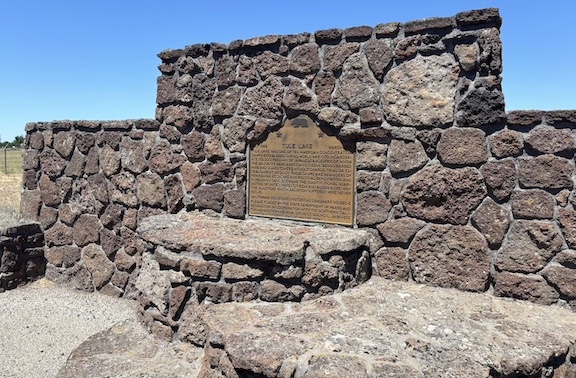
Tule Lake memorial plaque
Maybe home in a concentration camp was never a physical place. Maybe it existed in fleeting moments: the movement of the tule reeds, the stark white seashells scattered across the earth, the mountains beyond the confines of the camp. Small reminders that beauty and humanity still existed even in a place designed to strip them away.
This is the power of place.
Tule Lake cannot give us back the people we lost. It cannot answer every question left behind by those who suffered there. But it allows descendants to stand where their families once stood, to breathe the same air, to feel the same sun and to remember that they were here.
Eighty years later, I can still return to the place where Yoshi stood. I can still say his name. I can still look toward the same mountains beneath the same sky.
Tule Lake cannot change what happened to Yoshi. It cannot undo the years stolen from him or answer the questions that remain.
But places hold memories. They allow us to return, to remember and to recognize the lives that existed beyond the labels placed upon them.
In Block 73, I did not find all the answers I was searching for. I found something else: a connection across time. A reminder that while I cannot bring Yoshi home, I can carry his story forward beneath the same sky that once watched over him.
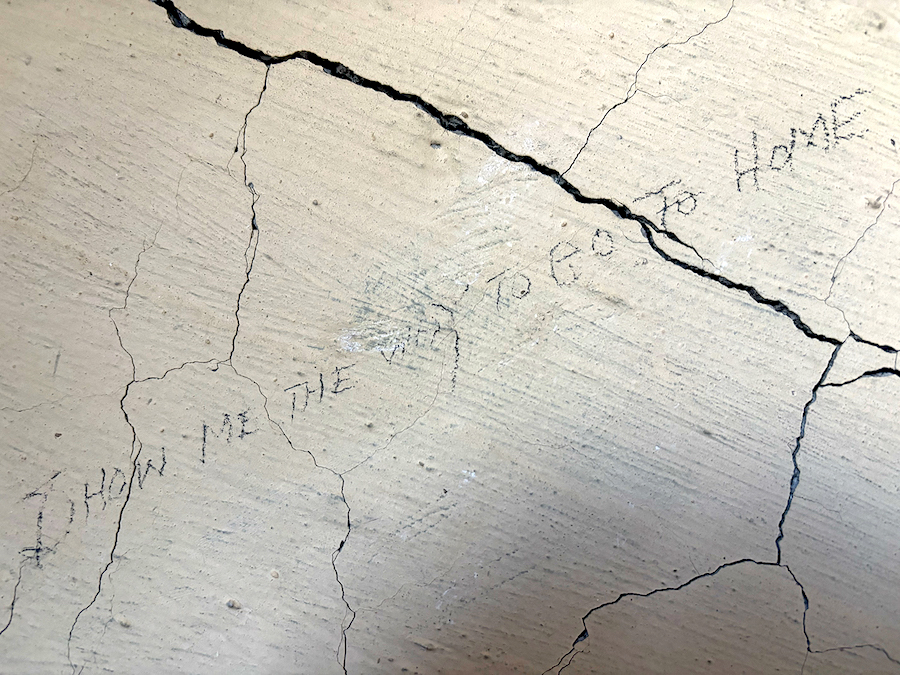
“Show me the way to go home,” an inscription left by a prisoner inside the historic Tule Lake jail.