
Sebastian
Carbajal
Earlier this month, the Cato Institute, an American libertarian think tank, polled the public on socialism and capitalism. Fifty-three percent of Gen Z respondents found socialism more favorable than capitalism (45 percent), a reversal from older generations, where favorability drops to 37 percent (ages 45-64) and 23 percent (65+). The survey also found 61 percent of Democrats and 51 percent of Gen Z would favor a “Democratic Socialist” candidate.
It doesn’t take an oil-funded think tank to see this shift already playing out. This midterm season, the Democratic “establishment” — those who treat holding on as a virtue, offering incumbency and the assurance that they are not Donald Trump — is losing ground to a new generation of candidates, many aligned with the Democratic Socialists of America, running on the novel premise that they might promise something.
In the mid-1800s, the Whig Party was held together by two things alone: opposition to Andrew Jackson and a refusal to take a real position on slavery. It worked, until it didn’t. By 1854, the party had collapsed, its northern wing fleeing to the newly formed Republican Party, built on an uncompromising commitment to abolition.
A coalition built on what it opposed, rather than what it stood for, cannot survive contact with an issue that demands an answer. Swap “Andrew Jackson” for “Donald Trump,” and you start to see where this is going.
Let’s look at the receipts: In New York City, Zohran Mamdani, a near “nobody,” faced off against party fixture Andrew Cuomo, whose campaign leaned into Islamophobic framing, even circulating digitally altered images darkening Mamdani’s skin to code him as more “foreign.”
Mamdani still won the primary outright, then beat Cuomo again in the general election after Cuomo re-entered as an independent — a sore-loser campaign.
Something similar is happening in Michigan, where Abdul El-Sayed is running against Chuck Schumer favorite Haley Stevens for an open Senate seat. Establishment figures like Neera Tanden have spent recent days tying El-Sayed to Graham Platner, the Maine Senate candidate who just dropped out amid serious allegations, arguing his collapse vindicates the party’s distrust of outsiders — guilt by association more than an actual accusation.
If this sounds familiar, it should. Our own organization has a well-documented history of doing this to its dissidents.
When journalist Jimmie Omura testified before Congress in 1942 against the JACL’s acquiescence to mass incarceration, JACL National Secretary Mike Masaoka branded him “Public Enemy No. 1” and told him, “We’ll get you.” Omura spent three decades erased from Japanese American public life, unable to find journalism work anywhere.
Meanwhile, the JACL’s own paper, the Pacific Citizen, editorialized against the Heart Mountain draft resisters as men who “injured the cause of loyal Japanese Americans everywhere” —resisters who were incarcerated citizens objecting to being drafted before their rights were restored. It took the JACL nearly 60 years and a report it commissioned and tried to bury, before it apologized.
Why am I telling you all this? Because we still find these issues within the JACL today. We watch young stars burn out and leave for groups that feel more honest to their values. We call ourselves one of the oldest civil rights organizations in the country, but what is there to show for it? We pass a token resolution here and there, but when was the last time we mobilized our full weight to prove we’re more than a trophy passed endlessly around a circle? Why are we so afraid to fight?
Is it worth carrying on as some kind of zombie — moving, technically, only to collapse into dust, because we were too afraid to do our duty while we still could? It is a far more honorable death to fall in battle, sword drawn, fighting for our values and civil rights for all, than to rot from the inside while still standing, mistaking stillness for survival.
My opinion? Listen to the youth. Lest we go the way of the Whigs.
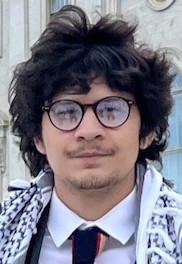
Sebastian Carbajal is the PSW youth representative of the NY/SC, born and raised in East L.A. and an active member of the Little Tokyo community.