By Skylar Paxton
When Chris Cheng heard the news that 84-year-old Thai man Vicha Ratanapakdee was fatally assaulted just 10 minutes away from San Francisco his home in 2021, he kept asking himself two questions: “What is my place in all of this and what can I do to make my community, my family, and other Asian Americans safer?”
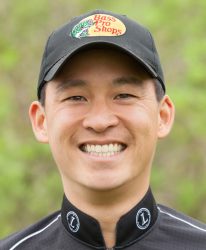
Chris Cheng
Cheng’s response was writing and publishing his historical World War II fiction novel “Proven in Blood: A Novel of War, Betrayal and Belonging.” The story follows Nisei Daniel Tanaka who goes from being a UC Berkeley baseball student to volunteering for the 442nd Regimental Combat Team, a segregated Japanese American army unit, while his family is incarcerated.
The combat unit, which was combined with the 100th Infantry Battalion (nicknamed the Purple Heart Battalion and comprised mostly of Nisei from Hawaii), is renowned as the most-decorated unit in U.S. military history for size and length of service. Cheng writes about the complex dynamics the soldiers experience through the eyes of Tanaka and how he navigates his changing world with courage, patriotism and strength.
“I wrote ‘Proven in Blood’ as a response to the anti-Asian hate that our country saw at the beginning of the pandemic,” Cheng said in an interview with Pacific Citizen. “It is my hope that ‘Proven in Blood’ will be a positive force for the Asian American community in helping us be strong and feel powerful.”
Following the death of Ratanapakdee, Cheng went on to showcase his marksmanship skills on TBS’s talent show “Go-Big Show.” While mostly known for being a champion on History Channel’s “Top Shot” and as a weapons expert, Cheng wanted to incorporate his Asian American identity on TBS and researched possible connections to the weapons he wanted to use. That’s when he did a deep dive into the the history of the 100th/442nd that would lead to six years of research and writing “Proven in Blood.”
“My proudest Asian American moment was learning about the men of the 100th and the 442,” Cheng said. “And learning about them inspired and galvanized me in a way that I’ve not experienced ever in my life.”
Alongside oral interviews and historical documents, research for “Proven in Blood” included two trips to Italy and France where Cheng toured the battlefields that the 100th and 442nd soldiers fought at. Both trips coincided with the 80th and 81st anniversary of the liberations of 1944 and had descendants of the Nisei soldiers and local residents commemorating the famed battalion. Cheng noted how he saw the president of Tuscany, as well as other local mayors, come to recognize the soldier’s efforts in liberating their homes.
Related Stories From 2026 Veterans Day Issue:
Go for Broke Holds 25th Evening of Aloha
Nisei Veterans’ Descendant Visits Where They Fought Nazis
Japanese American Vietnam War Vets Represent a Legacy in Motion
New Documentary Tells How Nisei Soldiers Planted ‘Seeds of Aloha’
Retired Maj. Gen. William Chen Discusses Career That Spanned Cuban Missile Crisis to the First Gulf War
Japanese American Vietnam War Vets Represent a Legacy in Motion
During WWII, Fort Snelling’s MIS Language School Turned Nisei Into America’s Secret Weapon
He also met Leslie Sakato, daughter of soldier and Medal of Honor recipient George Sakato, who served in the 442nd. Cheng said he was moved by her father’s story and her decision to come to Europe to see where her father fought. George Sakato, who had risked his life by making a one-man rush and advancing his platoon across enemy lines on hill 617 in France, became someone Cheng constantly thought about while writing about his protagonist.
“Many of [the Nisei soldiers] also lost their lives fighting for our country,” Cheng said. “That was very moving for me to be witness to her experience.”
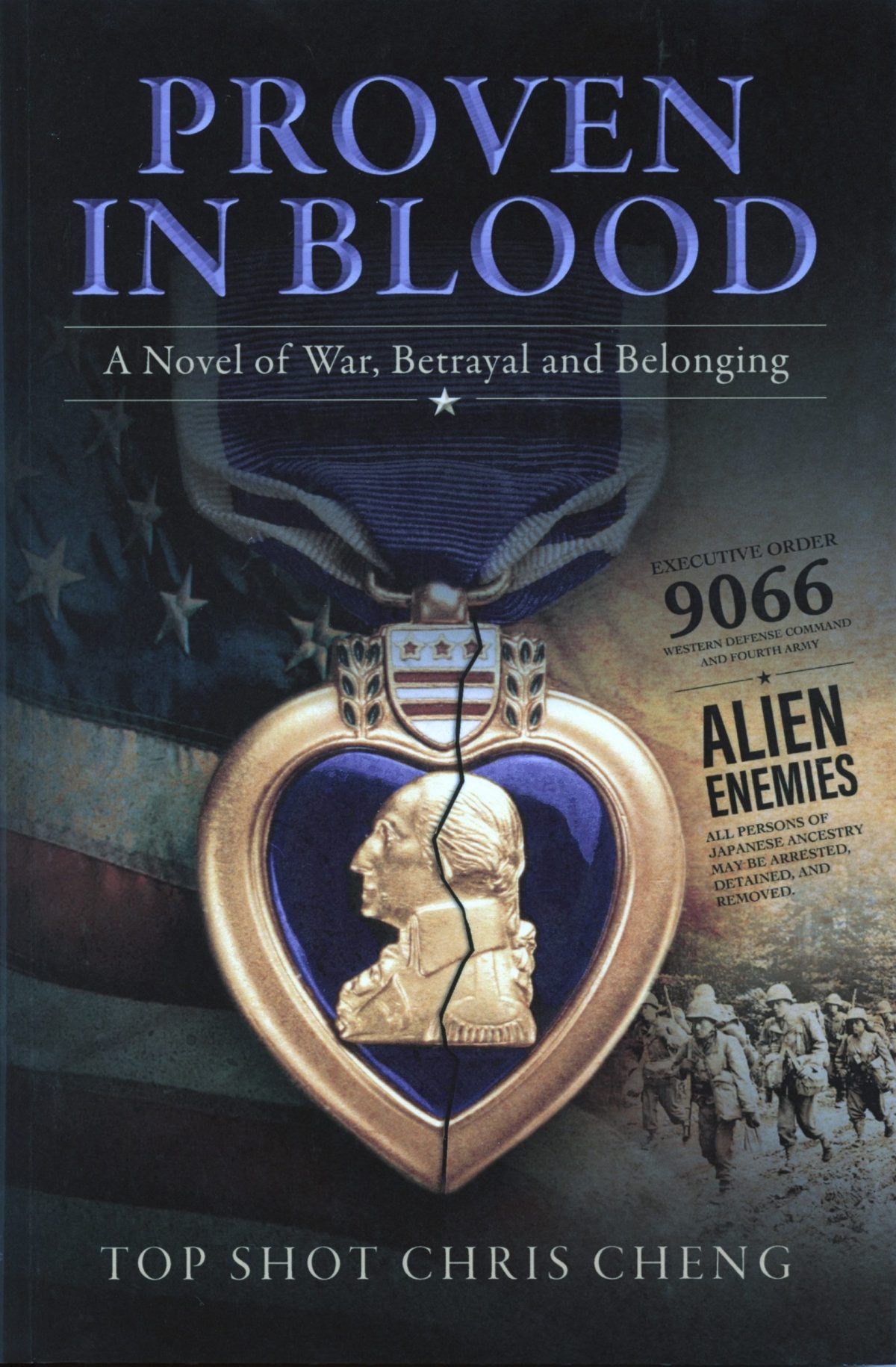
‘Proven in Blood’ follows the fictional character Daniel Tanaka as he enlists in the 442nd Regimental Combat Team during WWII.
While Cheng is a professional marksman and is familiar with military concepts from having family in the Navy and Army, writing about the battle scenes authentically was a challenge. Researching about the battalion also took more time than finding information about other Japanese American histories like the incarceration camps.
“I’m a native Californian, and I only learned about the 100th and 442 six years ago, and I was just shocked, right?” Cheng said. “I’m half Japanese and half Chinese, grew up in California where a lot of the 442 came from, yet I had never even heard of a segregated Nisei unit.”
It’s why Cheng finds this history to be so important to tell, especially as an Asian American. Despite not having ever written a fiction novel before, with his first book “Shoot to Win” being a nonfiction shooting guidebook, Cheng said he wanted to write about the history through a vehicle that would help “every American know who these men are.”
Cheng also said he hopes the story can become adapted into a movie or television series where he can help platform Japanese American actors and make the “Purple Heart Battalion” history more known to the general public.
“Asian Americans have always been a part of the American story,” Cheng said. “ ‘Proven in Blood’ is one of these key examples of how we rose above the racism and the bigotry when our country distrusted us, and the Nisei soldiers were the best of what America had to offer.”
“Proven in Blood: A Novel of War, Betrayal and Belonging” is available to purchase on Amazon at tinyurl.com/4bz82mfu.